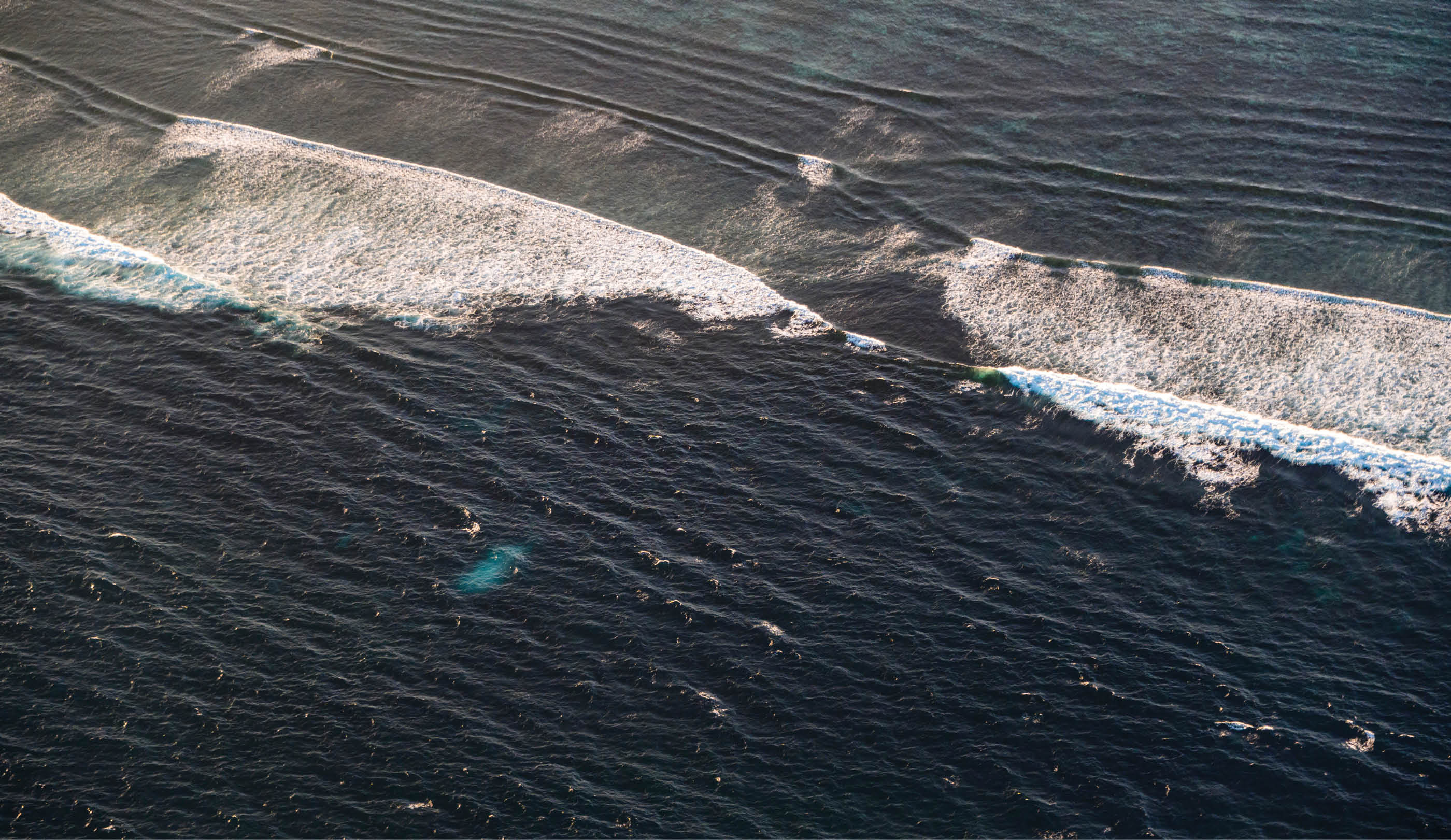
The final resting place of Batavia is about 800 metres east from the south-west corner of Morning Reef. Commander Francisco Pelsaert recorded that it was almost impossible to walk on the deck because of the pounding of the ship on the reef after it had gone aground. The wreck event resulted in a huge depression formed by the weight of Batavia’s hull grinding through the hard limestone reef as it was breaking up.
Today, all that remains from the now excavated shipwreck site is a large sand hole that can be seen from above. When the archaeological excavation work was completed, the bottom of the site at the stern was about five metres below the top of the reef. A scatter of anchors and cannons remain at the site and can be viewed by snorkellers and divers.
Abrasion marks on the port side of the transom hull reconstruction at the WA Museum Shipwrecks Museum in Fremantle show the considerable forces–about 600 tonnes displacement–to which the ship was subjected to after the wrecking.
Beyond the main site, in the lagoon shallows on the inside of the reef, is an area where material from the wreck has been driven by storms. Artefacts have been recorded being carried by the currents towards Beacon Island. On one occasion during the excavation of Batavia, an archaeologist’s writing slate that had been lost some months before, was found washed up on Beacon Island, confirming it was in a direct line for material that washed away from the main wreck site.
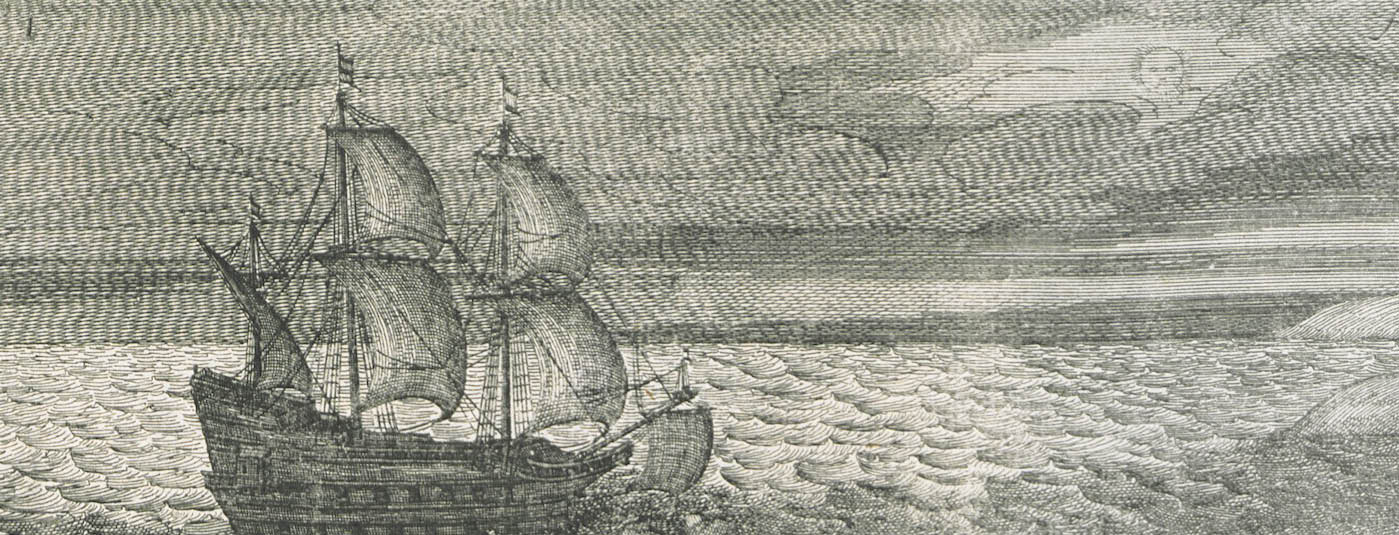
Batavia underway, Houtman Abrolhos Islands. Illustration from Ongeluckige voyagie, 1647.
Credit: State Library of Western Australia, b1660729_1
Batavia Coast Maritime Institute’s vessel Masterclass, alongside the large sand hole left from the excavation of the shipwreck site at Morning Reef.
Credit: P. Morrison