
25
w
Lucretia van der Mijlen
During the voyage, Jacobsz had made unwanted sexual advances towards one of the female passengers, a noblewoman named Lucretia van der Mijlen. As a woman of privilege, Lucretia had been regularly spending social time with Pelsaert enjoying the food and comforts of the Commander’s cabin. When Lucretia rejected Jacobsz’s advances he turned to seduce her maid, Zwaantie Hendricx, who was willing to receive both Jacobsz’s attention and dangerous ideas. These events and relationships led to Jacobsz and Cornelisz conspiring to create an event to
trigger a mutiny, centred on Lucretia.
On the night of 14 May, as Lucretia left Pelsaert’s cabin after dinner, some members of the crew violently assaulted her, placing a bag over her head and roughly smearing her in excrement. Cornelisz and Jacobsz thought that the outraged Pelsaert would be forced to take reprisal action to defend Lucretia’s honour. They assumed that if he could not identify the perpetrators, he would punish the crew as a group, thereby creating widespread dissension and the perfect conditions in which to launch their mutiny.
Despite the severity of the attack, the attempt was thwarted
as Pelsaert took no action, apparently sensing the situation and his vulnerability. He stated in his journal that he: …More especially suspected, from many circumstances of which he had become aware during his sickness, that the skipper had been the author of it.
With dissension aboard continuing to brew, the isolated ship continued to sail its course until early in the morning of 4 June 1629. It jarred abruptly as it ran aground on a reef, later named Morning Reef, in the Houtman Abrolhos Islands, off the western coast of Australia.
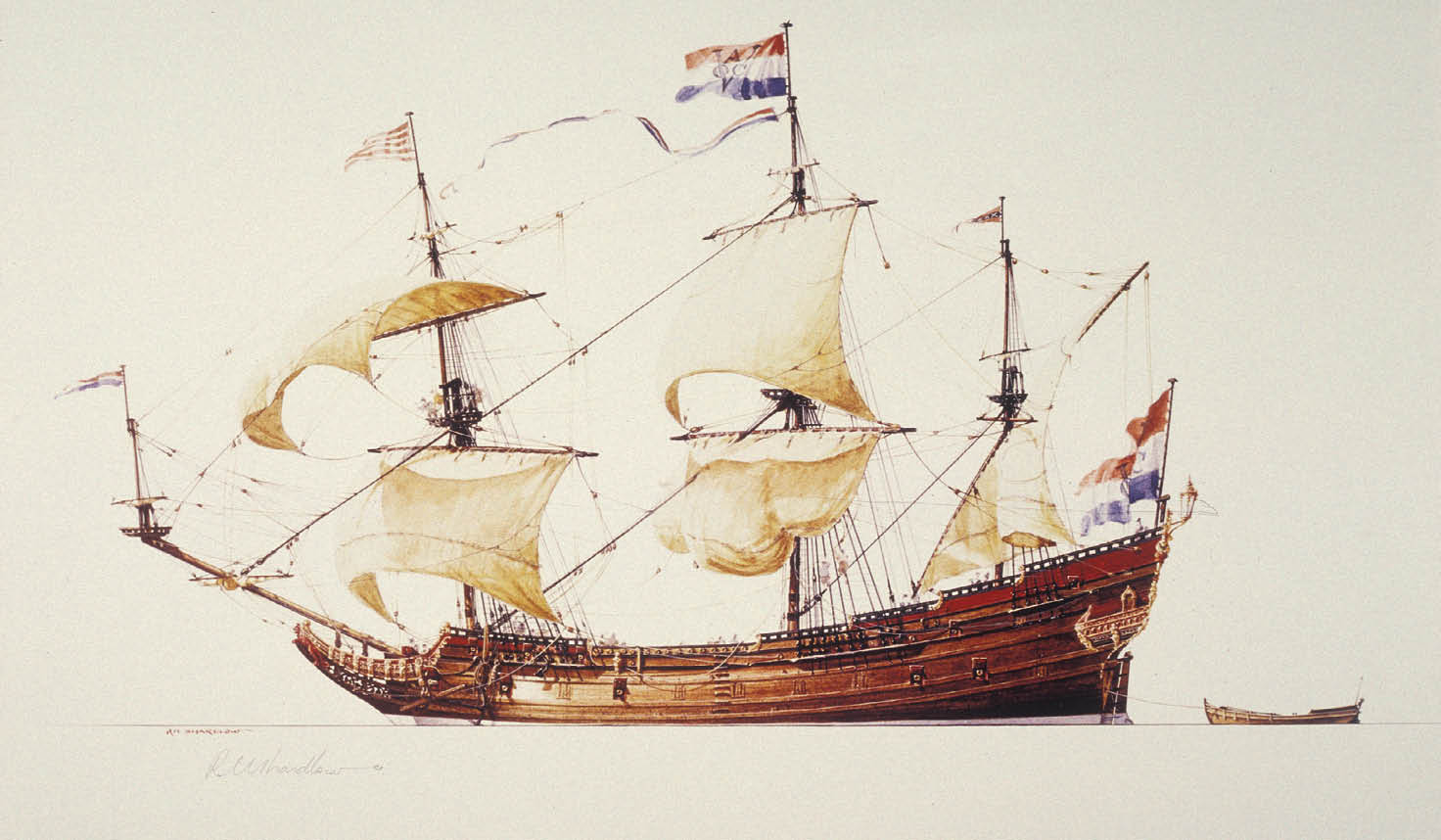
Batavia was a 600 ton, heavily armed East Indiaman built to make annual return voyages between the Netherlands and the East Indies.
Credit: R. Shardlow
Leaving the Cape
From the Cape of Good Hope, the three ships followed instructions for the Brouwer route, sailing east for about 5000 kilometres, before heading north for Java. Soon after leaving the Cape, Pelsaert became unwell and became confined to his cabin, and Jacobsz seized an opportunity to separate Batavia from the rest of the fleet during a storm.
With Pelsaert sick, Jacobsz and Cornelisz nurtured mutinous ideas among the crew, and a small group of supporters was gradually enlisted. However, a miscalculation on the severity of Pelsaert’s illness—he was back up on deck within a month—required the rebels to reassess their approach to seizing the ship.
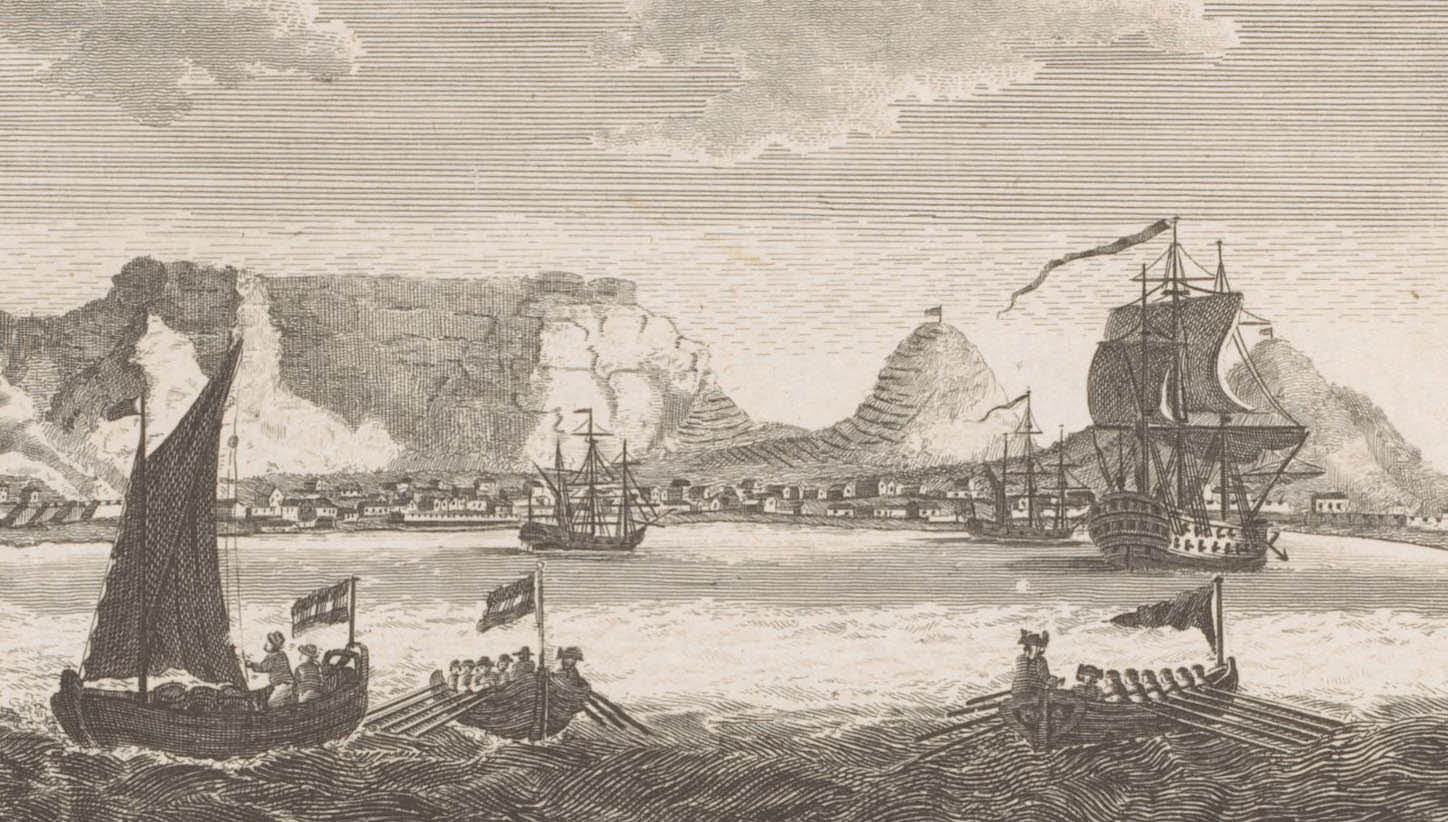
View of Cape of Good Hope from Table Bay, from about 1650-1700.
Credit: Rijksmuseum, Amsterdam
JOURNEY FROM THE NETHERLANDS