54

RAISING THE SHIP
A unique and priceless collection
The excavation of Batavia resulted in the first and largest collection of VOC material ever recovered in an archaeological excavation anywhere in the world. This includes the earliest, and most substantial, remains of a Dutch East Indiaman yet to be discovered. The hull remains are comprised of the stern quarter
of the port side of the ship up to the top of the first gun deck, including the transom and sternpost.
More than 35,000 artefacts are in the collection, including coins, ceramics, armament, medical supplies, personal possessions,
navigation equipment and articles relating to the ship’s hull and rigging. The 137 sandstone blocks lying over the hull were found to form a stone portico façade, weighing over 37 tonnes. Archival research revealed the portico was destined for one of the port gateways at Batavia Castle.
3D reconstruction of the Batavia wreck site created using photomosaic images from the 1970s. The hull timbers, seen here with identification tags, have been conserved and the hull section reconstructed. The hull can be seen on display at the WA Shipwrecks Museum.
Credit: Hub for Immersive Visualisation and eResearch, Curtin University



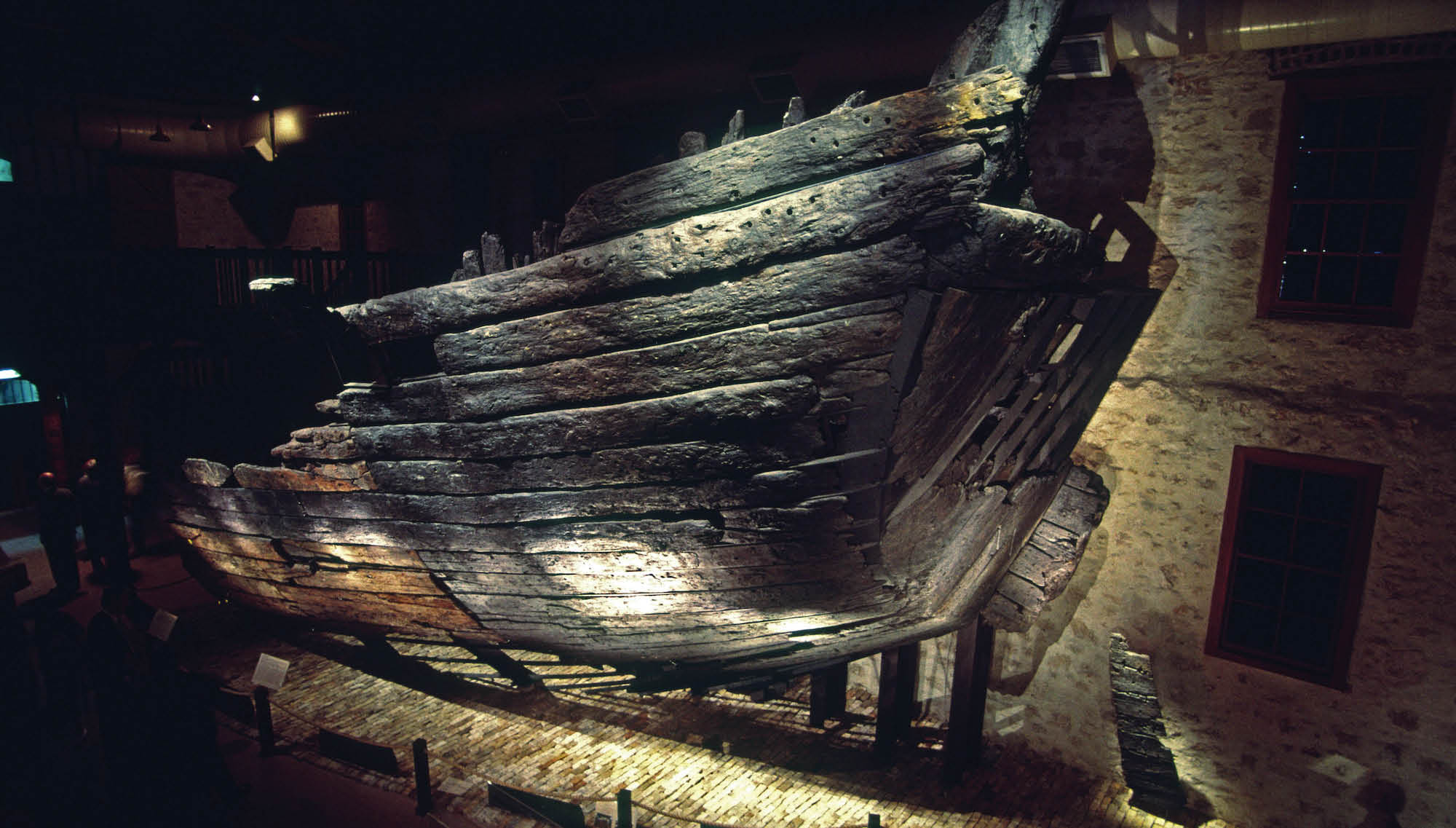
Batavia’s hull reconstructed and on display at the WA Shipwrecks Museum.
Credit: WA Museum, BTT_518