Lunar Design and Discovery
Dates
Weekdays during school term | 10am and 12.30pm
$280 per group (up to 32 students)
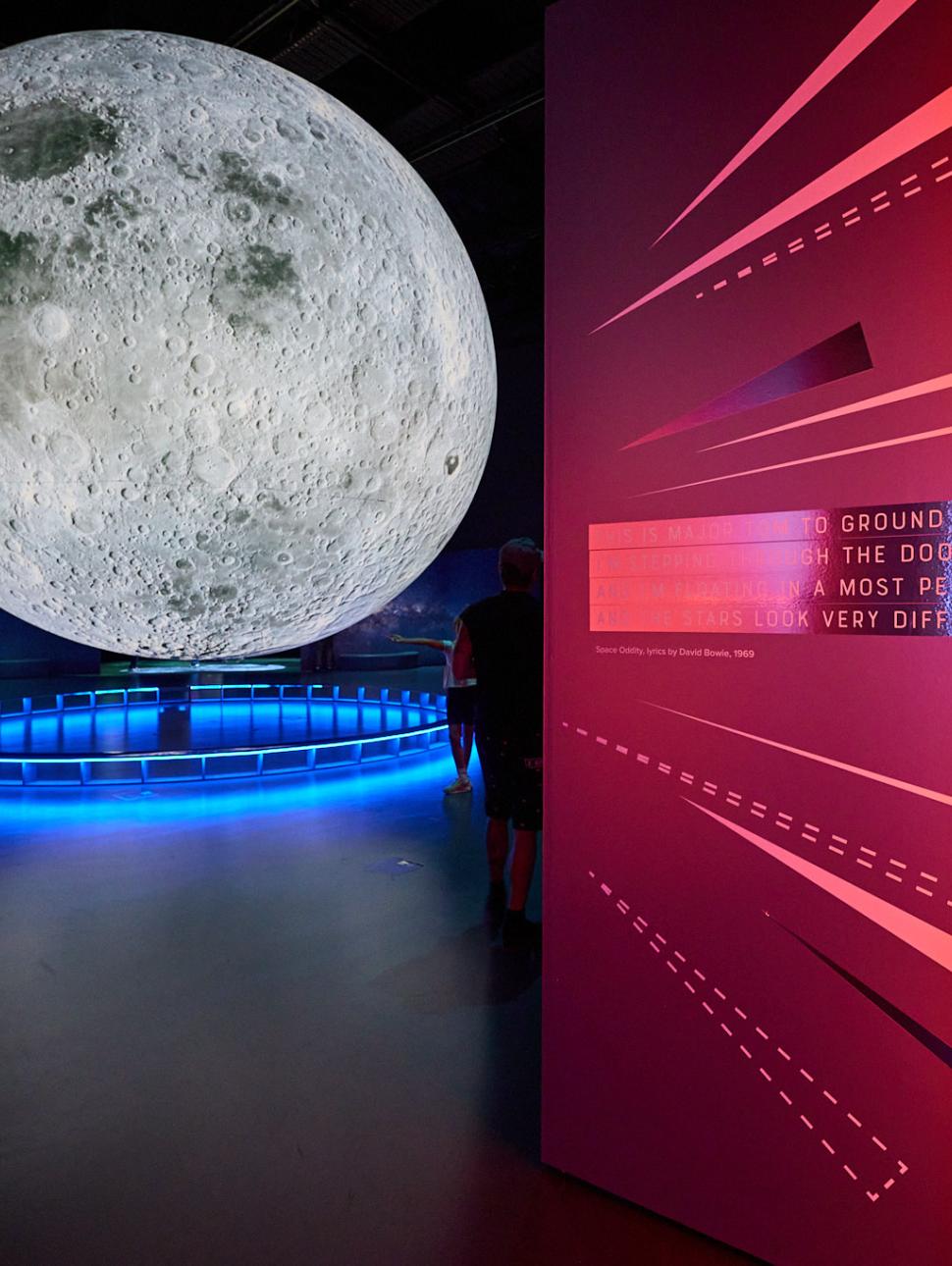
Learn more about our Moon, its formation and the search for water on the surface.
Students will explore the Moon and it's geology through examining objects from space in our Origins and Innovations galleries. They'll then return to Earth (otherwise known as our Learning Studios!) and use digital technologies in a challenge to search for lunar resources.
Student experience
Students will:
- Learn about the latest scientific information about the formation of the Moon
- Visit our Origins and Innovations galleries to explore collection items associated with the Moon, and consider the future of Moon exploration
- Use robotics to program lunar 'rovers' and explore the potential for this technology to further lunar research.
Curriculum links
This program links to the following strands of the Western Australian Curriculum:
Year 7
- Science
Earth and Space Science: Predictable phenomena on Earth caused by its position relative to the Sun and the Moon, including lunar phases, eclipses, seasons and tides (WA7SSUE2)
Science Inquiry- Collaborating and applying: Illustrate how the development of scientific knowledge has benefited from collaboration across disciplines and the contributions of people from a variety of cultures (WA7SSICL1)
- Collaborating and applying: Illustrate how the development of scientific knowledge has benefited from collaboration across disciplines and the contributions of people from a variety of cultures (WA7SSICL1)
- Technologies
Digital Technologies- Design thinking skills:
- Investigating and defining
- Break down a given design brief, identifying and defining the purpose and competing considerations (WA7DIGDTID2)
- Consider given technologies, resources and/or components to develop solutions (WA7DIGDTID3)
- Producing and implementing
- Implement agreed protocols and use a range of technologies, components and/or equipment to produce designed solutions (WA7DIGDTPI1)
- Investigating and defining
- Design thinking skills:
Year 8
- Science
Science inquiry:- Evaluating: Construct evidence-based arguments to support conclusions or evaluate claims (WA8SSIE2)
- Collaborating and applying: Illustrate how the development of scientific knowledge has benefited from collaboration across disciplines and the contributions of people from a variety of cultures (WA7SSICL1)
- Technologies
Digital Technologies- Design thinking skills:
- Investigating and defining
- Investigate a problem for a given need or opportunity (WA8DIGDTID1)
- Consider technologies, resources and/or components to develop solutions, identifying constraints (WA8DIGDTID3)
- Producing and implementing
- Implement agreed protocols, a range of technologies, techniques, components and processes to produce designed solutions (WA8DIGDTPI1)
- Investigating and defining
- Design thinking skills:
Year 9
- Science
Science inquiry:- Evaluating: Construct arguments based on analysis of a variety of evidence to support conclusions or evaluate claims (WA9SSIE2)
- Collaborating and applying:
- Illustrate how advances in scientific understanding often rely on developments in technologies and engineering advances are often linked to scientific discoveries (WA9SSICL1)
- Illustrate how proposed scientific responses to contemporary issues may impact on society (WA9SSICL2)
Year 10
- Science
Earth and Space Science: Space exploration contributes to knowledge of the formation and evolution of the universe and Earth, as well as provides useful tools and technologies to improve our life on Earth (WA10SSUE2)
Science inquiry:- Evaluating: Construct arguments based on analysis of a variety of evidence to support conclusions or evaluate claims (WA10SSIE2)
- Collaborating and applying:
- Illustrate how advances in scientific understanding often rely on developments in technologies and engineering and technological advances are often linked to scientific discoveries (WA10SSICL1)
- Illustrate how proposed scientific responses to contemporary issues may impact on society (WA10SSICL2)
All facilitated workshops are led by the Museum’s experienced Learning and Engagement team and have been curated using the Museum’s unique resources to provide a deeper learning experience in our specialist subject areas.
Your booking for a facilitated workshop will include all materials and activities for the duration of the program with no prior preparation required.
As part of all facilitated workshop bookings, you are welcome to explore the rest of the Museum free of charge pre or post workshop and do not need to make any additional bookings to do so. WA Museum Boola Bardip is open daily from 9.30am to 5pm, with last entry at 4pm.
