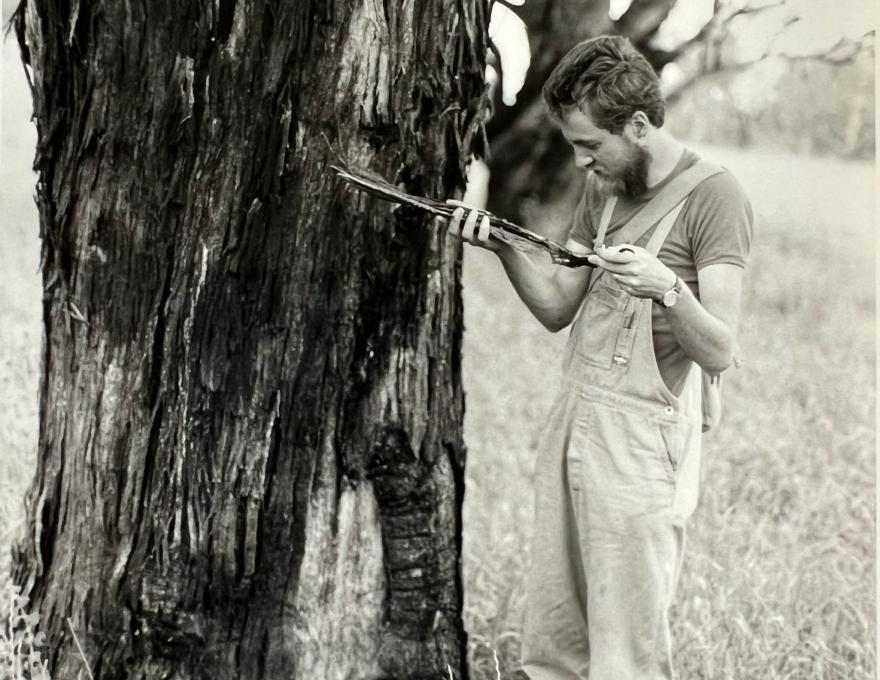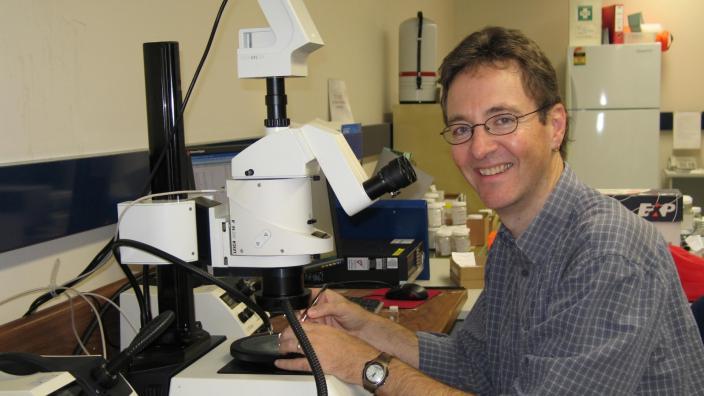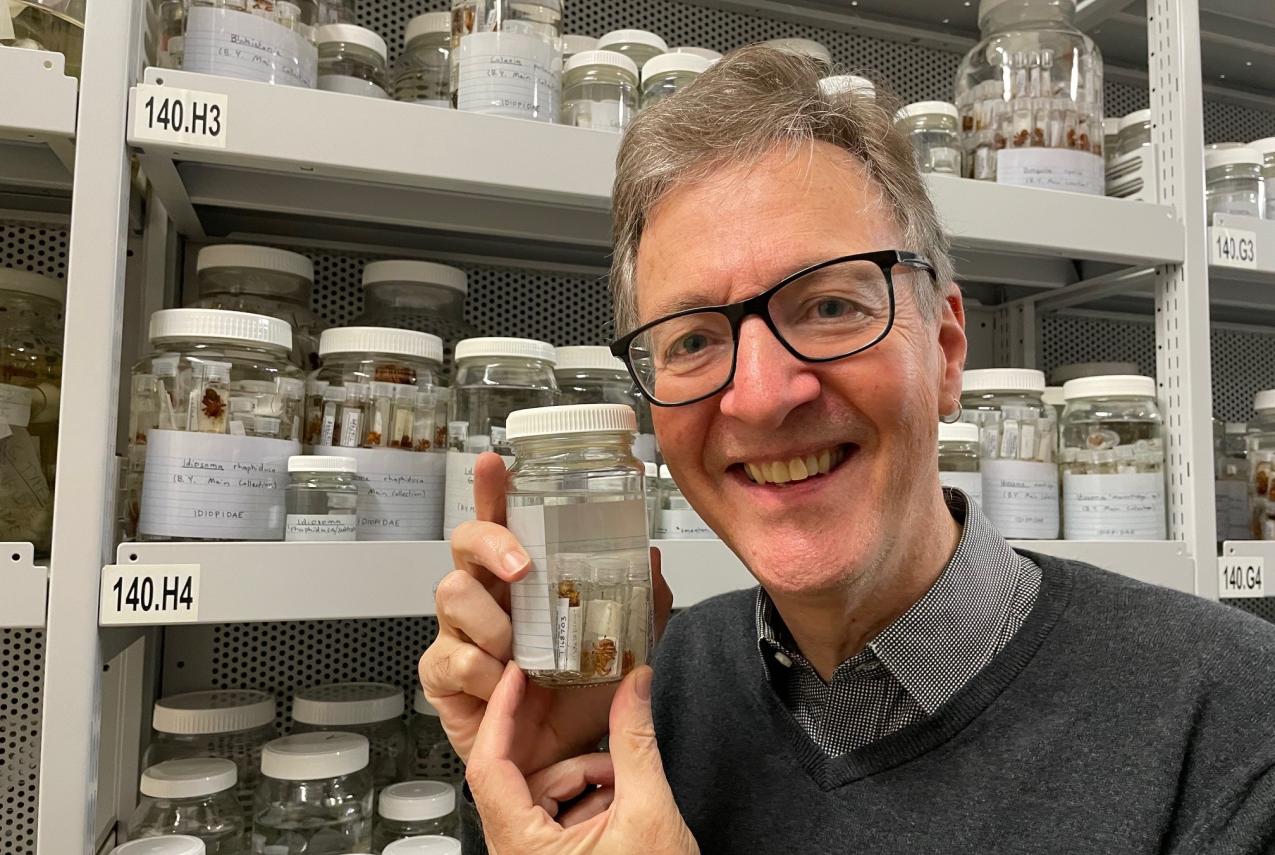
If you’ve ever lifted a piece of bark, turned over a stone, or peeked into a creek, you might have glimpsed the world that Dr Mark Harvey, Western Australian Museum Research Associate, has spent his life exploring.
His work has been vital in documenting Australia’s hidden biodiversity, helping scientists understand and protect species that are often overlooked but are essential to healthy ecosystems.
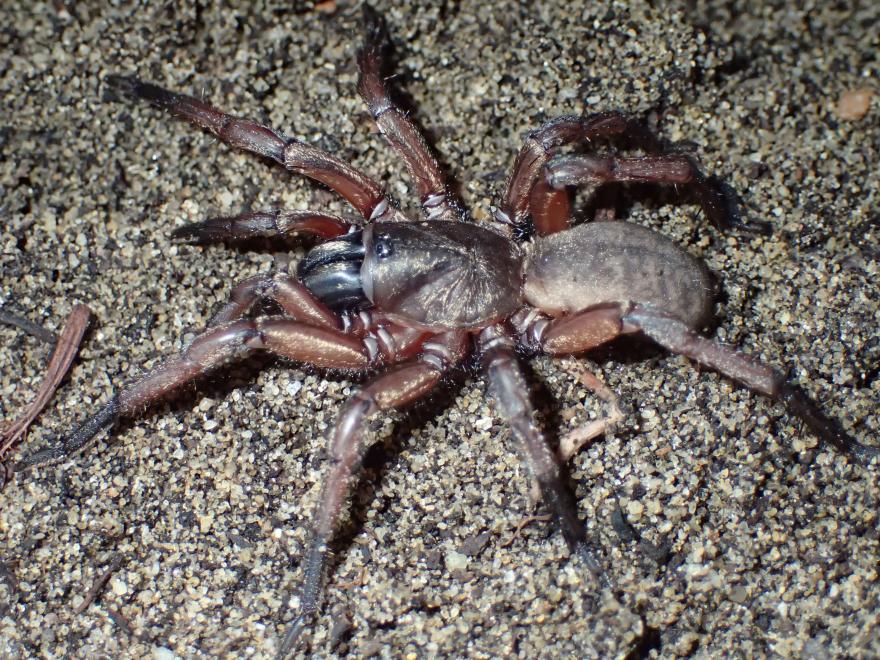
Over more than four decades, Mark has described 1,015 new species and 108 new genera of invertebrates — spiders, pseudoscorpions, mites, whip spiders, scorpions, millipedes, and even velvet worms.
This feat is rarely achieved by taxonomists, making Mark one of very few living scientists to have achieved this milestone.
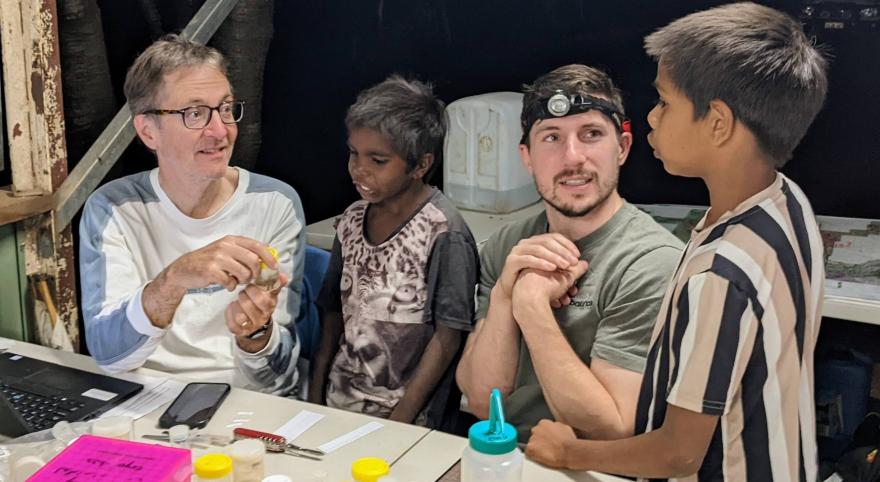
Mark works with a global network of like-minded scientists to document invertebrate diversity. His fieldwork spans Australia and international locations, including Indonesia, Japan, South Africa, and Brazil, with collaborative research that has informed conservation.
“I feel incredibly lucky to have worked with so many brilliant people. Even after 1,000 species, there’s still so much left to discover. Every field trip uncovers additional new species that have not been named in the scientific literature. And we not only find dozens of new species we also discover new genera,” Dr Harvey said.
These discoveries have profound real-world significance—they help guide conservation efforts and safeguard ecosystems across Australia. Some of the species Mark has described have since been listed as threatened, prompting targeted conservation actions and highlighting the importance of understanding Australia’s fauna before it’s lost.
“The Australian invertebrate fauna is unique but faces numerous challenges from habitat loss, climate change, and bushfires.
“While every new species we document brings us closer to protecting this fauna, the extinction of even a single species—sometimes before it is described—remains an irreversible tragedy.”
Growing up in Melbourne, Mark explored local creeks and the bush and later spent holidays driving through rural Victoria searching for spiders and other invertebrates. He completed his Bachelor of Science and a Doctor of Philosophy at Monash University, followed by postdoctoral research at CSIRO Canberra and the Museum of Victoria.
Mark joined the Western Australian Museum in 1989 as Curator of Arachnids and, from 2006 to 2022, served as Head of the Terrestrial Zoology Department. Over this time, and throughout his career at the Museum, he helped build one of the largest arachnid collections in the Southern Hemisphere. He continues his work today as a WA Museum Research Associate and Adjunct Professor at the University of Western Australia.
He also helped name an Australian spider after Sir David Attenborough and presented him with a framed photograph of the species.
“Sir David had a huge influence on my view of the natural world and meeting him was an incredibly special moment.”
With nearly 400 scientific papers and the influential book Worms to Wasps to his name, Mark occasionally adds some humour to his scientific research, coining quirky scientific names like Draculoides bramstokeri and Tyrannochthonius rex.
Colleagues have honoured Mark by naming 45 species and two genera after him.
He continues to lead in taxonomy as Editor-in-Chief of the Australian Journal of Taxonomy and a Member of the International Commission on Zoological Nomenclature, while still discovering, describing, and sharing the wonders of the natural world.
“Even with more than 1,000 species described, there are countless discoveries still waiting, offering exciting opportunities to understand and protect our ecosystems.”