Australian Premiere: A Life Illuminated screening and Q&A
Standard | $15
Concession | $10
Children | $10
Friend Members receive 15% off ticket pricing for this event.
Site access information
WA Museum Boola Bardip is fully accessible. Call 1300 134 081 for assistance. Accessible resources and programs >
Join WA Museum Boola Bardip for the Australian premiere of A Life Illuminated.
A Life Illuminated follows pioneering marine biologist Dr. Edith Widder’s lifelong quest to use the language of light to communicate with the most mysterious creatures in the deep sea. Now, she heads off on her greatest journey yet into the deepest depths of our ocean world to understand our biggest questions about bioluminescence and what it can tell us about the future of life on Earth.
Produced by the Oscar-nominated team behind Fire Of Love and directed by award-winning filmmaker Tasha Van Zandt.
Presented by Minderoo Foundation, the Foundation for the WA Museum and OceanX, the screening will be followed by a special panel discussion featuring leading voices in marine science and deep-sea exploration:
- Dr Vincent Pieribone, Co-CEO and Chief Science Officer, OceanX
- Dr Lisa Kirkendale, Head of Department, Aquatic Zoology, WA Museum
- Dr Georgia Nester, Deep-Sea Postdoctoral Researcher, Minderoo Foundation
Facilitated by WA news reporter Ben O'Shea, the conversation will explore the groundbreaking work of OceanX and the researchers pushing the boundaries of deep-sea discovery, conservation and science.
Event Schedule
Film Screening: 2.00pm - 3.30pm
Q&A Panel Discussion: 3.45pm - 4.45pm
Panel Speakers
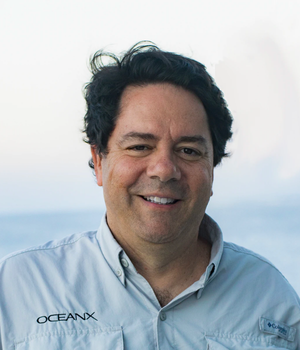
Dr. Vincent Pieribone is the Co-Chief Executive Officer and Chief Science Officer of OceanX, an initiative of Dalio Philanthropies. He is also an Adjunct Senior Research Scientist at Lamont-Doherty Earth Observatory at Columbia University and is a Research Professor at Southern Connecticut State University. His research is currently focused on Synthetic Biology and the engineering of novel biochemical activities into cells.
Over the past 20 years, he has conducted ocean research expeditions across the globe. He has founded both a pharmaceutical company (Marinus Pharmaceuticals, Inc.) and a medical diagnostic company (Affinimark, Inc.). Dr. Pieribone also served as a Research Associate for The American Museum of Natural History and is on the Scientific Board of Directors of the Mystic Aquarium. Vincent attended New York University College of Arts and Sciences where he received a baccalaureate degree in Biology and Chemistry in 1986. He then attended New York University’s Graduate School of Arts and Sciences and received his doctorate in Philosophy in 1992 in neuroanatomy and neurophysiology.
He later received his Masters of Art privatum from Yale University. From 1990 to 1992 he was a National Science Foundation and Fogarty International Fellow at the Nobel Institute of Neurophysiology at the Karolinska Institute in Stockholm, Sweden. From Sweden, Vincent did post-doctoral work at The Rockefeller University in New York from 1992 to 1995 and became an Assistant Professor there in 1995. Vincent joined Yale University School of Medicine as an Assistant Professor and The John B. Pierce Laboratory as an Assistant Fellow in December 1997.
He rose to Full Professor of Cellular & Molecular Physiology and Neuroscience at the Yale School of Medicine and Fellow at the John B. Pierce Laboratory. From 2018 to 2021 he was Director of the Laboratory. Dr Pieribone will join Columbia University and Southern Connecticut State University in February 2025.
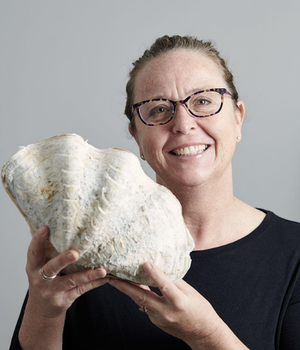
Curator Lisa Kirkendale joins us from the Western Australian Museum, where she leads the Aquatic Zoology Team, a research and collections group focused on uncovering biodiversity from the deep sea to freshwater creeks across Western Australia.
Originally from Canada, Lisa moved to Australia and joined the WA Museum in 2013 after living and working on the south coast of New South Wales. Throughout her career, she has worked with the Muséum National d'Histoire Naturelle in Paris and the Natural History Museum, London, while also collaborating closely with museums across Australia and New Zealand, and with Traditional Owners in Western Australia.
Lisa's research focuses on bivalve molluscs, which she investigates through the lenses of evolution, biogeography, and systematics. Her work spans everything from documenting the diversity of carnivorous deep-sea bivalves inhabiting the abyss to understanding the remarkable partnership between shallow-water giant clams and the microscopic algae living within them.
A recent highlight was diving in the crystal-clear water of Cocos (Keeling) Islands and discovering more than a hundred animals living in just half a cup of sand. These experiences form part of her ongoing quest to better understand marine life in the Indian ocean, from the world's largest clams to the tiniest microscopic organisms.
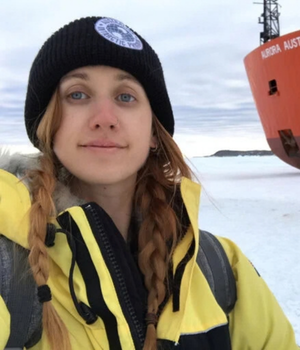
Dr. Georgia Nester is a molecular ecologist specialising in the application of genomic approaches to understand and monitor biodiversity in the deep ocean. She leads deep-sea research at the Minderoo OceanOmics Centre at The University of Western Australia, spanning environmental DNA (eDNA) and biodiversity genomics, and supervises students working across these areas.
Her research has a particular focus on developing and applying eDNA approaches in abyssal and hadal environments, where conventional biodiversity observations are challenging. More broadly, she is interested in how advances in molecular methods, sequencing technologies and genomic resources can extend biodiversity observation into remote and under-sampled parts of the ocean, improve understanding of species distributions and communities, and address critical knowledge gaps in support of marine conservation and management.