Bird Adaptations
Dates
Weekdays during school term | 10am and 12.30pm
Year 5-6 | Year 9
$280 per group (up to 32 students)
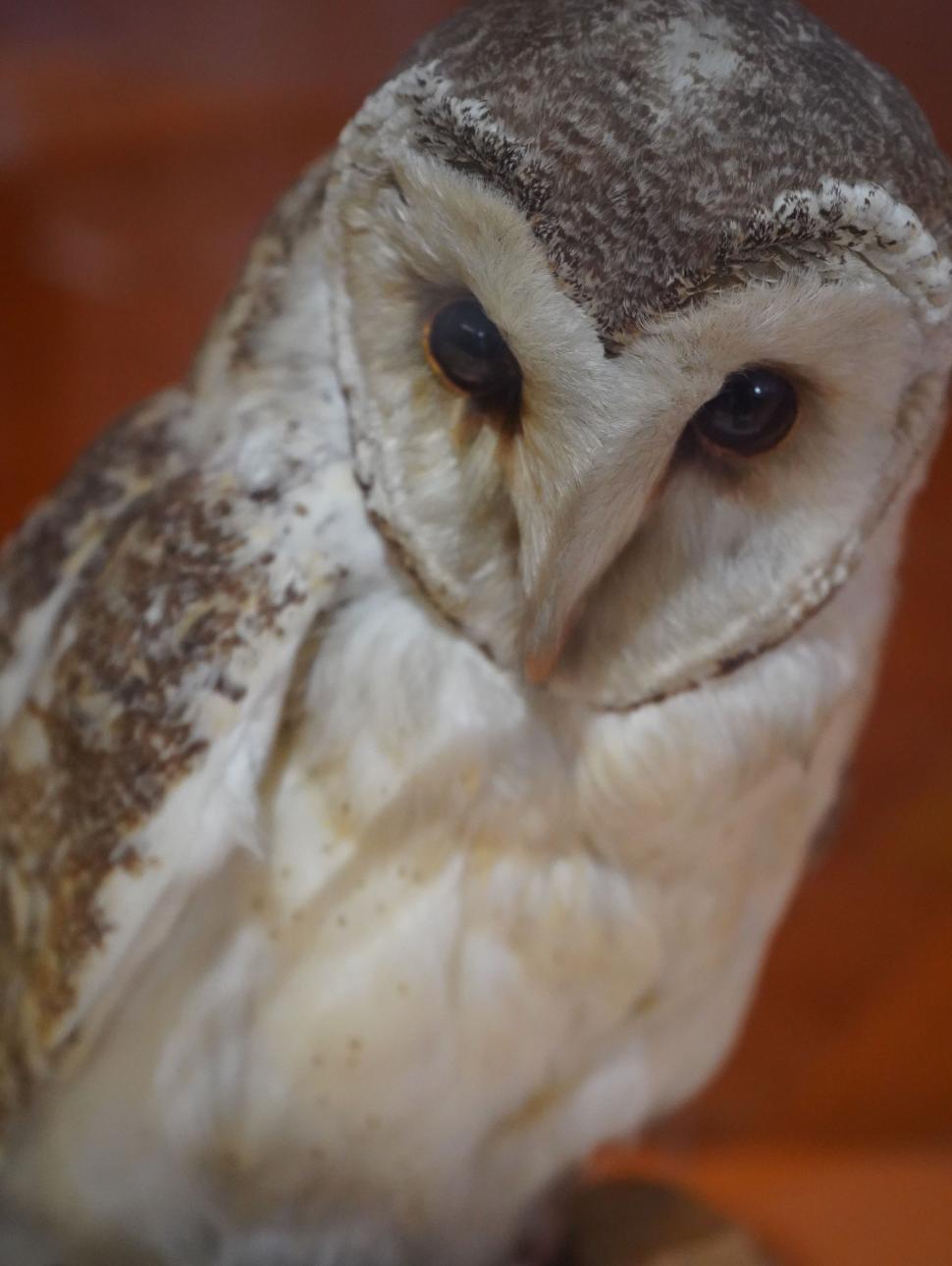
Living things are remarkable in their ability to adapt to changing environments. Come and explore some adaptations of our avian friends.
Focusing on birds, this program examines the way living things adapt to their environment and the changes that allow species to thrive and survive.
Students will use scientific tools, Museum specimens and 3D scans to observe and record structural changes in bird skulls, beaks and feathers.
Student experience
Students will:
- Investigate structural adaptations of birds
- Describe and record some of these structural features
- Recognise that structural features are adaptations which help birds to survive in their environment
- Understand the importance of physical adaptations to an organism’s survival
Program feedback
"Perfectly links to science curriculum of adaptations."
"The learning experience that was provided was fantastic. It was aligned to the curriculum and the content that we were covering in class. The children were engaged in learning throughout the whole workshop. The children just loved it."
"I have been teaching for a long time and this is one of the best excursions that I have been on."
Curriculum Links
Programs at the WA Museum support teachers in their delivery of the WA Curriculum. This program links to the following strands of the Western Australian Curriculum:
Year 5
- Science
Biological sciences: Living things have structural features and adaptations that enable their survival in their environment (WA5SSUB1)
Science Inquiry:- Questioning and predicting: Pose testable questions that include variables to be measured and changed, and apply science knowledge to make predictions (WA5SSIQ1)
- Collaborating and applying: Use science knowledge to develop considered responses to problems, at a local and global level, through investigation and research (WA5SSICL1)
Year 6
- Science
Biological sciences: The growth and survival of living things are affected by the changing conditions in their environment and the influence of human activities (WA6SSUB1)
Science Inquiry:- Questioning and predicting: Pose testable questions that include variables to be measured and changed, and apply science knowledge to make predictions (WA6SSIQ1)
- Collaborating and applying: Use science knowledge to develop considered responses to problems, at a local and global level, through investigation and research (WA5SSICL1)
Year 9
- Science
Biological sciences: Plants and animals have structural, behavioural and physiological adaptations that enable their survival in their environment (WA9SSUB1)
Science Inquiry:- Questioning and predicting: Propose investigable questions and hypotheses to test relationships and develop explanatory models (WA6SSIQ1)
- Processing, modelling and analysing:
- Analyse and connect a variety of data and information to explain patterns, relationships and anomalies, and draw conclusions based on evidence (WA9SSIPR2)
- Construct arguments based on anaylsis of a variety of evidence to support conclusions or evaluate claims (WA9SSIE2)
All facilitated workshops are led by the Museum’s experienced Learning and Engagement team and have been curated using the Museum’s unique resources to provide a deeper learning experience in our specialist subject areas.
Your booking for a facilitated workshop will include all materials and activities for the duration of the program with no prior preparation required.
As part of all facilitated workshop bookings, you are welcome to explore the rest of the Museum free of charge pre or post workshop and do not need to make any additional bookings to do so. WA Museum Boola Bardip is open daily from 9.30am to 5pm, with last entry at 4pm.
