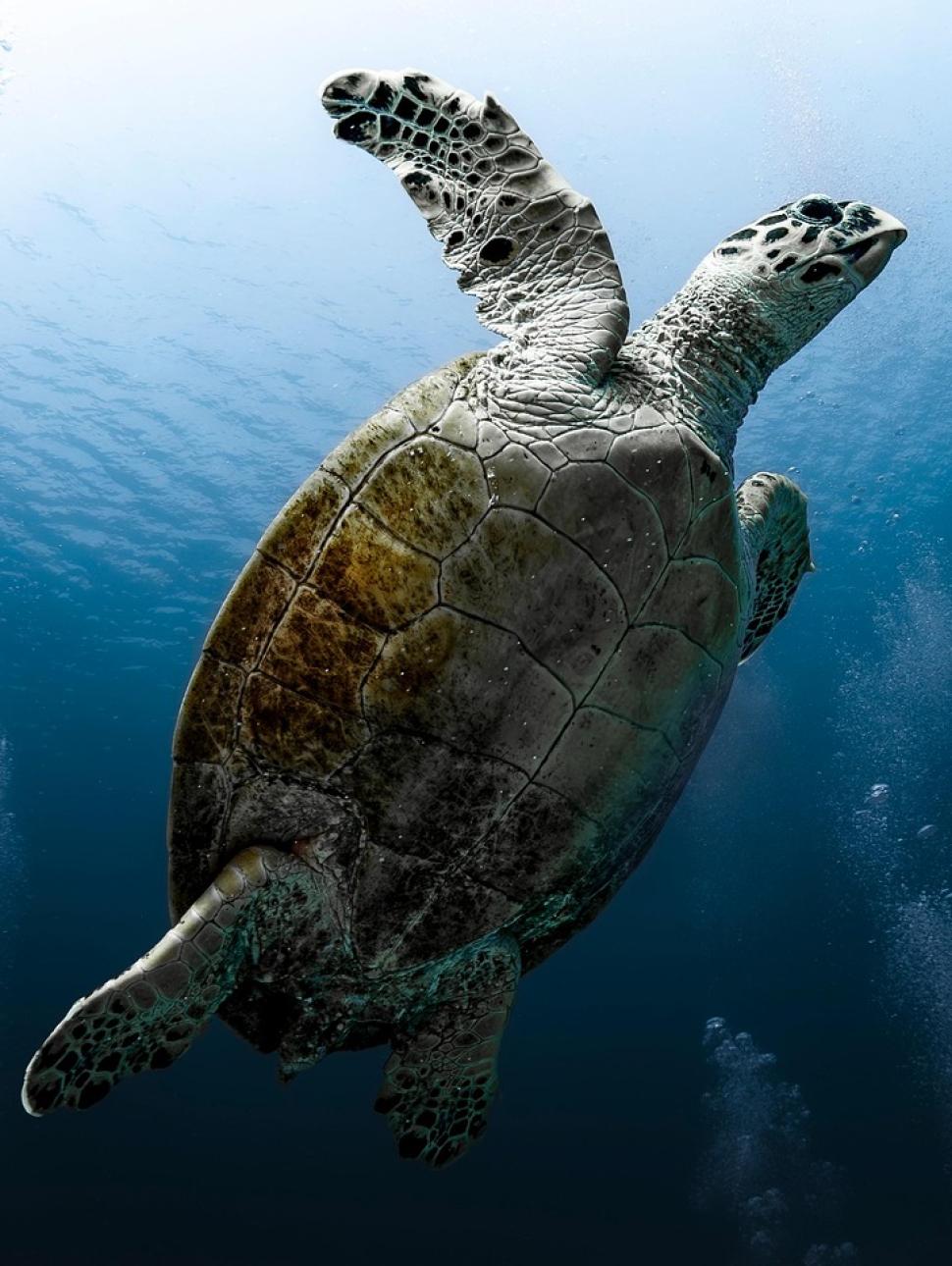
The National Geographic Explorers of Our Ocean Panel
Standard | $25
Concession | $20
Junior (12-15) | $15
Friend Members receive 15% off ticket pricing for this event.
Site access information
WA Museum Boola Bardip is fully accessible. Call 1300 134 081 for assistance. Accessible resources and programs >
Journey to the frontlines of ocean discovery.
What does it take to explore one of the last great frontiers on Earth?
Join four National Geographic Explorers for an evening of adventure, discovery and cutting-edge science as they reveal the remarkable stories lying beneath the surface of Western Australia's Indian Ocean.
Featuring Dr Brad Norman AM, Dr Kate Quigley, Dr Ru Somaweera and Dr Rohan Brooker, with panel facilitator Ben O'Shea, Four National Geographic Explorers. One Ocean. offers you the opportunity to hear directly from the scientists leading globally significant research in our own backyard.
From swimming alongside the world's largest fish to uncovering the hidden genetics helping corals survive a warming planet, tracking elusive marine reptiles across remote coastlines, and discovering how the sounds of a healthy reef could help restore entire ecosystems, these scientists are reshaping what we know about our oceans – and demonstrating just why WA is one of the world's most important natural laboratories.
Discover the science. Experience the adventure. Be inspired to help shape the future of our ocean.
Access information
WA Museum Boola Bardip is a fully accessible venue.
If you're attending this event and would like to request Auslan interpretation, please contact reception@museum.wa.gov.au or call 1300 134 081 a minimum of five working days before the event to allow time for us to make these arrangements.
Meet the National Geographic Explorers
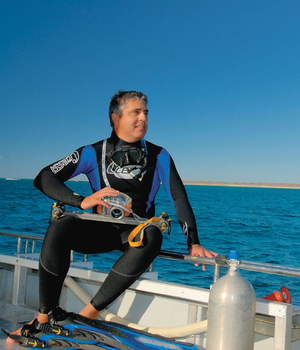
Dr. Brad Norman AM is a leading Australian marine biologist who has dedicated more than 25 years to the research, education, and conservation of whale sharks, the world’s largest fish. A Research Fellow with The Harry Butler Institute, he leads major whale shark research programs and is the founder and head of ECOCEAN Inc., which developed the world’s longest-running photo-identification monitoring program for a wild shark species. His work spans key marine ecosystems including Ningaloo Marine Park, Shark Bay Marine Park, and Great Barrier Reef Marine Park. In recognition of his pioneering contributions, he became the first Australian to receive the Rolex Award for Enterprise in 2006 for his whale shark citizen science initiative, and in 2019 was appointed a Member of the Order of Australia for significant service to science as a marine biologist.
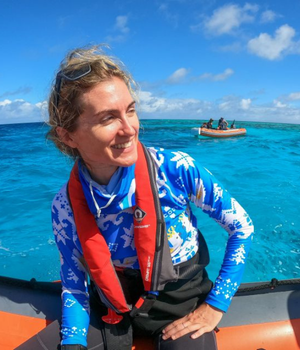
Dr. Kate Quigley is a molecular ecologist and holds a joint point as an ARC DECRA Fellow at James Cook University/University of Western Australia and Principal Research Scientist at Minderoo Foundation. Her research investigates the genomic basis of stress tolerance, adaptation, and resilience of coral reef organisms. She uses a range of genetic tools combined with field, experimental, and modelling methods to understand what makes some corals resistant to stress while others are more vulnerable. She is currently examining how fast corals at Ningaloo Reef, the Great Barrier Reef, Lord Howe Island, and the Houtman Abrolhos will adapt to climate warming. She is also developing genetic conservation tools like selective breeding to increase heat tolerance in corals.
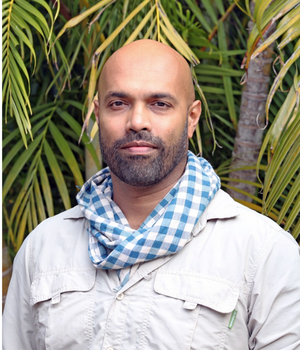
Dr. Ru Somaweera is a herpetologist and behavioural ecologist with nearly two decades of experience spanning scientific research, environmental consultancy, and science communication. His work focuses on understanding how reptiles respond to global environmental change and translating that knowledge into practical conservation and management outcomes. Over the past decade, he has worked extensively on sea snakes, marine turtles, and saltwater crocodiles across tropical northern Western Australia, and held senior technical and leadership roles within global environmental consultancy firms, leading multidisciplinary projects across northern Australia, South and Southeast Asia, and southern Africa. Ru is currently an Adjunct Associate Professor at Murdoch University and contributes to global conservation initiatives through the IUCN and UN-linked programs.
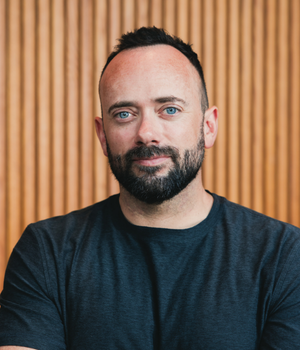
Dr. Rohan Brooker is a marine ecologist and Research Scientist at the Australian Institute of Marine Science, where he currently leads Reef Song, a 5-year research program investigating ecosystem-based approaches to coral reef restoration and resilience across Ningaloo and the Great Barrier Reef. His research focuses on coral reefs, fish–coral interactions, animal behaviour and senses, underwater sound, and restoration science. In his work, he investigates how animals interact with each other and their environment, and the ways these relationships can be harnessed to support our coral reefs.
