Otto's Symphony
Dates
Daily* | 10.30am, 12.30pm and 2.30pm
Included with General Admission
Location
Hackett Hall
Site access information
WA Museum Boola Bardip is fully accessible. Call 1300 134 081 for assistance. Accessible resources and programs >
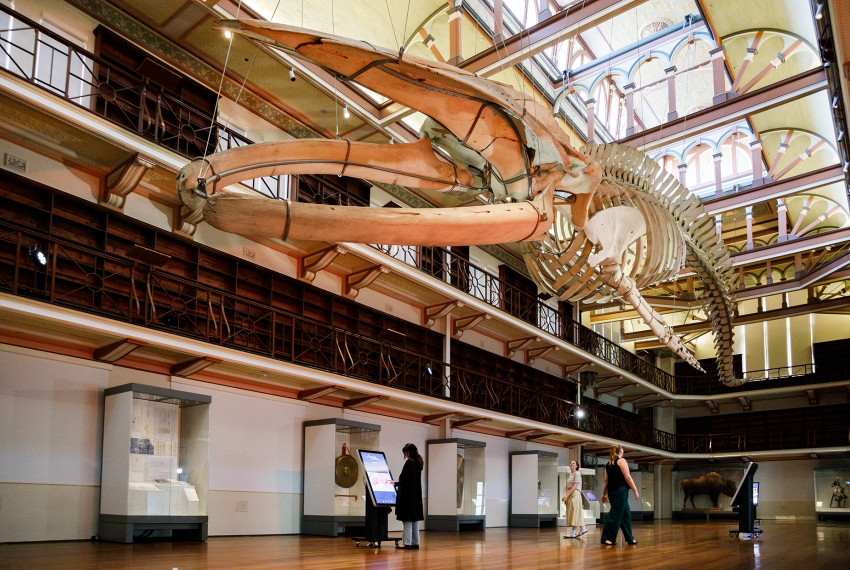
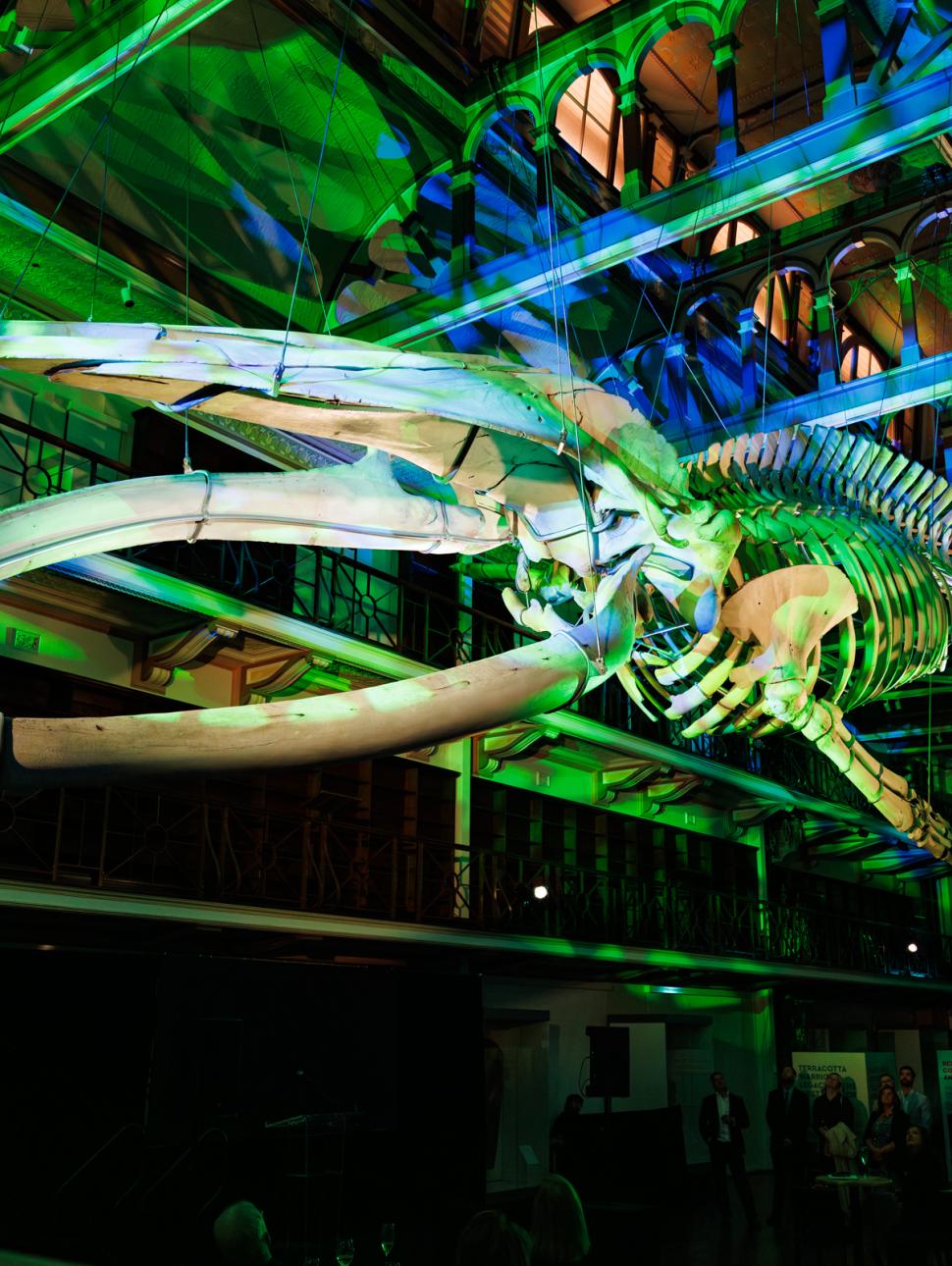
Experience Otto the Blue Whale in a moving display of sound and light, accompanied by an original composition by Perth Symphony Orchestra composer Emma Jayakumar.
Commissioned by the WA Museum and performed by the Perth Symphony Orchestra under the direction of Iain Grandage, Otto’s Symphony invites visitors to pause beneath Otto and experience the scale, beauty and emotion of the blue whale in a new way.
Composer Emma Jayakumar shared the inspiration behind the work:
"The fact that Otto the whale was not an adult but an adolescent at the time of his death brought about playful images of him in my mind; a young animal full of life and a little mischief, but essentially a gentle giant at their core. A swimmer in the ocean encountering this colossus; first at a distance, and then closer and closer until the entire form moves past them, perhaps swims and plays with them for a while, and then moves on again. That’s what I envisioned the music describing, that joyful and emotional experience of swimming with Otto"
Three times daily at the WA Museum Boola Bardip, visitors can experience Otto's skeleton come to life through immersive lighting and sweeping sounds of Otto's Symphony. Despite being a 120-year-old whale skeleton, Otto is still captivating Museum visitors in new and innovative ways.
*The Stan Perron WA Treasures Gallery is frequently used for both public and private events, on these occasions, Otto's Symphony may be unavailable.
Who is Otto?
In August 1897, a young girl named Daisy Locke came across a beached blue whale near the mouth of the Vasse River.
It would become one of the State’s most beloved treasures.
The whale was reported to the Western Australian Museum and over the next three years the Museum’s taxidermist, Otto Lipfert, oversaw its preparation for transport to the WA Museum. The whale was hence given the moniker "Otto" after Lipfert.
Read more about Otto's story as well as the taxidermist who prepared him below.
The Blue Whale skeleton is one of the WA Museum’s largest and most loved specimens. For over 120 years the WA Museum has been the home to this marine giant’s skeleton.
The specimen washed ashore and was reported to the WA Museum in 1898 and remained at the mouth of the Vasse River (near Busselton) for three years before it was ready to be transported to Perth for display. Over those three years the Museum’s taxidermist, Otto Lipfert, oversaw its preparation for transport to the WA Museum.
The 24-metre-long skeleton was transported to the Busselton Railway Station in a horse-drawn carriage, where it was taken by train up to Perth.
The skeleton was reconstructed in a three-sided shed behind the WA Museum, on the corner of Francis and Beaufort streets. The bones were supported off the ground by more than a tonne of iron rods.
The blue whale was in this location until 1968. Due to the exposure to the elements, including sunlight, the bones appear bleached, or whiter, on one side.
In the 1970s a new building was constructed for the WA Museum on Francis Street. Getting the giant whale into the new Francis Street building was quite a feat. A crane had to be used to lift the skeleton in to the fifth floor of the Museum before the roofing was completed in the early 1970s.
The Francis Street Building was closed in 2003 for safety reasons. The blue whale was once again disassembled and moved into storage at the Museum's Collections and Research Centre in Welshpool for almost 17 years.
With the State Government commitment of a New Museum within the Perth Cultural Centre, it was confirmed in 2016 that the one object that would undoubtedly return was the Blue Whale. It is the object most asked about by the people of WA.
Displaying a blue whale is a complex and challenging process at the best of times. The WA Museum's blue whale project had even more challenges due to the heritage-listed building, the fragile, 120-year-old skeleton, a dynamic pose that has never been done before and a metal armature (frame) that was bespoke for this project.
The pose of our whale is based on the latest research into blue whale feeding behaviour. Using drone video and tracking devices, scientists revealed that blue whales roll and lunge as they feed on millions of krill.
Now in 2026, Otto the blue whale comes to light in a new way, being accompanied by the original composition "Otto's Symphony" and dynamic lighting design, visitors to the Museum will see him unlike ever before. Despite being 120 years old, Otto is not too old to keep captivating visitors in new and innovative ways.
Credits
Composer: Dr Emma Jayakumar
Conductor: Iain Grandage AM
Sound Engineer, Producer: Lee Buddle
Creative Director: Fiona Campbell OAM
Orchestra:
Violin 1: Paul Wright
Violin 2: Pascale Whiting
Viola: Sally Boud, Christian Read
Cello: Melinda Forsythe, Emma Vanderwal
Double Bass: Libby Browning, Sarah Clare
Flute/Piccolo: Tresna Stampalia
Oboe: Esther Lee
Clarinet/Bass Clarinet: Catherine Cahill
Bassoon: Joanne Littlely
Trumpet: Mark Underwood
Trombone: Bruce Thompson
Bass Trombone: Peter Younghusband
Piano: Tommaso Pollio
Timpani: Paul Tanner
Percussion: Amanda Dean
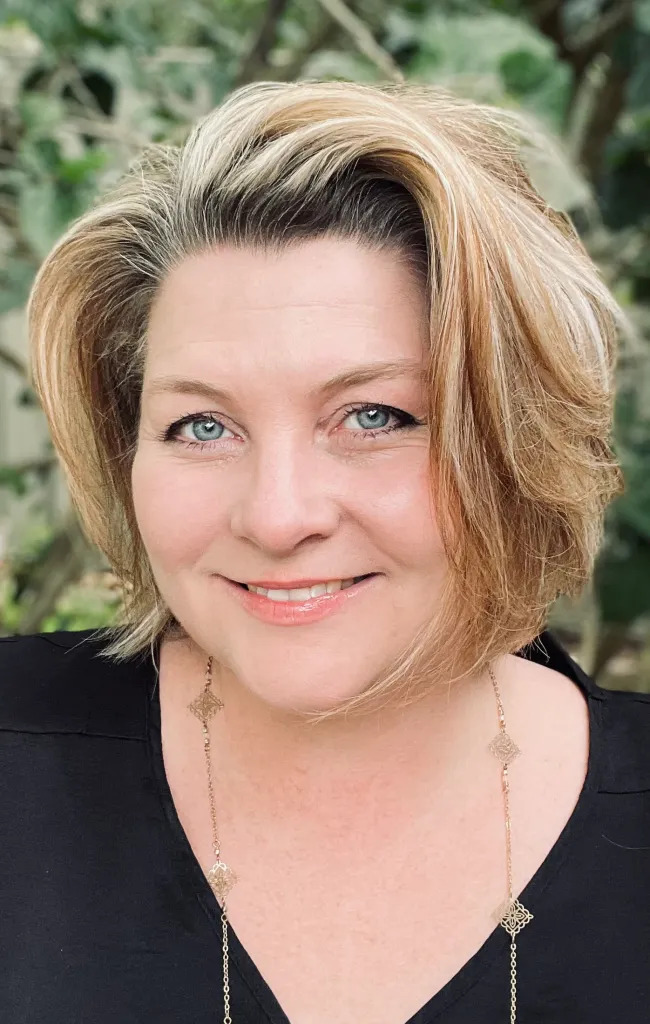
Emma Jayakumar is an award winning Australian composer of opera, ballet and chamber music. Recent major commissioned works for orchestra and ensemble include “Celestial Bodies” for the Darlington Quartet and the Arboria Chamber Music Festival (2026), “Lu” for the Australian Vocal Ensemble (AVE),”Swim With Me” (2024) for Perth Symphony Orchestra and WA Museum Boola Bardip, Our Little Inventor (2022) for West Australian Opera, Bell Birds Suite for String Quartet (2020) for the ABC, and The Adventures of Snugglepot and Cuddlepie (2020) for West Australian Ballet.
Our Little Inventor received outstanding reviews for its innovative score, libretto and performances, including a five star review from Limelight. Emma was awarded the Performing Arts WA award for Outstanding Composition for OLI, the show also receiving an impressive 12 nominations in a total of 11 categories in both the overall and the Musicals and Opera section of the 2023 (including Outstanding New Work, and Best Production). Emma was also nominated for an outstanding score award at the 2021 PAWAs for the ballet score The Adventures of Snugglepot & Cuddlepie (WA Ballet).
Completing a practice-led PhD in composition at WAAPA in 2018, which was subsequently awarded the 2018 WAAPA Research Medal for most outstanding research thesis, Emma is also an award-winning singer, and an alumna of the Royal Academy of Music, the Sydney Conservatorium of Music and WAAPA opera courses, where she also sessionally teaches the next generation of young opera artists. She is a sought-after composer and fierce advocate of engaging and accessible works for young audiences, as well as new music celebrating diverse Australian voices. Her book “Children’s opera and music drama: practical tools for composers and creators” will be released by Routledge in late 2026.
In 2026, Emma will helm the inaugural Arboria Chamber Music Festival as Artistic Director, producing a 3 day festival in the Perth hills featuring chamber music and one act operas, along with community workshops and new work commissions from Australian composers of chamber and vocal music.
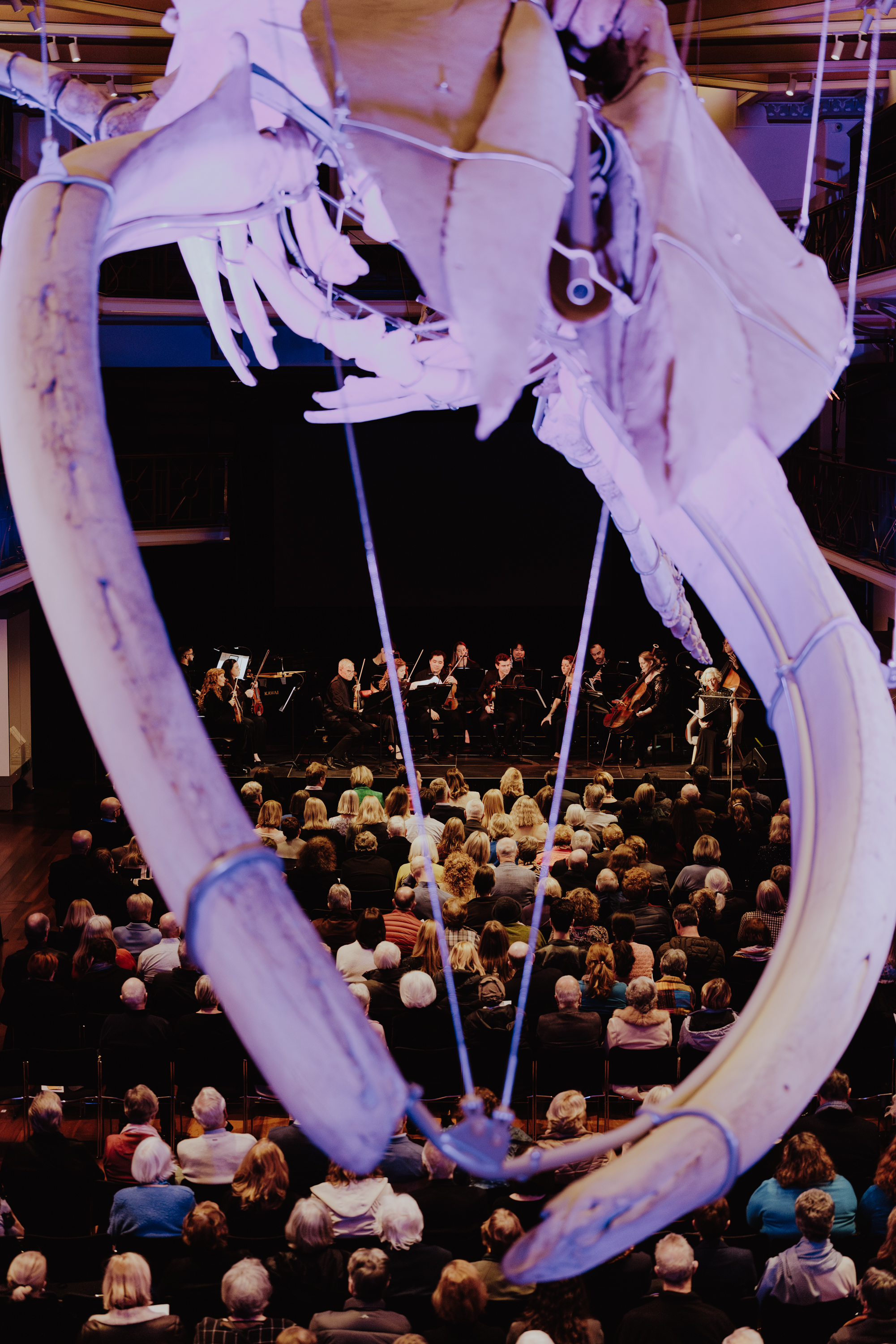
Perth Symphony is renowned for captivating performances that enchant and inspire in unexpected ways. Guided by our principles of Fun, Fresh, and Fearless, we break the rules by activating diverse performance spaces and integrating genres, art forms, and communities.
We aim to bridge the gap between orchestra and community, rewriting the script for orchestral engagement.
Founded in 2011, Perth Symphony serves as a home for freelance musicians, arts practitioners, emerging talent, and technical crew, providing vital and diverse opportunities to grow and sustain their careers.
We're committed to nurturing a vibrant cultural community across Western Australia, inspiring audiences with every performance.”
Related exhibitions