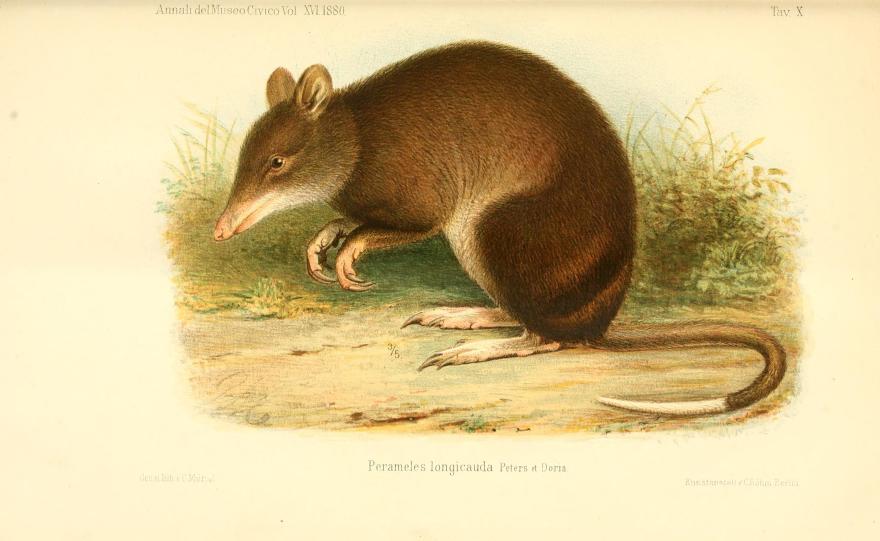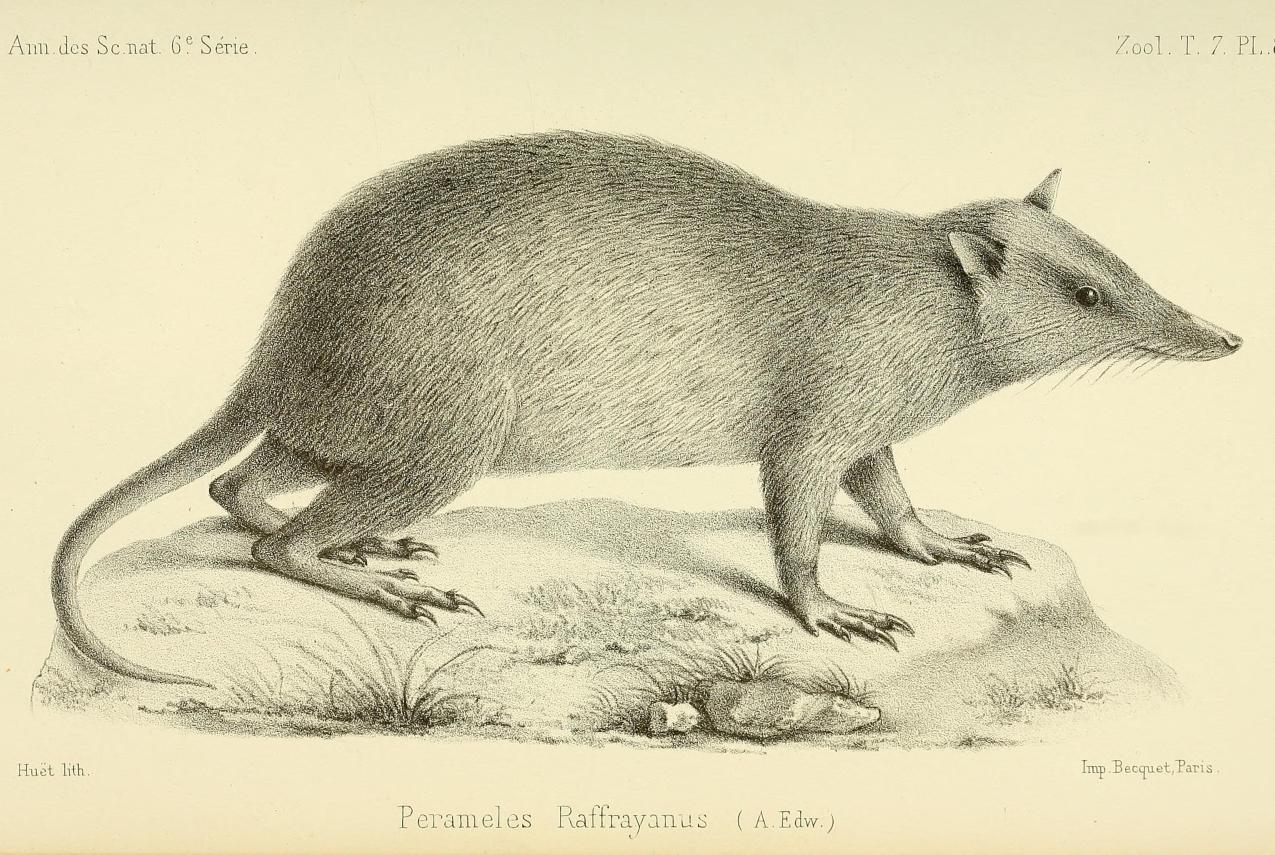
A century after the last Peroryctes bandicoot was identified, scientists led by the Western Australian Museum have discovered a new species from the remote West Baliem River valley in Papua Province, Indonesia.
Dr Kenny Travouillon, Curator of Mammals at the WA Museum and lead author of the study, said the species — now formally named Peroryctes trigonodon — is only the third recognised member of the genus.
“The discovery emerged from a seven‑year taxonomic study that included re‑examining specimens from the Australian Museum’s collection, first documented two decades ago in a mountainous village.
“Specimens like these often gain new significance when fresh research is applied.
“After comparing them with known species and analysing their physical features, it became clear they didn’t match any recognised Peroryctes. Although the DNA was too degraded to use, the anatomical evidence was decisive,” Dr Travouillon said.
New Guinea is one of the world’s richest regions for undiscovered mammals, with scientists estimating that up to 30% of its small mammal species remain undescribed. Bandicoots are among the least studied, and many highland species are known from only a handful of records.
“The region’s long‑nosed bandicoots fall into just two genera: Peroryctes and Microperoryctes. Until now, Peroryctes contained only two recognised species, making the addition of Peroryctes trigonodon a rare and significant scientific milestone.
“It remains one of the most important areas for mammal discovery, and it’s incredibly exciting to add a new species to the genus after 100 years. But it also shows how much of the region’s biodiversity is still unknown.”
Bandicoots in West Papua are generally common, but a few species occur only in isolated mountain valleys. The new species appears to follow this pattern, with all known specimens coming from a single part of the Baliem Valley, suggesting it may have a naturally small range and could be vulnerable to local environmental change.
“The specimens come from one small area, which suggests this bandicoot may naturally have a restricted range. Species with such limited distributions are often at greater risk, simply because any disturbance in their habitat can have a major impact.”
Dr Travouillon said the discovery also highlights the vital role of museum collections in revealing hidden biodiversity.
“This is why museum collections are so important. They let us return to historical specimens with fresh questions, revealing species we didn’t know were missing and informing future conservation efforts.”
This research was conducted in collaboration with the Australian Museum, the South Australian Museum, Adelaide University, The Australian National University, and Bishop Museum.
The full scientific description of Peroryctes trigonodon can be read in The Records of the Australian Museum https://doi.org/10.3853/j.2201-4349.78.2026.3000