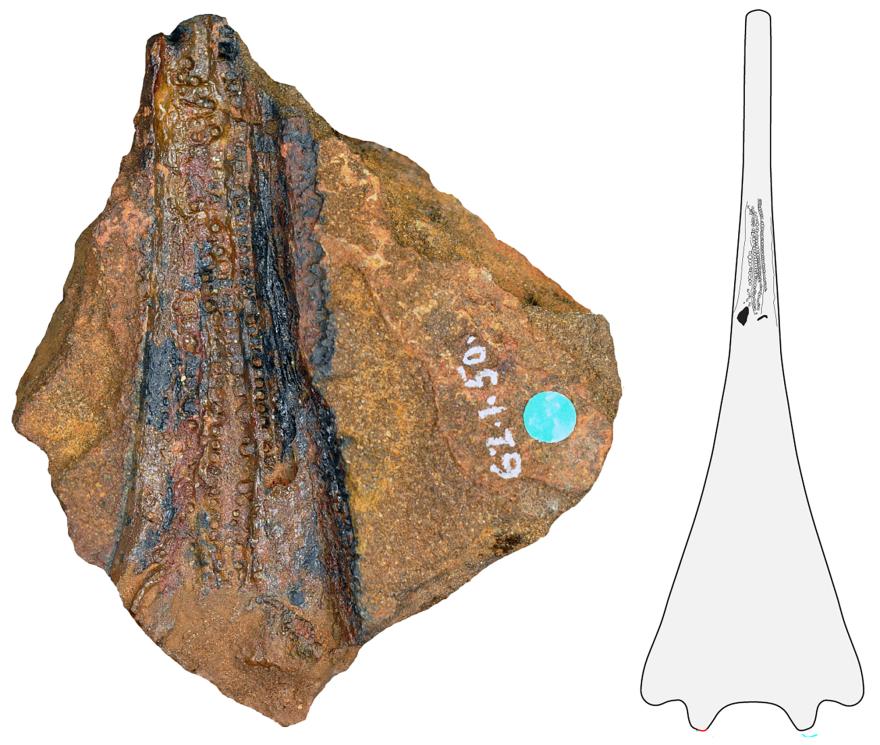
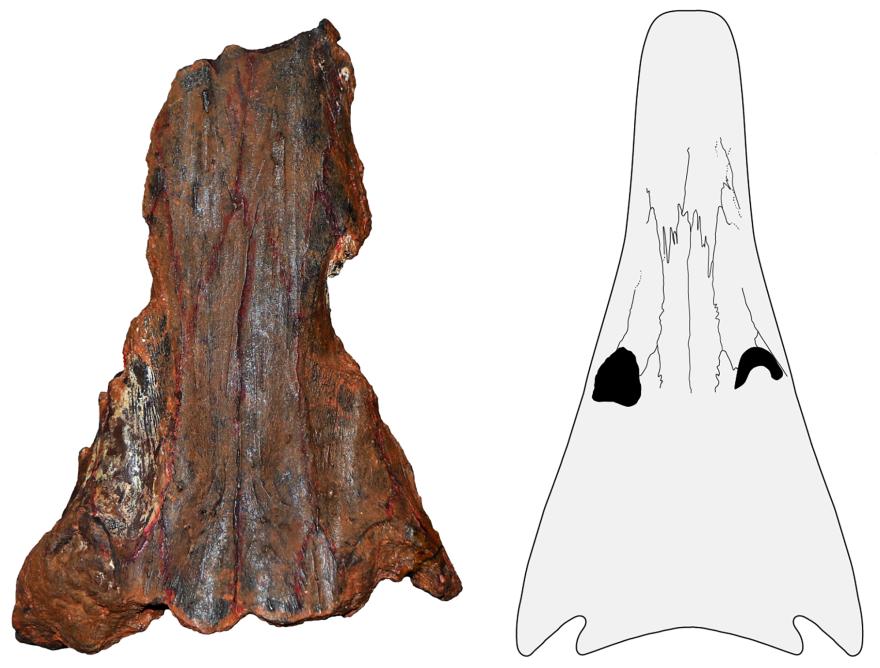
Ancient marine amphibian fossils discovered in Australia in the early 1960s and 1970s were initially described as a single species, Erythrobatrachus noonkanbahensis, named from several skull fragments found on Noonkanbah cattle station, east of Derby. Over time, that original material was split between museum collections in Australia and the United States, with some lost to time. For decades that left an incomplete picture of what had really been found.
Throughout those years, the Western Australian Museum retained a high-quality plaster cast of one of these fossil pieces, helping preserve an important record. When one of those long-lost fossils was rediscovered in a museum collection in Berkley in 2024, the material was able to be reassessed in detail.
A fresh look showed the fossils actually belonged to two different species of trematosaurids. While one of the fossils still reflected the distinctly Australian species, Erythrobatrachus, another was identified as Aphaneramma – and they had previously been recorded from similarly aged deposits in Svalbard, the Russian far east, Pakistan and Madagascar. Notably, their fossils have been found in rocks dating less than 1 million years after the most catastrophic mass extinction event in Earth’s history, the Great Dying.
These ancient amphibians, distant relatives of modern salamanders and frogs, looked a little like crocodiles and were among the earliest limited vertebrates to adapt to life in the sea. However, while Erythrobatrachus had a broader, more robust skull and was likely a larger-bodied predator, Aphaneramma had a long-narrow snout that was better suited to catching smaller fish. Both would have moved through the same waters, but likely targeted different prey.
Taken together, these fossils show that ancient Western Australia was home to a more diverse marine amphibian community than previously thought. They also place the Kimberley in a much bigger global picture, showing these early sea-going animals were already spreading widely, perhaps following the coastal margins of interconnected supercontinents, in the earliest years of the Age of Dinosaurs.
You can read the full research paper published in the Journal of Vertebrate Paleontology: https://doi.org/10.1080/02724634.2025.2601224