Conducted aboard R/V OceanXplorer, the research brought together OceanX, Minderoo Foundation, Minderoo OceanOmics Centre at UWA, the Western Australian Museum, the Living High Seas Initiative and Nanyang Technological University in Singapore.
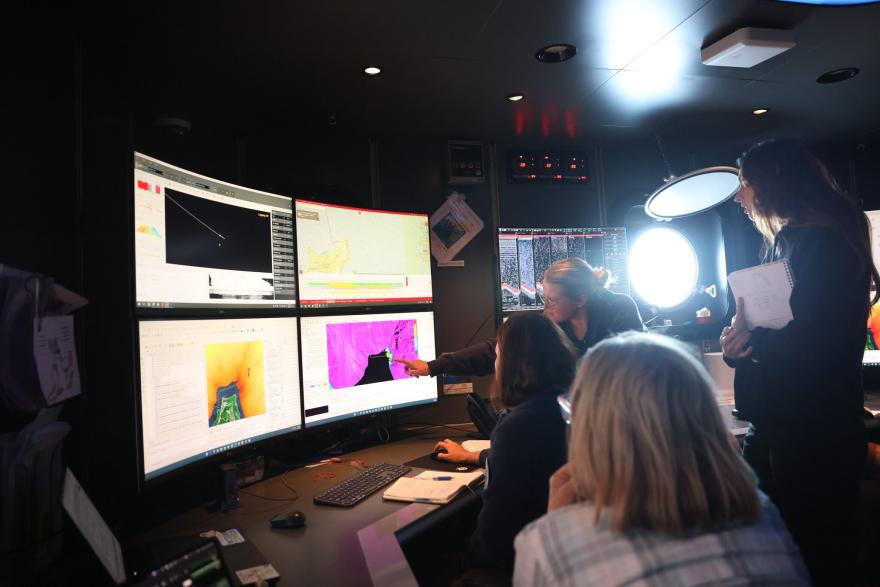
The team surveyed two seamount features within Roo Rise, a remote underwater mountain range located near Christmas Island, using high-resolution seafloor mapping and remotely operated vehicle (ROV) surveys to document their structure and biodiversity. Environmental DNA (eDNA) sampling, water-column profiling, plankton surveys and targeted specimen collection produced complementary datasets spanning the seafloor through the upper ocean.
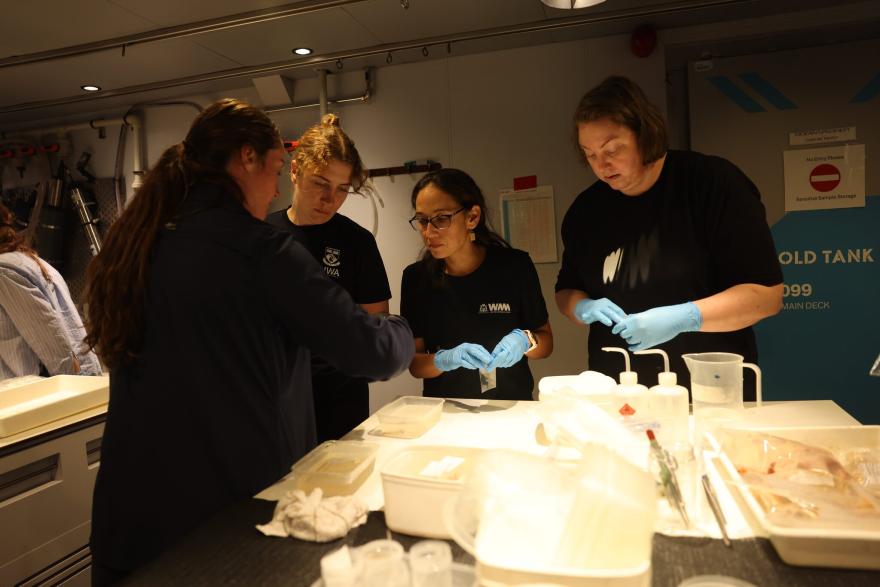
WA Museum scientists contributed taxonomic expertise and specimen-based research, helping to document deep-sea life.
Expedition outputs include:
- 12,833 square kilometres of seabed mapped, including 9,333 square kilometres in international waters. Approximately 8,232 square kilometres, or 64% of the total area, represents new mapping when compared with existing global and Australian datasets.
- Eight ROV dives, one submersible dive, nine CTD casts, 15 bongo net deployments and six XBT deployments. The deepest CTD cast reached 3,845 metres.
- 2,365 samples recorded across the expedition’s scientific workstreams, including 329 specimen lots and 528 eDNA samples collected across ROV transects and CTD stations.
- Tissue samples from 243 specimens across nine phyla collected for whole-genome sequencing and the development of genomic reference resources in collaboration with the OceanOmics Centre.
Preliminary observations documented extensive sponge gardens and coral communities across Roo Rise, including large habitat-forming species and taxa recognised as indicators of Vulnerable Marine Ecosystems. Several surveyed areas supported dense coral and sponge assemblages with diverse associated communities of echinoderms, crustaceans, molluscs, annelids and fishes.
Scientists also identified four xenophyophore morphotypes that may represent undescribed species, subject to further taxonomic and molecular review. An unusual seafloor habitat consisting of probable early diagenetic carbonate colonised by abundant agglutinated foraminifera was also documented during a Roo Rise dive.
The specimens collected will now become part of the Museum’s permanent reference collections, where they can support species identification, taxonomic description and future deep-sea biodiversity research.
“The real legacy of expeditions like this lies in the specimens that come back to the Western Australian Museum collections. While the footage is spectacular, it is the specimens that allow us to verify what we've seen, describe the species, and provide a permanent record that scientists can return to as new questions and technologies emerge” said Jennifer McIlwain, Director of Science at the Western Australian Museum.
Read the full media release from OceanX here.
Want even more ocean science?
During the expedition, more than 100 people visited WA Museum Boola Bardip for a Live Cross with scientists aboard the vessel. If you missed the excitement, the full recording is now available to watch on YouTube.
Closer to home, OceanXperience at WA Museum Boola Bardip gives families an interactive look at the science and technology used aboard R/V OceanXplorer, and how researchers explore some of the least understood parts of our ocean. The exhibition closes on Sunday 11 October.