Reef Investigators - Secondary
Dates
Tuesdays & Thursdays, 9.30am–11.30am | 28 July - 5 November 2026
Curriculum
Science, Science inquiry skills, Science understanding, Sustainability
Facilitated session: $150 per class not including VR screening. Maximum of 2 classes, booked in conjunction with Life in the Great Barrier Reef class visit.
VR session group entry is $10 per person for education groups (minimum 25 pax, 30 maximum for VR headsets)
Bookings
Please send an email to education@museum.wa.gov.au to book. Full booking information requirements can be found below under "Booking instructions".
Duration
120 minutes includes VR screening and facilitated session
Take your students on a journey to discover the reef, explore the challenges and inspire meaningful actions
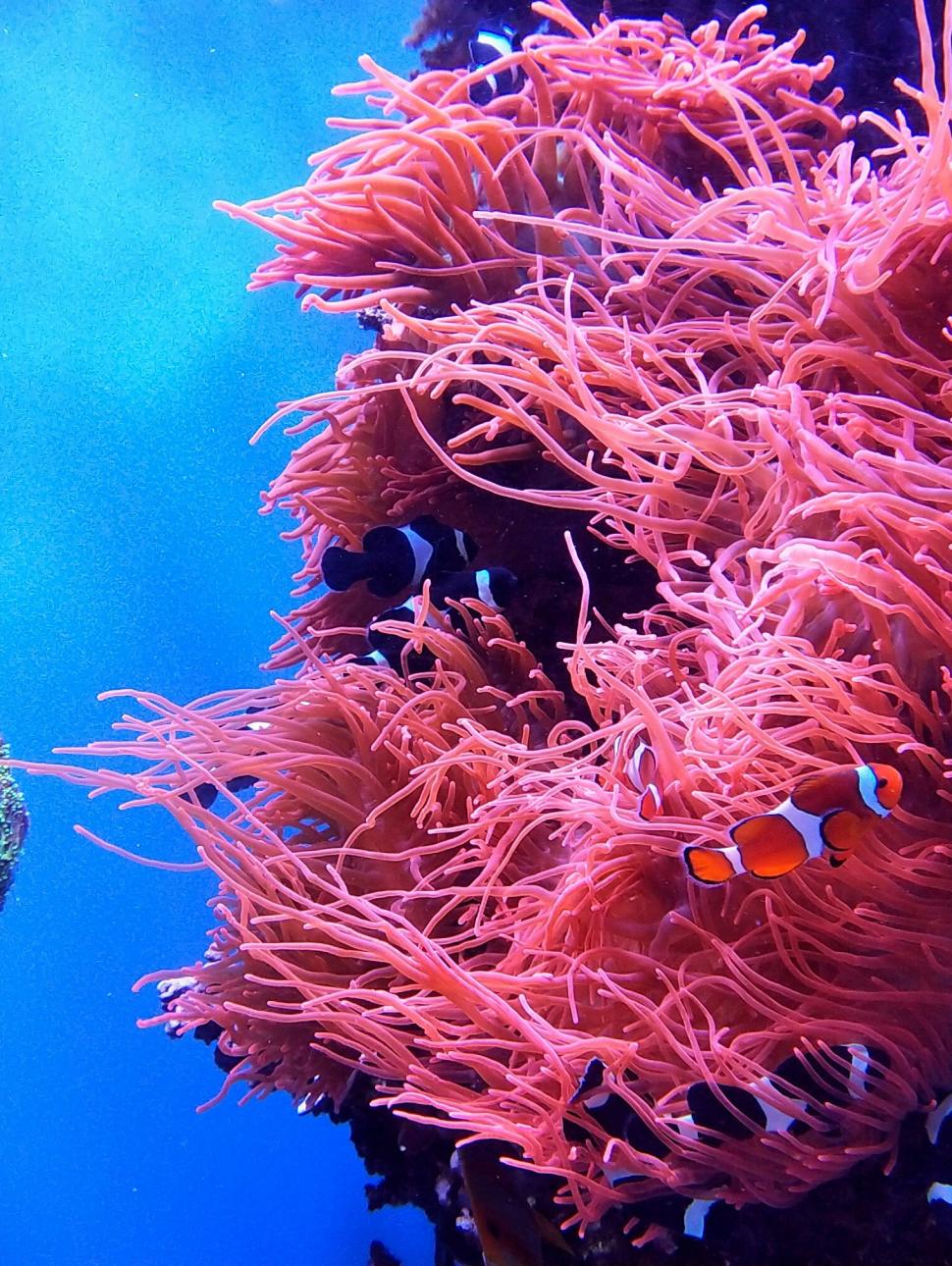
This program offers a facilitated learning opportunity designed to complement the Life in the Great Barrier Reef VR exhibition experience. Your students will be inspired by the splendour of the Great Barrier Reef, experiencing the heightened immediacy and connection offered through a 360 degree immersive view. Reef Investigators offers students an opportunity to deepen their scientific understanding about the ecosystem of the Great Barrier Reef and the evidence-based insights that will assist us in navigating the challenges of the future.
Using hands-on learning and group discussion, this program uses a ‘Think Global, Act Local’ ethic of connecting the challenges facing the Great Barrier Reef to Perth’s marine environment (Cockburn Sound, Marmion Marine Park). This aims to empower students with real actions that connect with the sustainability themes of Life in the Great Barrier Reef experience.
This curriculum-based program has a focus on sustainability as a cross curriculum priority link, aligned with United Nations sustainable development goals. This program has been developed to offer students an in-depth facilitated learning experience in conjunction with a visit to Life in the Great Barrier Reef screening session. Please review the information for teachers planning school visits to Life in the Great Barrier Reef and VR experiences to ensure that this option is right for your group.
Key Learning Outcomes
Students will experience Life in the Great Barrier Reef as a group before commencing the Reef Investigators facilitated program. The program aims to encourage students to think deeply about the nature of the Great Barrier Reef ecosystem and the scientific insights that allow us to address environmental challenges to the health of the Reef.
Key learning outcomes include these concepts and processes:
- Describe marine ecosystems as dynamic systems that are shaped by both biotic (living things) and abiotic (non-living) factors (temperature, pH, predation, competition) which determine population size and species diversity
- Represent energy flow in a Great Barrier Reef food web and predict cascade effects of species loss or population explosion
- Analyse and interpret real data tables from Great Barrier Reef sea surface temperature and coral bleaching data to identify trends and construct evidence-based arguments
- Evaluate proposed scientific responses to reef decline and consider their social, environmental and economic implications
- Connect reef science insights from the Great Barrier Reer environment to local WA marine ecosystems and identify personal and community-scale actions that promote marine sustainability.
Booking instructions
Step 1 – Creating your class rotation
- We can accommodate up to 2 classes of 30 students maximum (25 students minimum) for Life in the Great Barrier Reef per day – mustering from 9:30am for a screening starting at 9:45am. This option is only available Tuesdays and Thursdays during the screening season. Screening program runs for 35 mins.
- The Reef Investigators facilitated program commences 10:30am (60m minutes duration) subsequent to the screening session for all students.
Step 2 – Making a booking
Please send an email to education@museum.wa.gov.au with the following details and we will begin to process your booking.
- Program choice: Reef Investigators: Secondary
- Preferred visit dates and session times (Tuesdays or Thursdays)
- Number of *classes & student numbers in each class
- Number of attending adults per class
- Contact Teacher name, email and mobile number
- School
*Please note that there is a maximum of 2 classes, with 30 headsets per class for the VR experience. Additional group members can experience the screening in-room only.
Step 3 – Planning your visit
- Don’t forget to read the Planning Your Visit section (below) so you are prepared for your visit to the Museum.
- If you are booking for more than one class, please share this page with your fellow class teachers.
Please email education@museum.wa.gov.au or call us on 1300 134 081 to discuss other booking options if the options above are not suitable.
Booking conditions
- We may need to refuse entry if we are already at capacity at your selected Museum and you haven't pre-booked.
- Each part starts on the hour, and we are unable to shorten the program (especially if you are rotating with another school).
- For the best learning outcome, we recommend a maximum of 30 students per session. This is due to constraints on the audience space in the Life in the Great Barrier Reef exhibition. However: a group of 32 can be accommodated, with a limit of 30 headsets available for VR immersion. A minimum supervisor ratio of 1 adult to 10 students is required, however a ratio of 1 to 6 is supported for this program. A minimum of 2 adults per group is required to supervise the screening session without wearing VR headsets to assist with student behaviour and any issues experienced with VR immersion. Note that there is still a quality in-room experience for those who are not wearing VR headsets.
- Bookings need to be made 14 days before the date of your visit in order to secure a class booking in the VR screening schedule.
- Changes to dates and times are subject to availability.
Refunds are not available if you cancel your booking within 14 days of your visit.
Curriculum Links
Programs and exhibitions at the WA Museum support teachers in their delivery of the WA Curriculum to their students. The Reef Investigators program has been developed to assist teachers in addressing the following content descriptions from the Western Australian Curriculum:
Curriculum Areas that link to these requirements for secondary students are:
Year 7 Syllabus - Science Understanding
Biological Sciences
Food chains and food webs can be used to represent energy flow in ecosystems and predict possible impacts of human activity (WA7SSUB2)
Year 8 Syllabus - Science Understanding
Biological Sciences
Flowering plant and vertebrate systems carry out specialised functions that enable them to survive and reproduce (WA8SSUB2)
Year 8 Syllabus - Science Understanding
Earth Sciences
The theory of plate tectonics explains global patterns of geological activity (WA8SSUE1)
Year 9 Syllabus –
Biological Sciences
Plants and animals have structural, behavioural and physiological adaptations that enable their survival in their environment (WA9SSUB1)
Biological Sciences
Population size and species diversity can be affected by abiotic and biotic factors; sampling techniques can be used to monitor (WA9SSUB3)
Earth Sciences
Global systems, including the carbon and water cycles, rely on interactions involving the biosphere, lithosphere, hydrosphere and atmosphere (WA9SSUE1)
Earth Sciences
Changes to global systems can be used to explain patterns of global climate change (WA9SSUE2)
Science Inquiry Skills, Processing and analysing data and information.
Analyse and connect a variety of data and information to identify and explain patterns, relationships and anomalies (WA9SSIPR2)
United National Sustainable Development Goals addressed:
- Industry, Innovation and Infrastructure
- Climate Action
- Life Below Water
- Sustainable Cities and Communities
- Life On Land

