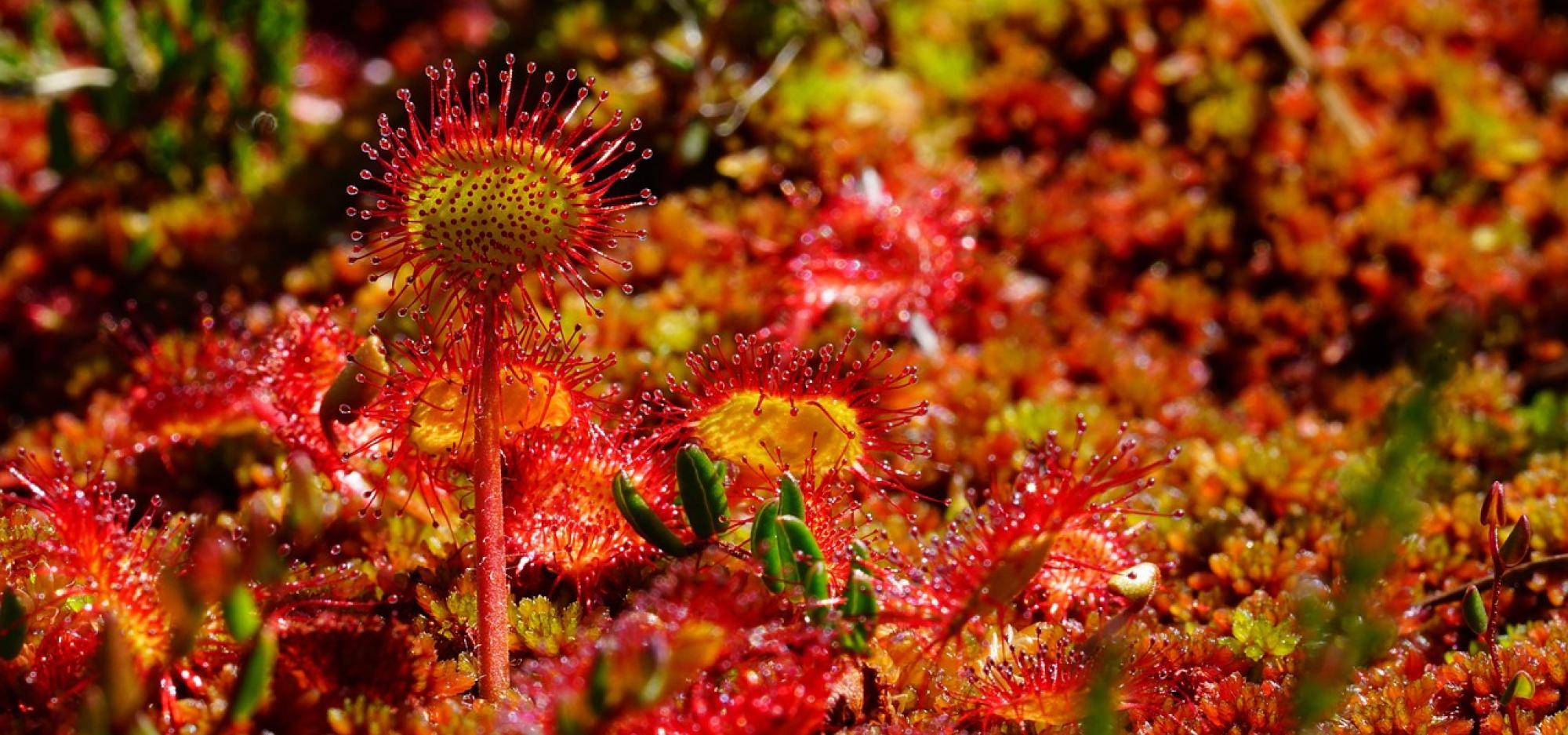
Meet the Museum: Carnivorous Plants of WA
Trapped! Inside the world of WA's carnivorous plants
Western Australia is home to an incredible diversity of carnivorous plants, which use their leaves to capture and digest animal prey. This unusual nutritional strategy has long been a source of fascination and inspiration, from Charles Darwin’s elegant glasshouse experiments to the monstrous myths of people-eating plants in popular culture.
Some of these carnivorous plants, including the sticky-leaved sundews (Drosera) and rainbow plants (Byblis), the suction-trapping bladderworts (Utricularia), aquatic Venus flytrap (Aldrovanda), and Albany pitcher plant (Cephalotus).
Join Dr Laura Skates to discover how these amazing plants capture and digest their prey and hear stories of the fascinating history of carnivorous plants.
Meet the Museum
Are you curious about the fascinating world behind the scenes at the Museum? This monthly program delves into the less visible parts of the Museum’s work, as scientists, researchers, historians and curators share their expertise and passions.
-
Episode transcript
Arlene Moncrieff: Welcome to the Meet the Museum for this session on carnivorous plants of W.A. with Doctor Laura Skates. I usually like to start by giving a little introduction about our presenters. So, a little bit about you, Laura:
Doctor Laura Skates is a botanist, artist, and science communicator who had the pleasure of studying carnivorous plants for her PhD. In her research, Laura is fascinated by how plants interact with the world and how people interact with plants. She completed her PhD on the nutrition and ecology of carnivorous plants at the University of Western Australia, supported by the Kings Park Science and the University of Bayreuth Germany. Laura works in environmental science communication roles, where she enjoys engaging with people about the wonders of Australia's native plants. You can find her on Instagram. Strange that. Okay. @floraskates.
Okay, so we're delighted to have you here, Laura. It seems like it's been a while. We've had this one lined up for quite a few months now, and finally you're here. So, would you please put your hands together and welcome Laura.
Dr Laura Skates: Thanks so much, Arlene, for that introduction. And hello, everyone. It's really lovely to be here with you all.
Yeah. So, my name is Laura, and I, as Arlene said, was lucky enough to be able to study carnivorous plants for my PhD. And it was a really wonderful experience because they are such amazing plants and I when Arlene got in touch with me about doing this, Meet the Museum on Carnivorous Plants, I sort of wanted to, I guess, look at carnivorous plants from the point of view of the amazing adaptations that they have and their incredible ecology, but also because we're in a museum, hopefully weaving some stories around the history of carnivorous plants and our connections with them. So, before I go any further, I'd also like to acknowledge that we're meeting on the lands of the Whadjuk Noongar people, and pay my respects to Elders past and present. During my PhD, I was really lucky to be able to go all over Western Australia. All over the southwest corner of WA and up into the Kimberley region, where there is an incredible diversity of carnivorous plants. And so, I'd also like to pay my respects to the local traditional owners of all of those spaces that I was able to travel through.
And just to give you an idea, hopefully you can see the screens. Okay. This is one of the ecosystems where I was doing my research, up in the Kimberley region. That's me down in the corner there. And it might not be the kind of place that you would expect when you're hearing the words ‘carnivorous plants’. I'm sure that probably a lot of you aren't picturing a scene like this. In fact, some of you may be picturing a scene a bit more like this. So, for those that don't know, this is a production of Little Shop of Horrors with ‘Audrey II’ the monstrous, alien plant creature, that can talk and sing and is hungry for blood. And you can see in the second picture that it's feeding on a very unfortunate human. And I wanted to share these images because I think when we talk about carnivorous plants, a lot of the time people might think about these sorts of, plant horror tropes that carnivorous plants are so often portrayed through. And there's so many examples, not just Little Shop of Horrors. You can see the movie version, poster here, or one of the movie version posters, I should say. Others might be familiar with Day of the Triffids, which was originally a book and has been adapted into radio, TV series, films.
And there are many, many other examples from more recent popular culture as well. So if anyone that plays ‘Super Mario’ games, you might know the sort of, piranha plant that comes out of the sewers. Has anyone played Plants Versus Zombies? Yes, I see. Great. So, in Plants Versus Zombies, it's a mobile or computer game, and you are trying to defend your house from the horde of zombies that are coming to attack you, and your defense is your garden. And so, you plant various different kinds of plants to protect yourself from the zombies. And one of them is this ‘chomper plant’ which can eat the zombies. The other example, is everyone familiar with Pokémon as well? Yes. Yep, yep. So, there's ‘Victreebel’. Which is, rather than being a sort of Venus Flytrap inspired portrayal, it's based on a pitcher plant. So, we see carnivorous plants portrayed in these kinds of ways quite a bit. And I wanted to bring you back in time, in history. The final image there, which hopefully you can see is from the Victorian Gothic era and it's an illustration of what's called the ‘Yateveo’ or ‘I see you’ carnivorous plant. And it's a fictional portrayal again, but it was from around a time when there was a lot of exploration around the world, and some people were bringing back these, sort of, fantastical stories of man-eating creatures from, you know, distant lands. And this is just one of those sorts of examples. There were some others similar to this with sort of serpent-like branches that coil around the victims. So, yeah, these sorts of monstrous portrayals of carnivorous plants have been around for quite a long time, or, you know, around as long as we've been actually sort of studying the carnivorous plants in, in Western science.
So, I guess I wanted to make the point, though. This is, again, ‘Audrey II’ from Little Shop of Horrors that the reality of carnivorous plants is quite different. And you can see here the Venus Flytrap that ‘Audrey II’ is based on. And there are, of course, some similarities there, but I guess I wanted to point out that, yeah, the reality of carnivorous plants is just really incredible. They are amazing plants that have these incredible adaptations.
And you might all be familiar with the Venus Flytrap, but there's actually way more carnivorous plants in the world than just the Venus Flytrap. So, if you can't read the screen, it's saying: ‘It's not just Venus Flytrap’. So, there's actually about 800 carnivorous plant species worldwide. That's an estimate. So, kind of an amazing amount. Even more amazing than that, in my opinion, being from WA is that here in Western Australia we are a global hotspot for carnivorous plant diversity. We live in a really special place here in WA with an incredible diversity of, not just carnivorous plants, but many other kinds of plants and animals. It's a really amazing space for carnivorous plant diversity.
One of the other bits of history that I wanted to bring up when we're talking about Western Australian diversity of carnivorous plants, and because we're here in the WA Museum, I wanted to bring up a name of Rica Erickson. Is anyone familiar with Rica Erickson? Okay, I'm seeing a few hands up. So Rica Erickson was, a naturalist based here in Western Australia and, and a historian as well. And she wrote many books about our native plant life. She wrote about orchids and trigger plants and about plants of prey. You can see this is sort of a bit of a sneak preview of some of the species that we're going to be talking about today.
And I wanted to mention this particularly because there is actually a little exhibit, based on Rica Erickson here in the museum. It's downstairs under where the whale is. There's a, there's a sort of exhibit there. So, I've brought a book with me that's a kind of biography of Rica Erickson. So if anyone's interested and wants to have a look at the end, you're more than welcome to. But I wanted to bring her up because she was really prolific and is quite a big inspiration for the work that I have done. And yeah, she did some amazing illustrations, as you can see, of the different carnivorous plants of Western Australia in particular.
What I want to do now is go through the different groups of carnivorous plants that are native to here in WA. Can I see a show of hands who's already familiar with the Sundews? Well, the Drosera. Okay, there's quite a few hands. Okay, but not everyone. Cool. So, the Sundews are, we have the world's greatest diversity of Sundews here in WA. Over 100 or so species of them. And they come in an incredible array of shapes and sizes. See, there's some examples there. If you've been on a bush walk anywhere in the southwest or up in the Kimberley region as well, you will probably have seen a Sundew, even if you didn't realize that it was a Sundew. Some of the characteristics of them is that they've got these amazing sticky little kind of hairs all over their leaves, which have the little sticky dewdrop on them.
So, another example here, so you can see some of the amazing diversity of, of the Sundews with these, ones that climb up, the one on the left. You might be able to see that some of the sticky leaves have actually caught on to some of the other vegetation to help them climb up higher. And the one in the middle, if you follow the stem from the bottom up, you can see that it zigzags. That one's called a Drosera zigzagia. Yeah. So, and then this example here was kind of just to, to illustrate again this point that the Sundews come in so many different shapes and sizes. So, the one on the left is kind of pygmy Sundews, which look quite large there, but they're actually about the size of a $2 coin. So, each of the little sticky traps are only a few millimeters across. And then the one on the right is one called Drosera gigantea, because it is more gigantic. It's not humongous, but it is kind of more shrub like. It's more, sort of, hardy in the stems that it produces.
So, yeah, there's a real range of these Sundews. And if you're not super familiar with them, I'll just explain how the traps work. So, you can see on there that they've got these, in these examples, they've got these, sort of, sunburst looking, leaves which have the sticky hairs with a sticky dew drop at the end. Now, sticky dew drop at the end is for capturing the prey. It's, sort of, acts like a kind of glue that holds the prey. And then when an insect comes along and lands in the, or, on the trap, then the sticky tentacles can actually wrap around the prey, and sort of hold it in place. And then what happens in the middle of the leaf is that the leaf releases digestive enzymes to break down the prey, kind of the same as what we do in our stomach, but it's happening on the leaf surface, breaking down the prey, and then they can absorb the nutrients from the prey into the leaf. How do we even know that these plants are carnivorous? Part of the story of this goes back to this glasshouse which belongs to a very famous naturalist by the name of Charles Darwin. I'm sure many of you are familiar with Darwin from his work on, you know, evolution and theories of natural selection. But Darwin was also really, really fascinated by carnivorous plants.
So, he did a number of experiments here in this glasshouse. This is his actual glasshouse in Kent, in England. I got to visit there a number of years ago and if you are ever over that way, it's definitely worth a visit to Darwin House to see, go through the house, go through the gardens and the glasshouse. But Darwin spent a lot of time in this glasshouse doing all sorts of weird and wonderful experiments on carnivorous plants, and he was particularly fascinated by the Sundews. And I wanted to illustrate that with a couple of quotes from some of his letters to some of his colleagues. So, this first one, he wrote to a colleague, Charles Lyell:
“At this present moment, I care more about Drosera than the origin of all the species in the world. But I will not publish on Drosera until next year, for I'm frightened and astounded at my results.”
So, the second part of that quote is really going to show that at that time, it wasn't an accepted idea that plants could be carnivorous. At that time, it was, you know, there was this natural order of things. Plants are at the bottom. And then animals and so on. So, the idea that plants could kind of flip the tables on animals and capture them and digest them was sort of, just not really, a commonly accepted idea.
And so, Darwin spent a number of years working on his experiments with these carnivorous plants, so that he was really sure when he went to publish, that he's really right in what he's saying.
This is another quote from another letter.
“You are unjust on the merits of my beloved Drosera. It is a wonderful plant, or rather, a most sagacious animal.” Sagacious, just meaning clever.
“I will stick up for Drosera till the day of my death.”
So, he really loves Drosera. He ended up, publishing his experiments into a book, ‘Insectivorous Plants’. I've got a copy of it here as well, so that if you want to have a look later and you can see this Sundew on the cover of this one, most of the, quite a bit of the work is focused on the Drosera, but he also studied other carnivorous plants as well.
But you might be wondering. Well, what was he actually, what was some of the experiments he was doing with these carnivorous plants to try and understand them better? So, this is an illustration from one of the chapters about Drosera where he was, kind of, experimenting with how do the leaves react to different substances. So, he tried putting all sorts of things onto the leaves of these plants and then just observed what happened. So, he tried putting, you know, like a little piece of sand, a bit of glass, a bit of cheese, a bit of meat. In these examples, the one on the left soaked it in a solution of phosphate of ammonia. And what he found was that over time, though it started with the sticky tentacles all out, and then over time, they all had wrapped around into the middle. And then the one on the right he placed, I believe it was a little piece of meat on one side of the leaf and found that over time, the tentacles on that side wrapped around, and then eventually other tentacles would, would wrap around as well. So, he did a number of experiments like this. And what he concluded was that these plants are really responsive to things that have nitrogen in them. So, they weren't really responding to a piece of glass or a piece of sand, but they were very responsive to things like phosphate of ammonia or a piece of meat or cheese. And so, this was part of the evidence base that he was building to show that actually, these plants are adapted to be wrapping around things with proteins in them. So, insect prey.
And yeah, that this is just another example showing this, book of his again with a Drosera on the cover. This is an older version of it. The one on the cover there is a Drosera rotundifolia which is from the northern hemisphere. At least, I took this photo in the northern hemisphere.
So, Darwin did all sorts of weird and wonderful experiments with carnivorous plants, and he was the one to provide the first really comprehensive piece of evidence that these plants are really carnivorous.
He wasn't the only person interested in carnivorous plants at that time or the only person studying them, but he often gets a lot of credit because he wrote this amazing book detailing all of these amazing experiments and ideas. But I'll talk about some other people a bit later. So, I wanted to move on. Now that's the Sundews. Actually, while I'm here, the next one that I want to introduce you to is called the Waterwheel Plant, or the scientific name is Aldrovanda vesiculosa. It might not seem like it, but the Venus Flytrap that we saw at the start and then the Sundews and then this one here, are actually all part of the same family. They are in the family Droseraceae, so they are all closely related to each other, even though the Venus Flytrap has the snap trap, and the Sundews have the sticky trap. And then these ones actually also have a snap trap. So, you can see it a little bit better here. The Water Wheel plant is, that's the common name because of this kind of water wheel shape of the whorls of leaves on the stems and each of those little kind of water wheel bits, are actually the traps and they're tiny little snap traps. They're only a few millimetres across each of those traps. And this plant floats on the surface of the water. So, in sort of ponds and swamps and places like that, and you can see on the left photo, on the right, that there's a mosquito larva that's stuck, sort of sandwiched in to one of those traps. There. So, they're great plants in that they capture all the mosquito larvae, which, you know, we do need mosquitoes, but we also need to control them sometimes. So, it's good having Aldrovanda around to help with mosquito control, but they also catch other aquatic insects.
The other reason why these ones are so fascinating is because in Western Australia, they found in two very distinct places. So, there's one population known about in the Kimberley region, and then the other population is all the way down in Esperance. So, it's very, very disparate, populations. And that's kind of a bit of a theme with Aldrovanda. It is, found all around the world. So, it's native to Australia, Asia, Africa and Europe, I believe. And everywhere that it's found it’s this particular species, Aldrovanda vesiculosa, that's the only species that's known about. And people have done genetic studies of this plant all around the world and found that it's really quite genetically similar in all of the different populations, which is a little bit weird, because usually there would be a little bit of genetic diversity diversification occurring, with disparate populations. But I think part of the reason for that is because this plant, while it does have flowers, as you can see, the flower poking up out of the water to be pollinated by some sort of flying insect, it doesn't tend to get pollinated very often, and it actually reproduces more often, asexually, through budding. There's an example.
The way that these plants grow is that they have a growing end and a dying end. And in the one that I pointed out, there's two growing ends. It's sort of split off at the front. So, it will have been growing along, and then had a new growing end appear, and as it grows, the back end dies away. And so eventually those two will split because the, the back will die away and they'll become two new individuals. And so, what they're doing as well is that the dying end, they're sucking up the nutrients from that dying end and then letting those leaves go, and then that way they can put more energy into the growing and to keep on growing.
So yeah, these are a really, really fascinating plant and not one that you will often be able to see. I've actually not seen it in the wild myself. I've only seen it in an ex- situ conservation collection. The third group that I wanted to talk about is the bladderworts or Utricularia. Now these ones don't have a very pretty name, but I think that they are very, very pretty plants. And you can see these are just some examples of the amazing Utricularia flowers. And they come in all different colors and shapes and sizes.
The one in the middle is from up in the Kimberley region. And then the two on the right, on the left and right. We get down here in the southwest. The one on the right, commonly called the Red-coats because of the look of the flower. And the interesting thing about these ones, what we're looking at here is that we're looking at the flowers, but we're not actually seeing the traps. The traps of these particular plants are actually just below ground in the soil. So, these plants are capturing tiny little insects and protozoans that are in the soil layer, and they need to be in quite moist soil for their traps to work. And I'll explain the traps in a moment. It's a little bit hard to explain the traps with these terrestrial species, because you can't see the traps very well, but luckily there's also a lot of aquatic species of Utricularia. So, these are ones that are similar to Aldrovanda, float on the surface of ponds and lakes and swamps, and these ones have their traps rather than being in the soil, it's in the water.
Yeah, those are just two examples that you can see on the left here. This one has a sort of flotation device, the sort of star shape that helps the plant to float and keeps the plant upright. And then the one on the right is a little bit more like Aldrovanda where it's got this sort of long stem a bit more below the water.
And so, this is a close up of some of the traps, of Utricularia under the water. And these ones have one of the weirdest kinds of traps of carnivorous plants. It's called a suction trap and it's kind of like a bag with a trap door lid. And it's got like a vacuum suction kind of action that helps it to pull the prey in. So, what you can see here is the sort of bag shape. And at one end of it, it will have a very small little opening, which is a kind of trap door lid. So, it opens inwards, but it doesn't open outwards. And what will happen is, an insect will swim along and make contact with the trap door lid. It has little trigger hairs on it, which will then trigger the trap to activate. The way the trap works is actually the bag; it actively pumps water out of the bag through the cell walls, and that means that it creates this kind of a vacuum because it's moving the water out. And then when the door opens, water wants to rush in to get to equilibrium again. So, the plant is actively pushing water out to kind of create this sort of shape. Then when the insect reaches the trap door, triggers it, and it suddenly opens, pulls the prey in, trap doors closed, and prey can't get out. So, it's a little bit gruesome sometimes when I explain the traps of these carnivorous plants. They're quite amazing in how they have evolved. But this, the fascinating thing about this one as well is that it's actually the fastest, one of the fastest known plant movements that's been recorded. So, this happens in, you know, much less than a second. People have done some slow-mo filming of them. So, if you want to see that, I would recommend, yeah, having a look on YouTube that some often with a funny soundtrack. There are some videos of these traps just suddenly opening and pulling the prey in.
Now, part of the reason why we know that that's how these plants work is, thanks to this woman: this is Mary Treat. So, this is one of the people that I was mentioning earlier who, it wasn't just Charles Darwin who was working on carnivorous plants. There were many other people doing research around the same time. And Mary Treat is one of them. She was based in New Jersey in America, and she was fascinated by the natural world. She also wrote a book called Home Studies in Nature, which has a series of experiments that she did, a lot of it being in her garden or in her local natural environment, and she was also fascinated by the carnivorous plants. And the letter on the left is actually a letter that Darwin wrote to Mary. They had correspondence with each other, and she had sent him some observations, and he was writing back to say:
“Dear madam, I'm very much obliged to you for having so kindly sent me an account of Drosera filiformis. Your statements will be very useful to me in my short account of this species.”
So, she was studying Sundews as well. And, but in particular she was looking a lot at the Utricularia, and she spent a long time looking down a microscope, at these plants, and observing how the traps were working.
There were some other ideas about the traps at the time. I think there was an idea that they might, those traps might serve as a kind of flotation device for the plant. It was also an idea that the prey must just force their way inside the trap. They just sort of get to the trapdoor lid and push themselves in, but it was Mary's observations that revealed that actually the trap is more sophisticated than that, and the prey are not just pushing their way in, they are getting sucked in. She's an amazing figure in the history of carnivorous plants as well. Onto the fourth group that I want to talk about. This is the Rainbow Plants, or Byblis. Now these ones might look a little bit familiar, or similar, if you're familiar with the Sundews, because they’ve also got the very sticky trap. You can see the leaves there have these little sticky hairs. But, actually, Sundews and Byblis are not related at all. They've evolved completely independently in different orders and different families but just resulted in a very similar kind of trap. This sticky trap.
And that's actually something that has happened multiple times throughout the evolution of flowering plants. There are sticky leaved, I think there's about seven different genera of sticky leaved carnivorous plants. Most of them are all in different families have evolved completely separately. So, for example, there is Drosophyllum, native to the Mediterranean part of Europe, and that has evolved completely separately, but looks quite similar to Sundews and looks quite similar to Byblis. So, it's a really cool example of convergent evolution, where these separate families have evolved to have a very similar adaptation.
One of the, these are two examples of Byblis. The one on the left is Byblis gigantea from here in the southwest, and the one on the right is, I think, that's Byblis liniflora from up in the Kimberley region. One thing you might notice about them is that the one from the Kimberley looks a little bit more dainty, and the one on the left is a little bit more robust. So, the one on the left, from the southwest is a perennial plant. And the one on the right from the Kimberley is an annual. But they both have this sort of same morphology with these long, linear leaves covered in these little sticky hairs. One of the differences between Byblis and Sundews, if you recall, I was talking about the Sundews earlier where their sticky tentacles can wrap around the prey. Byblis doesn't seem to have that ability. The hairs are a little bit more passive and simple. So that's maybe one of the ways that you can sort of tell these plants apart. If you find them in the wild and you're not sure which is which.
The more telling feature is to look at the flowers. So, the flowers both often have five petals. But with Byblis, maybe I'll go back to this one. It's got a very characteristic set of stamens in the middle, which are kind of in this little cluster, and the pollen is actually held really tightly in that cluster. And I had an experience, years ago, of helping to pollinate some Byblis plants in a glasshouse. And to be able to get the pollen we actually had to use, like a tuning fork, whack it, it would vibrate, and we would put that against the stamens and that vibration would get the pollen to, release. And so, it's thought that these plants might be ‘buzz pollinated’ by native bees, although as far as I know, there's been no documented observations of that as far as I know. Although if anyone has heard differently, I'd be very curious to hear about it. So. So yeah, you can also tell these plants apart a little bit more easily by the flowers.
Oh yeah. This is just to show the sort of similarities between Byblis and Drosera. But you can hopefully see on the right the Drosera, the hairs are a little bit more complex. They've got more vascular tissues within the tentacles themselves so that they can wrap around, whereas these are more simple. And this is actually something that Darwin observed as well. So, this is some notes from his book about when he was looking at a herbarium sample of Byblis that was sent to him, and he said that these glandular hairs, the Byblis are far more simple in structure than the so-called tentacles of the preceding genera. And the ones that he'd been talking about before were the Drosera, the Drosophyllum, which I mentioned from Spain, and the Roridula, which is one, another one of these sticky leaved carnivorous plants that's not related but has evolved a very similar trap. And then he also goes on to say that “these hairs of Byblis’ don't differ essentially from those borne by innumerable other plants." So, part of what he's saying there is that actually a lot of plants have little sticky hairs along them. I'm often, when I'm in a botanic garden or in a natural area, noticing plants that have little sticky hairs all over them. That doesn't necessarily mean that they are carnivorous, though. So they might be able to capture insects. You might see little insects stuck along the sticky hairs, but to actually know whether it's carnivorous or not, we actually need to do some experiments to actually measure that. And that was something that I did as part of my PhD, was looking at the nutrition of Byblis and Drosera, and I won't go into too much detail on this, but if anyone wants to know more, I'm happy to talk about it later. But it was basically looking at the nutrition of these plants using stable isotope techniques. Again, I won't go into it into much detail, but you can sort of look at how carnivorous something is based on the chemistry within the leaves of the plants by comparing the carnivorous plants or the suspected carnivorous plants with other plants in the environment.
And so I guess with Byblis, there wasn't really a lot of evidence previously that these plants were actually carnivorous and so by looking at the isotope evidence, we were able to see that, particularly in the Kimberley, the Byblis were at a similar level to the Sundews, and then they were higher compared to the non-carnivorous plants in the same environment. So that suggested that they were indeed getting nutrition from the prey that they were catching on their leaves.
But there's a little bit of complication when it comes to Sundews and Byblis plants. And in this image you can probably see the very unfortunate dragonfly that's been caught just by the tip of its wings, on the tip of its tail. But the bug that I want to draw your attention to is actually the one at the very top of the screen. There's a little tiny green bug. This is called Setocoris bug, or a ‘Sundew bug’ is its common name, and it can actually walk along the surface of the leaves without getting stuck. So it's pretty amazing they've been able to kind of, I guess, co-evolved with the carnivorous plants. And this bug will walk along the plant, find the prey that the plant has caught, and then start to eat the prey that the plant has caught. This is an image I found from iNaturalist. I have a little bit of a close up. Sorry. It's, it got a bit blurry, but just to show you a little bit of a close up of the Setocoris bug. So you might be thinking like, oh, these bugs, are they like little thieves that are going around the plant and stealing prey from the plant and taking it away from the plant? And there might be an element of that, but at the same time, the bugs are also spending a lot of time in the plant and also excreting onto the plant and that can create a kind of natural fertilizer that the plant can then absorb into its leaves as well. So, there's a little bit of a symbiotic relationship going on between the Setocoris bug and, and the Sundews and the Byblis plants. And it's an area that, I think, yeah, we probably need a little bit more research into, to really, really fully like, quantify and understand the relationships that are going on here as to whether, you know, how many Setocoris Bugs does it take before they’re really thieving from the plants rather than helping the plants? How much of a give and a take is it? I think [it] would be very interesting to be looked into in the future.
Before I move on to the last one, I mentioned before about Darwin also talking about a plant called Roridula and Roridula is a kind of carnivorous plant which also has sticky hairs and sticky leaves and captures prey. But the sticky substance that it produces is more of a resinous substance compared to these ones, which is more of a mucilage substance. These ones, the mucilage they can release to the digestive enzymes into, and that breaks down the prey so they can absorb it. Roridula resin doesn't have any digestive enzymes in it. So, the plants are there and they're catching bugs, but they're not actually able to digest some themselves. They actually rely on a bug similar to the Setocoris bug, called a Pameridea bug, which can also walk along the sticky leaves and eat the prey that the plant caught, poops onto the plant, and the plant takes up the insect prey via the poop from the bug. So that one's maybe not so much carnivorous as it is sometimes called detritivorous or coprophagous, you know, terminology. But that's where we sort of think this, this could be something that's happening with Byblis as well. Byblis is able to digest prey by itself, but it could also be getting nutrition indirectly via this bug.
So, I'll move on to the last one which is the Albany Pitcher Plants or Cephalotus follicularis. This is another really special one. Like I was saying with Aldrovanda, the floating aquatic Venus Flytrap earlier, there's only one species of that aquatic Venus Flytrap. Similarly, there's only one species of Albany Pitcher Plant, and it only occurs, in the southwest of Western Australia along the south coast. And it's the only species within its genus and within its family. So it's a really unique part of our biodiversity here in Western Australia. And the way that it works is--Has anyone seen it in the wild? No. Okay. So, when you, if you were to see it in the wild these traps up here, you know, maybe only about an inch high and they're way down on the ground. So it lives in a sort of swampy environment, and it has a flower, and the flower comes up to about here, like, maybe a meter up above the ground, held up on a long stalk. And part of the reason for that is the plant wants to capture prey for nutrition, but it also wants to interact with insects for pollination as well. And it doesn't want to get the two mixed up. So, it's got the flowers way up high and the traps way down low. So, it can't, you know, can't be any mix up there. And that's something we see with other carnivorous plants as well, similarly with the Sundews and so on. The Albany Pitcher Plant is really special in a lot of ways. So, it's kind of a little cup shaped trap. And it's got this little lid on top. The lid doesn't actually close it. It just sits open. And part of the usefulness of this lid is if it rains, it doesn't fill the cup up and make all of the prey come out. So, it keeps the lid on, and the prey walks up the sides of the plant. You can see it's got these kinds of little runways, up the side of the plant that insects can crawl up. They get to the rim. I’ll use this cup as a handy demonstration. So, they climb up the side, and they get to the rim. At the rim, if this is the lid, my hand, they can climb onto the lid. And there's usually a kind of nectar-like substance that they can lick from the lid. But what they also find is that the rim here is quite slippery, and so they often will end up falling inside the trap. And then at the base of the cup, there will be a pool of digestive juices that will break down the prey that falls in. And the plant, again similar to the Sundews, which have the glands on the surface of the leaves that can absorb the nutrients. It's the same inside. The inside walls of the Albany Pitcher Plant can release digestive enzymes, break down the prey, and then absorb the nutrients inside.
Here's a sort of top down image of the Albany Pitcher Plant looking inside. And you might notice that along the rim there, you can see it's kind of got these hook shapes that hook inside the, inside the pitcher. And so that really makes it difficult if anything does fall in. And if it was able to crawl up the sides, it's very difficult to then actually crawl out. So again, these plants have evolved into these amazing traps that are actually very, quite scary if you imagine yourself as a little bug.
But having said that, there's a very interesting, symbiotic relationship that occurs with Albany Pitcher Plants and a native Stilt Fly which actually lays its eggs inside the pitcher. And the larvae hatch inside the pitcher fluid. They feed on prey that has been caught by the plant. And then they are able to exit from the pitcher. So, the pitcher itself acts as a kind of nursery for this little, Stilt Fly creature. So, it's a really nice symbiotic relationship there.
Like I said, the Albany Pitcher Plant is really unique. It's the only one of its kind, and it's endemic to the southwest. But you might have seen other kinds of pitcher plants. You can even get them at local garden stores and nurseries, called Nepenthes, which is kind of a longer pitcher plant. These are the tropical hanging pitcher plants. We don't have any of those in Western Australia, but we do have some over on the east coast, Queensland sort of area. And they're particularly found in Borneo and the Malay Archipelago region. And these ones have a very, very similar looking trap, but again, not related. They've evolved completely separately.
And Nepenthes pitcher plants have a lot of really interesting symbiotic relationships as well. There's another similar kind of example of a Nepenthes that has a relationship with a bat. The bat can echolocate to find the pitcher in the forest, and then it goes inside the pitcher and hangs upside down and roosts inside the pitcher. It's a nice, you know, like I said, with the lid before, nice, safe, dry-ish place to hang out. And then it will also poop into the plant. So, it gets a nice place to hang out, and the plant gets some nutrition similar with that example there with the tree shrew. I was talking about isotopic evidence before. That's also been used to show that these plants actually are getting nutrition from the poop from these animals. So there's some really amazing relationships going on between carnivorous plants and other animal life. Not just here in WA, but all around the world. I'm getting to the end now, and I just wanted to finish with talking a little bit about the future of carnivorous plants. This is an illustration from an article that was titled ‘Carnivorous Plants of the Future’ in Scientific American. And you might be able to see there is someone stuck in the Venus Flytrap at the top. And there's also a guy stuck in the trap at the bottom there. Just to bring us back to that idea of the people-eating monstrous plants. But the reality is that, you know, that old saying, it's like they're more afraid of you than you are of them kind of applies here, because carnivorous plants around the world are under threat from various things, such as land clearing and habitat loss, climate change, pollution and also poaching, which I'll talk about in a second.
This slide is just to show that there was an assessment of the conservation status of carnivorous plants worldwide back in 2020, and the green section, those ones were identified as least concern. So that's good. But then we've also got ones that were identified as being near threatened, vulnerable, endangered or critically endangered, and a decent chunk that were identified as being data deficient. We just don't know enough about these plants to be able to have a conservation status on them. And so there has been, not to be doom and gloom, there has been a group put together that's a carnivorous plant specialist group of the International Union of Conservation for Nature, who are tasked with helping to conserve carnivorous plants worldwide. And this is an image from the website of that group that David Attenborough is a patron of. And he writes a nice, I'll just read the little intro, I know it's way too small for you guys. But he says:
“Carnivorous plants fascinate a wide public, and understandably so. They seem to defy all conventional preconceptions about plants in the way they move, the organs they develop, and the way they sustain themselves. One consequence, however, is that many of the species are now seriously threatened by poaching, and a number have such localized distribution that a single unscrupulous collector could exterminate them in the wild, some species inhabit only the most fragile ecosystems, such as a single mossy ridge or a mountain summit, so ongoing degradation of habitat is also a major threat.” So yeah, I think, I think these are really important things to keep in mind when we're thinking about carnivorous plants is that they are amazing plants, but we also need to look after them and protect them in the wild. And there are many people that are working on that throughout the world. So, from things such as ex-situ collections like storing seeds and tissue culture of native carnivorous plants, protecting the ecosystems and their habitats and restoring those ecosystems as well.
And I think it's, this is another image from that feature of carnivorous plants. And the guy is helping the other guy out, and I just wanted to use it to illustrate that there's a lot that we can all do to, give a helping hand to carnivorous plants to help look after them in the wild. And particularly, just going back to this image from the start of this ecosystem that I was working in, protecting ecosystems like this that are home to an incredible diversity of carnivorous plants, as well as so many other amazing plants and animals. And so I like to finish on these images, which are paintings of carnivorous plants in their natural habitat. These are by Marianne North, who was an incredible explorer and painter and went around the world painting carnivorous plants and many other species. And I particularly love these paintings because they show these plants in their natural environment. On the left we've got the Albany Pitcher Plant, and you might recognize some of the other Western Australian native plants surrounding it.
Similarly on the right, these are some Sundews, I believe from South Africa, and you can see that they're part of an ecosystem with many other species that they are interacting with.
And then in the middle, Nepenthes northiana, which was named after Marianne North, and you can see it depicted in its natural landscape, with the mountains of Borneo in the background.
So, I guess I hope that what I've been able to show you is that these kind of plants are not just these kind of weird oddities and these man-eating tropes that we see so often in popular culture, but they're actually a really incredible part of our biodiversity. And they have these amazing relationships with other species, not just being a carnivorous plant, but being habitat, being a food source and having an amazing interaction with other species in their environment.
I'll leave it there. And thank you very much for your time.
Arlene Moncrieff: Who's got some questions? Let's see.
Audience Member: How did the Stilt Fly, how did the flies not get incinerated?
Dr. Laura Skates: That's a really good question. So, the flies that are in the Albany Pitcher Plant, so I guess that they have just co-evolved with the pitcher plant to not be impacted by them. I'm actually not sure. And I don't know if anyone's studied that specifically to see what, what is it about these flies that makes them not get digested. I'll have to look into it.
But I guess that's a really important point, is that there's still so much that we don't know about these plants, and there's a lot of room for the next generation of scientists to come along and answer some of these questions. So yeah, really good question. Audience Member: I don't know why the stalk is so long, but it doesn't snap because the stalk would be so thin.
Dr. Laura Skates: That's another really good question. Yeah. So the stalks of the flowers of the Albany Pitcher Plant, they're not like really thin and flimsy that they would sort of fall down. They're actually quite sturdy, the sort of make up of them. So yeah, I'm not sure, they must be strengthened somehow to be able to stand upright like that. But yeah, it's a really good point. I suppose as well, they might be a little bit protected from a lot of wind and stuff in their environment, so maybe that helps. But yeah, another really good question that I'm not sure of the answer to. Audience Member: Yeah. I was just wondering if they are carnivorous all year round or do they have a season and then go dormant?
Dr. Laura Skates: That's a great question. So, it sort of depends on which plant you're talking about. A lot of them do, like their growing season goes over the whole year. And so they will have the traps there over the whole time. But there are examples of ones that don't have their traps out at all times. So, there's actually, a lot of the Sundews that we have here in the southwest, are tuberous. So, they've got a little tuber, like a little potato kind of structure that sits in the soil below ground. And it's attached with the kind of root to the plant. And these ones, the leaves might die back over, say, over summer if it's too hot and send the nutrients down to the tuber, and then it will pop up and some of the species will actually have the flowers pop up at a different time to when the leaves are around. So, they will just, you might just see the flowers popping up out of the ground. So yeah, there's some that kind of, like I was talking about before with this spatial separation of flowers and leaves, sometimes it's a time separation.
Yeah. And then, like I was saying with the Byblis in the Kimberley is an annual. So, it might sort of pop up during the growing season and then die back and then pop up again later.
Audience Member: Hi. Thanks. Great talk. Do they photosynthesize at all?
Dr. Laura Skates: Yes. Yeah, they do, yep. This is, the Albany Pitcher Plant is a good one to illustrate this because they actually have photosynthetic, mainly photosynthetic leaves. And then the pitcher leaves. So, you can see the pitcher leaves very easily here. But, that one there is a leaf, which is not a pitcher. And its main purpose is to be photosynthetic. And so, I guess just for anyone that's not sure of what photosynthesis is: it's a process where the plants use energy from the sun and produce sugars for themselves. That's how they feed themselves. So yeah, carnivorous plants can feed themselves through photosynthesis, and they can also get nutrition from the soil, and they can get nutrition from the prey that they catch. So, they've sort of got photosynthesis for the sugars. But then they can get nutrients from the soil and then also from the prey. Yeah.
Audience Member: Can any kind of carnivorous plant across the world acquire prey that is not of an insect variety?
Dr. Laura Skates: Yes, yes. There is a kind of pitcher plant called Sarracenia and then I think the other one is Darlingtonia in North America sort of region. And there's some evidence of them capturing alamanders. So, yeah, there have been salamanders found inside the pitchers and then again, some isotope evidence that the plants are gaining nutrition from those salamanders. I guess one thing to keep in mind with that is that the pitcher plants can't necessarily digest the whole salamander. They can digest parts of it. But yeah, they won't have the sorts of digestive enzymes that can do the whole thing. And so sometimes in those cases, it might end up that the prey inside might start rotting, and then that can negatively affect the plants as well. So, yeah. But there are examples of plants capturing vertebrate prey like that.
Just trying to think if there's anything else. You might sometimes see photos of pitcher plants with frogs sitting on the side of the pitcher as well. And I think some people have reported seeing frogs that have been caught, or little mice or things that have been caught, but I think often that's like maybe an accidental, like it's not what the, not that the plant has an intent per se, but it's not what it was intending, for lack of a better word. Audience Member: How large or what's the extent of the habitat of the pitcher plant and what, if any, are major threats to it? Dr. Laura Skates: Yeah. Great question. So, the Albany Pitcher Plant population, there's, there's quite a few populations across the, the South coast. So, it's not just found in Albany, but in other areas along the south coast as well. So across towards like Denmark and, and I think further towards Walpole. But I think a lot of those populations are small or they are some of them also shrinking or becoming impacted. Some of the impacts on them, things like changed fire regimes, because if the swamp habitat becomes too overgrown, then it can sort of crowd out the picture. Plants at the bottom, but at the same time as well. If a fire goes through that is too hot, then it can negatively impact that swamp environment.
Other threats are also climate change because it's impacting, it's sort of shifting the areas that are suitable for the plants, but the plants can't necessarily move as quickly, or there might not be suitable swamp habitats to move into.
And then the other one I was thinking about is, I mentioned pollution before. So one of the things with carnivorous plants, because they have adapted to really nutrient poor environments, like part of the reason why we've got so many in Western Australia is because we've got really poor soils in that a lot of their nutrients have leached away over such a long time. And so, because the plants are adapted to a really poor nutrient environment, that's the whole reason they're putting all this resource into a trap to get nutrients from somewhere else. If they get a sudden influx of nutrients into their environment from runoff or pollution of some kind, then that can actually kind of, I guess, be a bit of a shock to the system. And then the other one to mention is poaching. So, people going out. When you think about poaching with wild species, you might think about like rhino horn, elephant tusks, that sort of thing, but it does happen with plants as well. And yeah, I think that can be an issue for the pitcher plant, because it is such a unique species that people want to add to collections, but there are other ways that you can get them from, yeah, from trusted sources.
Audience Member: Are they still discovering carnivorous plants at the moment?
Dr. Laura Skates: Yeah, yeah. So, there have been new species of carnivorous plants discovered in recent years. There was one a few years ago called Philcoxia that I think was, I think it's in Brazil, but don't quote me on that. And that is one that has again, like a sort of sticky leaf kind of structure but often covered in sand as well. And it was found that it captures tiny, tiny nematodes and gets nutrition from those. So, it doesn't really look like much because you can't really see it that easily. So that one, that's one of them. And yeah, there are new species or species that are being discovered to be carnivorous, that maybe we weren't sure if they were carnivorous or so not, and so it's confirming that they are. And I wouldn't be surprised if we find that there are more species that we didn't realise are carnivorous, just because they have popped up at least ten separate times within the evolution of flowering plants. Carnivory has popped up multiple times. So yeah, I think it's very possible that more could be found or discovered that are new to Western science.
Audience Member: Have you discovered any species?
Dr. Laura Skates: No, sadly, I guess. Yeah. My background is more in the sort of plant ecology, understanding how the plants interact with the environment. But people who know a lot about taxonomy are really good at discovering new species because they know what are all the species that already exist, and then if they see something that they go, ‘Oh, I’ve not seen that one before.’ Then they're able to sort of figure that out. It would be easier than me who would be like, ‘Oh, that one's nice.’
Audience Member: I’ve got a question about the digestive enzymes. Are they unique? Could there be some medical applications for them?
Dr. Laura Skates: Oh good question. So, a lot of the digestive enzymes, I don't know that they're unique per say. They've got different kinds of enzymes like proteases to break down proteins and phosphatase to break down things with phosphorus. I know that there has been some research into potential medical benefits. There's something that Kew Gardens has been looking at with a species of Sundew, I think, from Madagascar, but I'm not 100% sure on the details on that.
But yeah, but I guess on that point, kind of research, plants have been used by humans in many different ways. The Droserophyllum that I talked about before, Darwin says in his book about how people in Spain would hang the plant from the rafters of their house as a kind of natural bug catcher. There's one called Pinguicula in northern parts of Europe where they would use the, it's again got sticky, sticky leaves, and they would use it to curdle milk, create a kind of buttermilk with it. And then with the pitcher plants, there's some in, sort of Malaysian area where they would actually clean out the inside of the pitcher and then put rice in it, and that's a dish that is eaten. So, there's a lot of ways that humans have interacted with carnivorous plants. So, and medicine might be, might be one. Yeah. In the future.
Arlene Moncrieff: How many gardeners in the group? I was thinking about what you said about future carnivorous plants and thinking about research at Kings Park needing to develop something to put on my garden hat so that when I'm out in the garden, those mozzies are not going to bite me all the time.
So, while you're at Kings Park, can you see what you can do? Yeah, it would be pretty cool.
Dr. Laura Skates: Yeah, I can look into it.
Arlene Moncrieff: Yes. Okay. So yeah, whether it has to be a straw hat? I'll talk to you about that later.
Dr. Laura Skates: Can I just say on that point that, people do use carnivorous plants in glasshouses to catch midges in the glasshouse. So, yeah, maybe you can just stick one on your hat.
Arlene Moncrieff: What a great presentation. Thank you so much.
More Episodes
Join Corey Whisson, the WA Museum’s Collection Manager for molluscs, as we dive into the fascinating world of marine animals that sting, shock, or stick you when you least expect it. You'll learn how to spot them, avoid them, and appreciate them (from a safe distance, of course).
WA Museum's Collections Manager for Herpetology, Kailah Thorn, knows a thing or two about reptiles. Come and hear more about her fascinating work and scale up your reptile knowledge!
Visiting Egyptologist, Nubiologist and archaeologist Dr Julien Cooper of Macquarie University shares insights into the workings of Egypt’s gold industry, drawing on ancient texts and new archaeological surveys in eastern Sudan.

Join Bryn Funnekotter, a biotechnologist at Kings Park Science, as he shares how and why we are helping conserve some of WA’s most endangered native plant species.

Join the WA Museum Boola Bardip Learning & Engagement team for an exclusive behind-the-scenes look at how we create unforgettable experiences!

Join leading barrister and former President of the National Native Title Tribunal, Raelene Webb KC to explore the connection between art and law in the Spinifex People's pursuit of native title recognition.
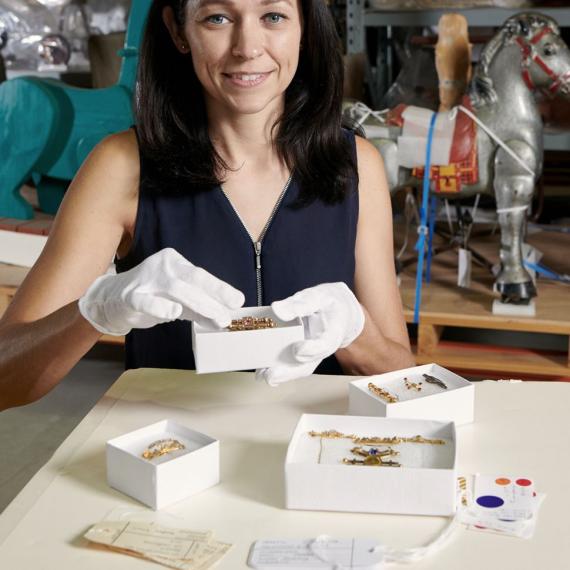
Join Erica Boyne, head of History at the Western Australian Museum's Collection and Research team, as she reveals the detective work happening behind the scenes to uncover the intriguing stories behind the objects you see on display.
