Meet the Museum: Western Australia’s Visions of the Cosmos
Western Australia’s dark skies: A stargazer's paradise
Western Australia’s vast, clear skies offer some of the best stargazing opportunities on Earth.
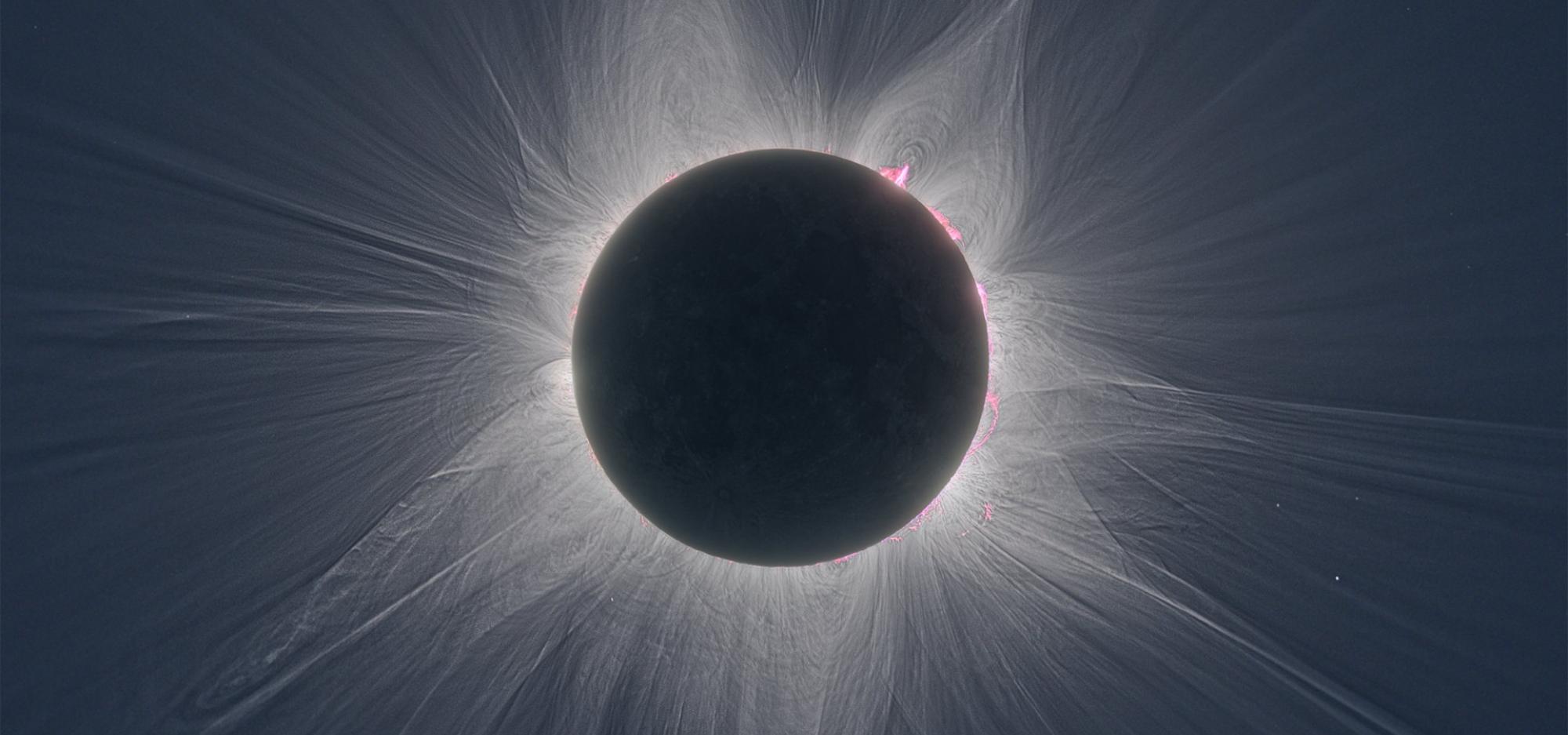
From the Milky Way stretching overhead to comets, meteor showers, constellations, and lunar eclipses, WA is a dream destination for astrophotographers. With wide horizons and ideal viewing conditions, the state also provided front-row seats to the spectacular Total Solar Eclipse in April 2023.
Join Dr John Goldsmith, astrophotographer and researcher at Celestial Visions, as he shares breathtaking images of the cosmos captured over 35 years across WA’s stunning landscapes. Discover how ethical, collaborative astrophotography can reveal not only the universe above - but also our deep connection to it here on Earth.
Meet the Museum
Are you curious about the fascinating world behind the scenes at the Museum? This monthly program delves into the less visible parts of the Museum’s work, as scientists, researchers, historians and curators share their expertise and passions.
-
Episode transcript
MC: For this month's Meet Museum, we're delighted to welcome Doctor John Goldsmith from Celestial Visions. So, John is an astro photographer, author, and researcher who is also the founder of Celestial Visions. His PhD investigated Australian Aboriginal astronomical knowledge, that's quite a mouthful, and John is a member of The World at Night and has participated in numerous international photography collaborations. He provided location support for Werner Herzog, sorry, Herzog's Fireball Visitors from the Darker Worlds documentary and has authored three books on astro photography. His latest book, Visions of the Cosmos: Landscape Astrophotography from Western Australia, is available for purchase this evening. [It’s very smooth!] So, mportantly for the WA Museum, John collaborated with us to help create the Western Australia by Night astrophotography exhibit, which is in the Origins Gallery on level two if you've had the chance to visit. It's an absolute delight having John present this evening, so please welcome John.
Dr John Goldsmith: Well, thank you, thank you very much everyone. It is an absolute pleasure to be here this evening. Welcome, this is our museum. We are so fortunate to have a magnificent facility such as this museum here. And, as Cec kindly noted, in the Origins Gallery, the “Western Australia by Night” digital astrophotography exhibit. This is a part of our community, the work of our local people here in WA presenting their astrophotography. So, I'm really pleased to see you all here tonight or this afternoon. The topic tonight is about astrophotography, and my focus here is on Western Australia. What's happening in our local state here. The emphasis that I concentrate on is landscape astrophotography. So, you'll come across deep space imaging with big telescopes and very detailed views of the cosmos. That's one major style of astrophotography. The second type is landscape, nighttime landscape astrophotography. So, we use digital cameras with wide angle camera lenses, that's the normal practice as to what we use equipment-wise. And the location, the landscape, the place that we are photographing is of great importance. We will seek out the magnificent dark skies here in Western Australia and the incredible landscapes that we have across WA. So, tonight is an opportunity to share some of this work with you. And into the future, the “WA by Night” exhibit here at the museum, always an opportunity to come back and enjoy West Australian astrophotography here as well.
Okay, so our mission today is to discover how ethical, collaborative astrophotography can reveal not only the universe above, but also to the deep connection to it here on this planet as well. So, we're going to touch on a number of really quite interesting themes tonight. This is a wonderful subject, and we can head off in a range of different directions here. Now, I would also like to note that we have an information sheet, which is available for anyone who would like an information sheet at the table, which Cec is just showing at the moment. So, this is a profile, acknowledgments, it contains the Celestial Visions statement of values, which we'll speak about in a little while, and a list of key websites on that information pamphlet. So, for anyone who would like that information, please feel free to help yourself after the session. And after the session I will be available here for anyone who would like to have a one-on-one discussion as well. An opportunity at that stage as well.
So, I'm just going to focus on a couple of the key words about the themes in this talk. We're talking about collaboration, ethics, revealing through astrophotography, and deep connection. So, this is quite intriguing. These are perhaps words that you may not normally associate with the field of astronomy or astrophotography. So, we're going to explore aspects of this this evening. So, for collaboration we're talking about working together, creatively, and for mutual benefit. That's part of what collaboration is all about. Ethics, that can be summed up as astrophotography with integrity. And that means various things. The quality of the image, the integrity of the image, how we relate to our communities, how we work together. So that's an aspect about the ethical aspect. Revealing, now astrophotography reveals. You go out into the middle of the night, the darkness, and you're photographing the stars. So, it's a process of discovering, exploring, and discovery. So, revealing is a key theme of this session tonight, and also deep connection and Wow! So, when you are out in the magnificent night sky, a remote location, and you have the astronomical events happening above you, the Milky Way, there is a beauty to that. There is a magnificence and this can help with realizing our place in this world. It's quite extraordinary. So, I'm going to give just some discussion about that topic during this session, just to give you some insight into this amazing subject. Some of the key themes that come out of this is about the global and interrelated community that we have and also the deep cultural connection that the stars bring to us all around the planet. And that includes both indigenous and non-Indigenous communities here in Australia and also around the world as well.
Now, the title of the talk is Visions of the Cosmos, which is the title of our astrophotography book. We have copies available here tonight. This is a collaboration based on WA astrophotographers. So, I really like to work with communities and a range of different people in bringing projects into being, and the “Visions of the Cosmos” book is a prime example of that. Nine astrophotographers who came together, and we collaborated, and the book is the product of the work like that. So, that type of interaction is quite a wonderful thing to do and, I'm really pleased with how this particular book production has come into being, what we've been able to record and document and for long term legacy to share with our community these astro images. So, this is a real privilege to be able to do this for everyone in our state and our bigger community as well.
So, in the photograph here that I just like to start off with, a view of the night sky, the starry view of the night sky. Once we leave, once we leave the city environment, once we travel out of Perth, away from cities into the dark night skies, when there's no moon in the sky, when it's a clear sky and this is what we can see. Western Australia has some of the most magnificent night skies literally on the planet. We are very, very fortunate, as close as if we're traveling up to Kalgoorlie, up to Menzies, up to Lake Ballard, about eight hours' drive from Perth. These are amongst some of the best night skies in the world. It's quite wonderful. And you can see the Milky Way here. The southern Milky Way stretching all the way through to the southern part of the sky, including the Two Pointers, the Southern Cross, the south celestial pole, the two Magellanic Clouds. These are all deep southern sky objects, whether they are constellations or other parts of the Milky Way like that. So, we have a magnificent view of the southern Milky Way sky from this part of the world. We are very, very fortunate.
Okay, so in terms of locations, I've included a map here of Western Australia and I'll just briefly speak about this. You can see the blue dots here which indicate the different locations that are featured in our book. You can see the locations throughout Western Australia, ranging from the Kimberley, the Pilbara, the Murchison region, the southwest and heading more inland as well, through to Kalgoorlie and north into the interior as well. So that's a that's a quick snapshot of the different locations that in our book collection that we have conducted astrophotography and featured in the book. There are, for people who enjoy traveling in Western Australia, it's the nighttime view, which opens up all kinds of possibilities, particularly when you're traveling in remote areas. That's one of the magnificent things about traveling in remote areas. You're away from cities, you're into the dark sky environments, and that is where you can get some of the most magnificent views of the night sky. So, it's really special.
And to start off with here, this is one of the locations which has become a personal favourite of my own. This is Lake Ballard, north of Kalgoorlie, near Menzies. The salt-lake, Lake Ballard. And most of us here, hopefully, will be familiar with Sir Antony Gormley's sculpture projects there. Fifty-one statues that are spread across the usually dry salt-lake. Not always. And this location has become a superb location for experiencing the landscape, the art project, the sculptures, and also the night sky. There's something very special about the landscape in that area.
Now another location, which is for us here in Perth, which is a very convenient location to get to, is Nambung National Park, the Pinnacles. About two hours' drive north of Perth and famous because of the limestone pillar formations. There is another world atmosphere at that location. It is a superb landscape. Most people experience it during the daytime and for the lucky ones, they get to see the Pinnacles at night time under the Milky Way. So, this particular image here is a shot of just before the setting sun, setting over the western skyline and the profile of the Pinnacles at this location. So, into the evening twilight, as the sun sets and we're heading into the evening twilight, and the sky is beginning to become dark, you see the first few stars in the night sky. And over the next sort of ten, fifteen, twenty minutes, half an hour, as the twilight progresses, and then the full darkness sets with the sky, and the stars become at their best visibility at that stage. A beautiful time of the night. And this particular image here is of one of our astrophotographers from The World at Night, Babak Tafreshi, the leader, during one of our astrophotography visits at the Pinnacles. A wonderful location to visit.
So, I've included here the same image that we've just seen and that photograph was taken in 2016. The upper image just here. And that is like, a fairly typical kind of an evening, the way the stars appear at the Pinnacles. So, you get the nice twilight glow, at that time of the evening, the first stars coming out and that particular type of colour. Notice the colour in the twilight. Now, contrast this with the lower photograph here. So, this is a photograph taken at exactly the same location, June 2022, several years later. And I went back to the exact same position, in the evening twilight, and photographed the same scene. And you can see that the two images are completely different. The lower image has this incredible orange colour to it, and this is just the most extraordinary thing. What had happened immediately before this time was the major volcano explosion in Tonga, and that sent up the ash cloud into the atmosphere, and that began to disperse around the planet. And we here in Western Australia, we literally saw the volcanic twilight in this location, despite the volcano being thousands of kilometres away. So, this story here, the normal twilight compared to the volcanic twilight scene, this just indicates actually how connected we are on this planet. It's the same atmosphere that we're all breathing. And, that volcano, that ash cloud, literally caused the twilight glow here in Western Australia. It's a very beautiful sight to see and to know that it's coming from an ash cloud, from a volcano, it's really quite an amazing experience like that. So, this is literally at the Pinnacles where we experienced that effect.
Okay. So this image here, who recognizes this image here, the location? Any ideas?
Audience member: Kalbarri
JG: Almost. Kalbarri. Good suggestion. This is Sandstone, London Bridge. And you can, you can see by the colours in this photograph, this is classic West Australian colours in the landscape. The rich pastel type colours coming through here. This is a time lapse time exposure image, and it's the equivalent of doing something like, a five-hour exposure of how the stars are moving during the night, under moonlight, over like a five-hour duration. So, the way that we actually do this photography is we'll set up the cameras. They're digital cameras. We're taking 30 second exposures, and we may take 5 to 6 hundred consecutive photographs. So, for 30 seconds a photograph, it goes immediately to the next photograph, another 30 seconds, and it just keeps rolling for the next 5 or 6 hours like that. And then in the computer processing we can merge those images together to produce what we generally describe as a star-trail photograph, which is this image here. So, this is the synthesis bringing 5 to 6 hundred photographs all into the same image to get that trail motion effect of the stars. And what you'll also notice is that we have the very centre right here, the very centre. This is known as the “South Celestial Pole”. And for astronomy, this is a very important part of the sky, because telescopes are aligned to that point so that they can follow the stars, and if you can recognize by the constellations, the two pointers Alpha and Beta Centauri, the Southern Cross, crux and other star constellations, you can actually recognize that part of the sky, which is actually very blank. There are few bright stars in that part of the sky, and that tells you where true south is. So, this is how based, without using telescopes, without using equipment, you can quite precisely determine the navigation points, true south. And so, you have that, with that knowledge you have an understanding of navigation, your compass bearings, by literally reading the stars. So that knowledge is a wonderful skill to obtain. And the great news is that this is freely available for everyone, it's just a matter of learning and becoming familiar with the star patterns in the night sky. Extremely practical knowledge like that. So, this is a lovely example of the practical use of astronomy, astronomical knowledge.
So now this little story here is a, is a very special one. So up in the East Kimberley region, the very top end of Western Australia, more than 2000 kilometres from where we are right now. Up to Broome, Fitzroy Crossing, Halls Creek and if you kept on going it would be Kununurra, come back down to Halls Creek and then down the Tanami Road, there is a giant meteorite crater. And the indigenous Jaru name is Kandimalal, otherwise known as Wolfe Creek meteorite crater, the national park. And this is the site of an ancient meteorite impact into the landscape of a monumental scale. This crater is more than 800m diameter, and it is magnificent. This is, in my opinion, this is one of the most special landscapes in Australia. And so, this place has become a real focus for our astrophotography, and then I began to learn through interaction with local indigenous communities that actually there are indigenous knowledge and stories relating to the crater and the night sky in general. And so that is where I literally began the PhD research into the extraordinary subject of Aboriginal astronomical knowledge here in Western Australia. This was the beginning, and there's a whole other talk about that subject. So, we’re just, we’re just touching on the very top surface of several of these topics. And I'd love to share more of these stories with you in the future, but that's for another time. Yeah.
The crater is on the edge of the Great Sandy Desert, and it's now understood, based on scientific analysis, that it is at least, approximately, 120,000 years ago when the meteorite fragment hit our planet. And to give you a sense of scale, the biggest ground based nuclear test in USA, that formed, I believe it was in Nevada, that formed a crater 300m diameter. This crater is more than 800m diameter. So that gives you a sense of the energy involved in that enormous impact that took place at least 120,000 years ago. So, this is one of the wonderful insights about locations like this. This gives us an insight into time scales and time scales that are beyond our normal experience. We as humans, we sort of think in terms of minutes and hours and days and weeks and months and eventually years and maybe decades and then ultimately a person's lifetime. That's, that's our common sense of time, yeah like that. This is at least 120,000 years old, this site. So immediately you're getting a sense of a vast sense of time and an ancient landscape like that. So, I find that just extraordinary. This is stretching our sense, our comprehension of time, and this is the physical landscape after 120,000 years. And it's still like this. Absolutely amazing. This is also one of the darkest locations on our planet and it is currently pretty well free of light pollution, no light pollution. This is a huge natural asset, and we need to look after it and we need to protect it because if we don't humanity has a habit of causing interference. That's what we, that's what tends to happen. Yep.
And so, this image here is on the rim of the crater, on the southern rim looking due north. So, this is actually a fairly unusual view for a star trail image. We usually orientate ourselves towards the south because that's what we, in the southern hemisphere, that's where we tend to orientate ourselves to. So, this is in the exact opposite direction, to the north. And you can see how the stars rise, arc over and then descend in that path like that, over about five hours or so. So, the classic star-trail image. And also, the illumination here, this is entirely natural light, it is moonlight. I've not used artificial light. I've found a balance point using moonlight as the illumination. And if you get it just right, you can get these magnificent images that illuminate the whole landscape entirely based on natural light. Reflected light from the sun, originating from the sun, reflecting off the moon, lighting up the whole landscape, literally at nighttime. Quite wonderful.
Okay, so I'd like to now talk about one particular project that we have just completed last year, which I'm really pleased to share with you this evening. This originated with a collaboration between Koya Aboriginal Corporation, which is based here in Perth, South Guilford, and my business, Celestial Visions. We put forward a proposal to the Office of Astronomy Development. They're based in Cape Town, South Africa. That's part of the International Network of Astronomy. And we developed this particular project, “Australia's cultural night sky: culture, creativity and community at Lake Ballard, Western Australia”. And one of the directors of Koya Aboriginal Corporation, Quinton Tucker and myself, we collaborated, and what we were able to do was to bring Aboriginal students out on country to experience the magnificent Milky Way in true dark sky conditions at a very, very special moment of that whole experience.
Before jumping into that, I'll just give you a brief bit of context. So, Astro4development, based in Cape Town South Africa, for the last 12 years they've funded in the order of 260 projects around the world, in the last 12 years. And what we noticed was no projects had been funded here in Australia, and I thought, how is that possible? So, we looked into the process we discussed some concept, we developed a specific proposal, put it forward, and it was supported. And so, this project actually became the first supported project by Astro4development via this particular program in 12 years. So, this was a huge opportunity to be able to collaborate with this international office and, to gain that project funding to enable us to do our site activities with the students, with the cultural activities, with the night sky. And I'll share a little bit of that with you in just a moment.
So, we've spoken briefly about Lake Ballard, Lake Ballard approximately 800km from Perth by road, and it's now become famous as a result of the art project by Sir Antony Gormley, the Inside Australia project. And this is where he literally organized the local community to be digitally scanned, a transformation process via computer. And that led to these, alien like, metal statues being designed and created and then installed out on the lake surface. Fifty-one of these. So, every single one of these metal sculptures that you see out there is actually as a result of a 3D body scan of real people out in the Menzies community and, and then it was created like this. This is extraordinary. This is a beautiful example of collaboration and creativity, community, landscape and encouraging people to just enjoy this magnificent place. I think that is superb. So, Lake Ballard and the Inside Australia project has become a natural focus for astrophotography and many other visitors as well, over the last 20 plus years or so. And one of the key locations is what has become known as Pyramid Hill. The prominent hill that pokes out of the usually dry salt-lake. I say usually because sometimes it is wet and sometimes it gets rather clayey and sticky out there, which is an interesting experience out there. Now at nighttime, the sky is superb. And so, this is an image where we've illuminated one of the metal sculptures with red light and the core of the Milky Way galaxy rising above Pyramid Hill. Like, in that area. So, this is a superb experience. It is serene. It is quiet. It is beautiful. In wintertime, at its best, it is freezing cold and that is part of the experience as well. That sense of remoteness on country is actually quite wonderful. So, we are so lucky in this part of the world to have such a place like this.
Now, what we also recognized with this project was where we are on the planet, here we're at about -30 degrees latitude where we are right now, the way the night sky works at this latitude, there is a remarkable astronomical phenomenon that takes place. And it involves the Milky Way, our galaxy. And so, this image here is a 180-degree field-of-view of the Milky Way. From one horizon to the other, in that circular, capturing the entire night sky that you can see at the same time in one photograph. So, the outer rim is the horizon in all directions, and then you're literally photographing everything above you. And you can see the Milky Way from one horizon to the other. And then you can see the very brightest part of the Milky Way, the core, is right in the middle of the photograph. That means it's directly above us. We, at this latitude, we are at just the right latitude where we can witness this experience, the very heart of our Milky Way galaxy appearing directly overhead. And this experience only occurs during wintertime. And the last opportunity per year to see it is in August or maybe early September, in the early evening. And then because of the nightly drift of the Milky Way, it then moves off being directly overhead. So, this is an extraordinary experience. So we were able to take a group of Aboriginal high school students to be on country, to meet and learn from Aboriginal elders of this, of this zone, the Lake Ballard - Menzies zone, and to learn about Aboriginal culture of the night sky, including the emu in the night sky. And for those, hopefully most of us here have heard about the emu. The emu has become one of the best-known Aboriginal sky patterns in the night sky, and it's actually formed by the dark areas in the Milky Way representing literally the emu, the flightless bird, giant flightless bird similar to the ostrich. And you can actually see it, in this image here, the Coalsack Nebula nestled into the Southern Cross, the neck of the emu stretching down and then towards the centre of the galaxy, the body of the emu as well. Now, this project was so loved by the students, and we didn't even know that they were going to do this. But after the, well later in the project, back at school, they decided to do a painting of their experience of this journey. And this is the image of the emu in the sky. This high school students painting of the emu in the sky, and a close-up image of this giant painting and a record of our journey from Perth to Kalgoorlie up to Menzies, Morapoi Station, out to Lake Ballard. Like that, yep. So, this is a wonderful outcome that, that took place. Another aspect of the project was “A Cosmos of Languages”. And so, what we looked at was unifying, finding out astronomical words and other words with different languages across the world. So, this is like a Rosetta Stone using different languages, and we included some Australian indigenous languages and then other world languages, Japanese, Russian, Indonesian, Greek and many, French, many other languages like that. So, this is a way of unifying and discovering astronomical meaning through language. And this coincides with the UNESCO Decade of Indigenous Languages, and that's from 2022 to, 2023, sorry, 2032, the decade of Indigenous languages.
So, the next image here, you're beginning to get a sense that astrophotography involves travel and experience. And so, this particular image here is a wonderful record of this. This is photographic film, not digital. This is literally a single four-hour photographic exposure. A single photographic image which lasted for four hours. And the camera was set up on this private gravel road, which was closed, we knew that there was no traffic on it. It's a private closed road. Under moonlight, and in those four hours the moonlight gives illumination, and we can see the stars rotating, revolving around the South Celestial Pole. Magnificent sight. This is one reason why Western Australia is such a good location for experiencing the night sky. So, this leads us towards the total solar eclipse up at Exmouth, from, in 2023. And so, the lead up to that, we presented a photographic exhibition at Carnarvon, which ran for about five weeks, Visions of the Cosmos. And this is one of the images of the exhibition at that time, just before the solar eclipse. And here's another image of the exhibition. This is a way of bringing back to our community the images that we've recorded here in this state and further beyond so that local communities can enjoy this work. So, this is a fantastic opportunity to present this at Carnarvon. And most visitors for the total solar eclipse, international visitors went through Carnarvon, heading up to Exmouth. So that's why we timed it at that time. Which brings us towards the total solar eclipse. Exmouth, a quick show of hands, did anyone experience the Exmouth eclipse? Excellent. Okay, we have some. Not many. Okay, good. So, we are amongst the 20,000 people who were at Exmouth for that incredible experience. This was a very unusual total solar eclipse. The path of totality, the narrow path of totality, that's usually in remote areas. And on this particular occasion, that path just clipped mainland Australia, at Exmouth. So that meant if you wanted to see the total solar eclipse, you had to be in that one location. And that's why 20,000 people descended on that tip of the Australian mainland, at Exmouth, to experience the eclipse.
So, I teamed up with Nicholas Lefaudeux, an expert image processor, astrophotographer based in France. He wasn't able to experience the eclipse directly, so I suggested, if we work together, I'll do the photography, you can do the image processing, we can collaborate. And that's how the project got underway. So that was our concept for this eclipse. And here's a few images, out at Pebble Beach south of Exmouth. This was right on the very centreline, the maximum of totality. Only 62 seconds of totality. That was it. 62 seconds where the moon passed in front of the sun, blocking the light, for only 62 seconds, completely blocking the sun. All of our photography had to happen in those 62 seconds. I had five cameras automated with different lenses, and the concept was, if we can record at different exposures, we can reach progressively finer detail away from the sun, from the very brightest inner core to the extremity, way out where it's much fainter. And so, this is our set up with our telescopes, our shielding from the strong onshore breeze at that time, and also some of the other eclipse watchers setting up on Pebble Beach like that. And the result is this. So, this is at totality, it's a highly precise image-processed astrophotograph, combining many exposures to even-out the light, the light of the eclipse. And it has revealed extraordinary detail. And here is an example of, a closer example of that detail. Absolutely extraordinary. You can see the prominences; the particles being blasted away from the sun. This is absolutely incredible. This is the first total solar eclipse that I'd ever photographed in 35 years of astrophotography. It was my first one. The other concept that we had was if we take a wide view of the eclipsed sun, we could image the stars behind the eclipse, during the middle of the day. And this is what this image is here. And this actually, we've got the planet Jupiter here and faint stars all throughout the daytime sky, and we've actually reached down to about, in the magnitude scale, for those who know about astronomical magnitude, down to about magnitude nine. Now the faintest star that we can see with our eyes, in dark sky, is about magnitude seven. This is way beyond that. This is in the middle of the day that we're recording, the camera is picking up. This is incredible. And a closer-up image, at, during totality featuring the prominences here as well.
So, one of the ways that we've been able to use these images is, and again to share back to our community, is in the high school physics book, via the Science Teachers Association of WA. And it's now become the cover image for high school students to be able to enjoy and appreciate as they're doing their physics at school, for this year and into the future. Yeah. And for those who experienced the total lunar eclipse that we've just had, just the other week, here's an image that I photographed, up in the Darling Scarp hills, of the total eclipse. A beautiful experience, just from the other week, like that. And that's using the same telescope as with the total solar eclipse. Now, that effect from the sun, all of those streamers billowing out. Now, when these big events occur, that if, if we are at the receiving end of the solar wind and those particles, that's what gives rise to the southern lights, the aurora. So, the aurora is very much related to the sun activity. And so, here's an example, in the wheat-belt region of WA, of the southern lights, the pink, appearance of the southern lights here. This image has never been publicly presented before. You are the first audience to see this. I'm very grateful to be able to share that with you this evening.
And this image here is near Mandurah, Peel Harvey Estuary, overlooking the estuary. And it was a magnificent night of the Aurora, with cloud coming through. So, a beautiful scene. I'll speak briefly about some of the projects here. So, this is an example of the collaboration between artists, creativity, the museum and our community. So, in this case, Rupert Guenther, the Cosmology Concert, the expert electric violin player who presented the concert right here at the WA Museum, downstairs. And, we collaborated by combining astro images with his live music performance, which we've discovered works really well. That combination is a wonderful experience like that. And you'll recognize the, the image here, from Lake Ballard here, that was presented here at the museum downstairs. You'll also recognize the giant whale, as well, famous for the WA Museum.
Now, here's another art creativity project. This was, this example was Fremantle, High Street. A multiple exposure of a total eclipse of the moon looking straight down High Street. And it was during the art project where they literally painted yellow arcs on the buildings. And as you walk down High Street, you don't know what quite what it means until you walk up towards the roundhouse, up the stairs, you turn around, everything lines up. It's the exact right perspective. Now it makes sense. And so, everything aligned at that perfect moment, on that particular total eclipse. So that's that particular image there.
So, I'll speak briefly about the ethical aspects here of astrophotography. I've written an article about this topic: A Vision for Ethical Astrophotography. This is all about how we work together, how we relate and behave with others in astrophotography. And I asked our colleagues around the world their opinions about ethical issues, and I was also able to present the Celestial Vision Statement of Values, which forms part of this work. And this is one of the reasons why this work is important. This image here is an example of an exhibition here, and you'll notice that there are no photo credits in the exhibition. It's a good idea to acknowledge other people's work. That's fundamental. So, this is one reason why ethics is very important. And the quote here, this is from Valentin Grigore who's the president of the Astronomy Meteor Society based in Romania, part of our international community. “With the technological advancement in astrophotography, many imposters have appeared who manipulate images in Photoshop that they present as real. But that has nothing to do with reality. Fake astrophotography has been on the rise lately. We need an international code of ethics in astrophotography that is voluntarily adopted by real astrophotographers”. So that is a key quote from Valentin Grigore. So that got me thinking about that. This led to my participation with the World Ethics Organization. They have a beautiful mission statement, and their focus is dedicated to building a better future with the power of ethics, to champion ethics as the cornerstone of human interaction by serving as a collaborative resource for organizations and individuals that cultivate human flourishing. I think that's a fantastic objective. I like it, so that's why I've got to meet and interact with the World Ethics Organization. That's their mission statement. Then I learned about photo ethics.org. This is a global organization, and this is for all photographers, not just astrophotographers. So, anyone in the photographic field, they can be a part of this if they wish, and they encourage the “Statement of Ethics” campaign. More than 130 individuals and businesses have presented their ethical statement on their website, so they are leading by their actions. This is fantastic work. So, the stage that I am personally now at, I released the Celestial Vision Statement of Values back in 2020, and now I'm looking at developing those statements into a statement of ethics. And what we've, this is work in progress right now. This is about image integrity, image usage, working together, the environment, as in sustainability and environmental care and communities, how we work within communities. So, this is where I personally am at right now. This is an active development right now, and I'm taking inspiration from our global community via the Photo Ethics organization. And for those who want more information on our brochure flier, we have the Celestial Visions Statement of Values as part of that record. Everyone's welcome to help themselves.
I'll be wrapping up fairly soon at this stage. But I want to share this particular story. Akira Fujii, the master Japanese astrophotographer who, back in Halley's Comet days, 1986, came to Western Australia to photograph the night sky and Halley's Comet. He was regarded as the world's greatest photographic wide-field astrophotographer. Huge reputation. The photograph on the left, this is Akira Fujii. This is his colleague, Tomioka-san. So, guess who this is? Me at age 14. This is when I first met Akira Fujii and Tomioka-san here in Western Australia, one hour from Perth. Photographing Halley's Comet, 1986.
37 years later, Fujii-san had just passed away. It was now the moment of Halley's Comet at its furthest path in its orbit, as far as it goes away from the sun. We went to the exact location back and we restaged to commemorate our first meeting 37 years later. And that's me holding Akira Fujii's Halley's Comet photograph from this location, and my colleague James Athanasou, one of our great astrophotographers here in WA. This gives you an idea of the, the importance and the connection in this subject. The next return of Halley's Comet in 2061. I hope to be there. [Laughter] The Japanese astrophotographers have visited the museum. This is an example here in the Origins Gallery, just down below us, near the “WA by Night” exhibit. And an example of an international film production, documentary film production, The Borderless Sky. Five episodes. One of those episodes was filmed here in WA, and I was a part of that particular initiative. So, that was a wonderful series that was produced, one of the episodes featuring here in WA.
So, as I conclude this talk, I'm going to put forward a proposition, and this is an invitation for everyone here. So, the proposition: Collaborative ethical astrophotography can help us discover and experience our beautiful and wonderful world, to reveal our deep connection to the cosmos and to others. And we can use astrophotography as a force for creative good to explore, discover, learn, enjoy, respect, protect, empower and heal.
We can do this. So, the invitation which I will wrap up on: Inspired by the cosmos, imagine what we can create together. And that's the thought that I'd like to leave with you all this evening. Thank you very much for your time this evening, thank you. [Applause]
MC: Okay. Well, thank you very much John. So, we have a couple of minutes for some quick questions. Anyone like to ask any questions of John? And again, just please wait for the microphone to come to you.
Audience Question 1: We saw that wonderful photograph where you were already with a internationally recognized astrophotographer at age 14. How did you get started?
JG: Ahh, so that's, to credit my father, who I remember I was age four, and my father sat down and we had a little notebook, and he drew, hand drew with me the solar system and the sun in the middle and the planets and the comets and the meteor showers and the rockets and the asteroids and the stars out there. And I was age four. And that made a huge impression on me. So, I would give credit to my father as the beginning. That's a great question, wow, thank you.
Audience Question 2: So, with the increase in accessibility for a lot of countries to put satellites into orbit through Starlink, through SpaceX, do you feel that that has impacted or will impact astrophotography into the future?
JG: That's an extremely important question and the answer is the impact is severe, now. And in the US, the public consultation period has just closed on the current proposal for one million satellites. Not 10,000. 1 million. We are losing the night sky now. People can make a difference. This is our choice. It should be our choice. Please have your say. Put forward your voices, because if we don't... Right now, we're at about 12,000 orbiting satellites, right now, and the night sky has already changed dramatically in ten years. Ten years ago, it wasn't like this. So, in the space of ten years, the impact is considerable and the potential into the future, if these proposals go forward, in a, in a unmanaged manner, the impact will affect everyone. Global. Whether you knew about it or not, whether you were part of the decision-making process or not, whether you put forward your voice or not, you will be impacted. And it's the night sky. I would suggest that the night sky is so incredibly important that, that is a wilderness, the night sky. It is a place of refuge. It is a place of reconnection. It helps de-stress. The relaxing aspect of the night sky is so important. Indigenous communities, local communities, cultures all around the world have that connection to the night sky. And if that's lost, I think that would be a tragedy, I really do. So, I've just put forward two submissions to the US consultation process, putting forward my views about those two proposals. One of those, which is, the million satellites. Very, very important topic. Thanks for the question. That's a big one. Yes, yes. Yep.
Audience Question 3: I have some questions about some of your photos that you've taken. Can we go back to the Milky Way galaxy? The, in particular the emu and, I just, I had trouble visualizing the image.
JG: Ah, sure. So, to help you, if you would like to meet with me later, I can, I can send you a link to the Australian Geographic article, which actually indicates, I wrote that in 1999, “The emu in the night sky”. This was Kings Park, Noongar dance group here in WA, and I'd love to share that with you. So, if, if you would like, I could send you a copy of that article, which indicates where the emu is. Would that, would that help?
Audience member 3: Yes, please. And also, the Aurora Australis, there appear to be some horizontal lines on the horizon.
JG: Yes.
Audience member 3: What were those?
JG: Satellites?
Audience member 3: Okay.
JG: The deluge has begun. And now you do a single 30 second exposure, and it's not unusual to have 15 satellites in a single 30 second exposure. That is the new normal, now. It's extraordinary. Yes.
MC: Yeah, frustrating, I'm sure. Do you have any other questions?
Audience Question 4: On that topic, do you edit out the satellites when you do photography.
JG: So, I take inspiration by Doctor David Malin who is Australia's greatest astrophotographer in the professional, professional astronomy sense. The Anglo Australian Observatory, 30 years career in the professional grade telescope. And he was faced with that exact issue where through the giant telescope imaging and a satellite track went through and the suggestion someone made was, oh, you could just edit that out. And David Malin’s position, to his credit, was no, I'm not going to edit it out because that is altering the reality at that time. That is actually part of the message as to what's occurring out there. If it's edited out, that's changing the meaning, the real meaning of that image. So, he took a stand years ago about that very issue. Yeah, like that. So, in general, I prefer not to edit out satellites. We now have a major challenge, right now, because of the conditions, right now. The night sky has and is transforming right now. Different people will give you different answers to that question and this comes to the core of the ethical aspect of astrophotography. I would prefer to know if an image has been manipulated or not. I personally would prefer to know is that a real image of the night sky, or is it heavily edited? If it's heavily edited, I personally would like to know, for that reason.
Audience member 4: I took a photo last year of a comet low on the western horizon.
JG: Yes.
Audience member 4: And counted something like 25 streaks.
JG: Exactly, exactly. And comet photography in particular, because where comets are usually appearing in the night sky, comet photography is very severely impacted by the satellite issue. More so than other fields of astrophotography. You're absolutely right. Yes.
[Recording] Thanks for listening to the talks archive brought to you by the Western Australian Museum Boola Bardip. To listen to other episodes, go to visit.museum.wa.gov.au/episodes/conversation where you can hear a range of talks and conversations. The talks archive is recorded on Whadjuk Nyoongar Boodjar. The Western Australian Museum acknowledges and respects the traditional owners of their ancestral lands, waters and skies.
More Episodes
Watch 13 of Australia’s brightest early-career researchers compete for the title of FameLab Australia 2026 Champion.

Koala fossils from WA were long assumed to belong to the modern east-coast species, however, new research undertaken by WA Museum scientists has revealed these fossils represent a distinctly different species. Join Helen Ryan to learn more about this remarkable species.

Join WA Museum curators Kylie Elston and Monika Durrer as they share stories of the trailblazing women who challenged discrimination and developed creative ways to ensure girls and women could play the sports they love.

Join us for an inspiring panel with three Moorditj Yorgas (strong women) who paved the way for Aboriginal and Torres Strait Islanders in Sport.

The 'Godfather of Coral' Charlie Veron joins internationally acclaimed cinematographer Michael Haluwana, and marine ecologist Todd Bond in a discussion facilitated by professional science and technology communicator, Commander Kat.
Join Dr Harriet Mills, Program Leader of the Perth Zoo Science team at the Department of Biodiversity, Conservation and Attractions, for a behind-the-scenes look at this vital program. Discover how partnerships with students and researchers have led to new scientific insights and stronger conservation outcomes.
