
Meet the Museum: Conservation success at Perth Zoo
In 2026, the Native Species Breeding Program marks three decades of protecting Western Australia’s threatened wildlife.
The program has returned thousands of animals to the wild while driving groundbreaking research and training the next generation of conservation scientists.
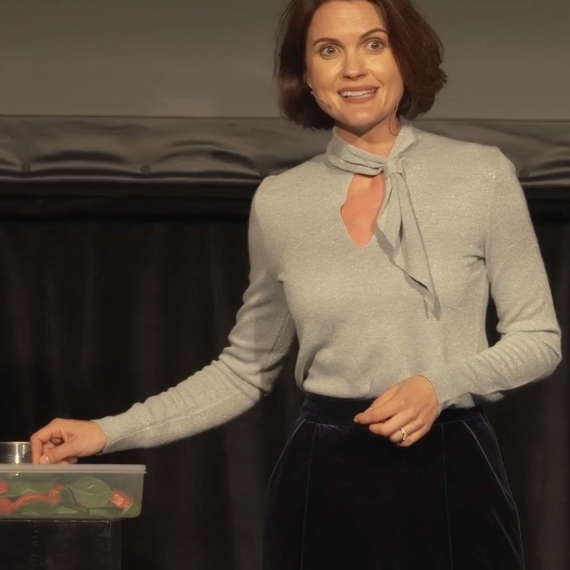
Join Dr Harriet Mills, Program Leader of the Perth Zoo Science team at the Department of Biodiversity, Conservation and Attractions, for a behind-the-scenes look at this vital program. Discover how partnerships with students and researchers have led to new scientific insights and stronger conservation outcomes.
Through inspiring case studies including numbats, western swamp turtles and white-bellied frogs, this talk explores the evolving role of modern zoos in conserving biodiversity and supporting evidence-based species recovery.
Harriet is a terrestrial ecologist with experience in zoological research, fauna management and animal ethics. Her research interests include reproductive biology, genetic outcomes of translocation, mammal ecology and invasive species management. She brings to this role over 20 years of local academic experience in conservation biology and zoology.
Meet the Museum
Are you curious about the fascinating world behind the scenes at the Museum? This monthly program delves into the less visible parts of the Museum’s work, as scientists, researchers, historians and curators share their expertise and passions.
-
Episode transcript
MC: Welcome everyone to this month's Meet the Museum. For this month's session, we're delighted to welcome Doctor Harriet Mills, Perth Zoo science program leader. It will bring us up to speed on the great conservation work that the person who has been doing over the past 30 years and continues to do. But first, a little bio about Harriet, and I'm going to read it so I don't miss any important part, so please bear with me. Harriet is a terrestrial ecologist with experience in zoological research. Fauna management, and animal ethics. Her research interests include reproductive biology, genetic outcomes of translocation, mammal ecology, and invasive species management. It's a big list, Harriet. Is it? Yeah. Prior to her current role as the program leader of science at Perth Zoo, Harriet was a university academic with more than 20 years of teaching experience in conservation biology and zoology at the University of Western Australia and Edith Cowan University. She supervised over 50 postgraduate student projects and previously coordinated an award winning work, Integrated Learning Program, offering industry experience for science students to improve graduate outcomes. We're delighted to have you here this evening, Harriet, to share your passion, dedication, wealth of experience, and tireless work in making sure that some of these delightful, amazing and unique species are around for not only future generations to see, but also for the health of the planet. Would you like to put your hands together and welcome Doctor Harriet Mills?
Dr. Harriett Mills: Thanks, Arlene, for that very kind introduction. And thank you, everyone, for coming along this evening. I recognize a few familiar faces in the audience. So that's lovely. So, I thought this evening what I will do is take you behind the scenes at Perth Zoo. Our native species breeding program is behind the scenes and so if you come to the zoo and you're a general visitor, you don't really get an opportunity to see a lot of this work that goes on and which we like to think is really the social license for the zoo and a lot of the justification for Perth Zoo's existence.
So to start off, a little bit about where I come from. I like to show people this photograph. It's my grandfather holding a numbat, down on my mum's family farm, just out of Kojonup. And this was 1948, when the family cat brought this numbat in. Probably quite a common scenario back then. Apparently the numbat was fine, so they had a good look at it and then released it and it bounded off into the bush. I’m not sure whether it actually would have survived, because you know, maybe the cat had injured it. But when I was growing up and visiting this family farm in the 1980s, 70s and 80s, numbats were long gone. So I grew up hearing stories about the fauna that my mum remembered being around when she was younger. And so I guess that sparked a bit of an interest in and a passion for native species and conservation. And so that led me on to various studies. I started off doing an arts degree at UWA, and then during my first year I was lucky enough to do some volunteer work with what was CALM back then, which is now DBCA. And so that far picture on your left is me up on Barrow Island doing some mammal trapping up there as part of an eradication of black rats on the offshore islands around Barrow. That was an amazing experience and I met Harry Butler while I was up, might have been a factor in me getting to switch degrees from an arts degree to a science degree, and I studied natural resource management. And for an honors project I radio tracked another fantastic native mammal species, the chuditch, which is in that Hessian bag in the middle picture. Sorry, can't see the chuditch but there was one in there. That was another fantastic experience and I thought when I finished that I would go on and go out into the real world and get a proper job. But back then in the sort of 19, mid to late 1990s, there weren't very many jobs around in wildlife management. So I was convinced to stick around uni and do a PhD, and that was right at the time when Perth Zoo was about to start a breeding program for dibblers. And so I was lucky enough to do a PhD on dibbler breeding biology. That was my first kind of interaction, I guess, officially with Perth Zoo not just as a visitor.
And so I guess Perth Zoo has changed greatly over the years. We're now more than 125 years old, and the zoo has changed from an institution where this kind of enclosure was common. And I still remember this being around when I was a kid visiting Perth Zoo. You probably can't read the sign, but there is a little sign on the front that says Jimmy the Chimpanzee. And Jimmy was famous at Perth Zoo for being a chimpanzee that smoked cigarettes and to entertain the public for that reason. Of course we have, we like to think that we've changed from that place to go for just purely entertainment, to something where we go to be educated and to conserve animals.
I also like to get people to have a think about zoos and to ask themselves whether zoos make a genuine contribution to conservation, because Perth Zoo and most others around the world like to make this claim and to justify their existence because they say, ‘oh, we, we, you know, educate people about animals and that leads to conservation outcomes.’ Or some zoos have breeding programs. So it is good to question this, and personally I think that there is a good case in some, in some circumstances, where zoos have made a genuine contribution. So there's a few classic examples from around the world, like the golden lion tamarin from Brazil that was down to 5 or 600 animals in the wild in the 1990s, and then through zoo breeding programs and releases back to the wild they've increased to now at least ten times that population size. Things like the Californian condor, where population sizes got down to 27 individual animals in 1987, and zoos in North America came together for breeding programs. All of the wild animals were captured and brought into captivity, and now there's thought to be almost 600 back in the wild. Przewalski’s horse is another classic example where it was widely distributed across the whole of Asia and Europe, and then populations crashed. So in the 1950s there were 12 left in captivity and through the efforts of zoos, mainly in Europe but in Asia as well, this species has also recovered and is now back in the wild and in big ranches and is in very large numbers now. And finally, the Arabian oryx, which is another species that was extinct in the wild in the 1970s and has now been down listed from extinct in the wild to vulnerable, which is sort of several categories better, through the efforts of breeding programs. So that is really great.
Perth Zoo does have breed for release programs, but not all of the animals at the zoo are there for conservation purposes. Some of them are genuinely there just to educate people or because they're reasonably common and easy to keep. So just to show you a few stats, we, we do a census of our animals on the 1st of January every year. So this year, on the 1st of January, we had 128 species and over 1300 individual animals at the zoo. And of those, 128, 24 are in some sort of conservation program. So that means they’re in either a regional program where the animals are managed across multiple zoos and animals exchanged for breeding purposes, all the way through to our breed for release program. So just to show you a few examples of those, we've got things like quokkas, the black and white ruffed lemurs, orangutans, Komodo dragon, western grand parrot, giraffe, Tasmanian devil, northern white cheeked gibbons, and African lions, all of which are in various types of conservation programs at the zoo.
And Perth Zoo also has some global conservation programs as well. So that's where money that's raised through the zoo goes directly to in-situ conservation programs. So people working in the field, both here in Australia but also overseas. And so this is another reason why we like to be able to say we do contribute to conservation outcomes. So for instance, with our white cheeked gibbons, we support an organization called Fauna and Flora. Who, I'm not sure if you can read all of this at the back, but they do things like running patrols to check for poachers and to engage with communities to educate them and provide resources to help the local people look after this species, rather than relying on international conservation efforts. And similarly with our Goodfellow’s tree kangaroo money has been provided from Perth Zoo to the Tenkile Conservation Alliance and they, in a similar way, work with local people to ensure that there's on ground conservation of this species in PNG.
And finally, the African painted dogs in Africa, we, provide funding to the Painted Dog, Painted Dog Conservation Inc, and they have programs where they have anti-poaching patrols, they look for snares, they have education programs and so on.
But probably you're here to talk about, to hear me talk about native species and our native West Australian fauna. So we have our native species breeding program, which has been running now for 30 years this year, and we currently breed five species for release. But we've also had a series of species that we have bred in the past, and we have wrapped up those breeding programs. So one of those is the chuditch, or the western quoll. So Perth Zoo bred these back in the late 90s, up to 2001 and released over 300 chuditch to the wild. And interestingly, now Taronga Zoo has the chuditch breeding program over there, and they're doing some fantastic work with breeding for release of this species. We also had the Lancelin Island skink, a little skink only found on Lancelin Island, quite threatened. And between 1994 and 2005 Perth's Zoo bred over 150 of these and released them onto another island in Jurien Bay, Favorite Island, where that population has established. And we've got, this little guy is the Australian water rat or the rakali. This was part of an urban renewal project that Perth Zoo was involved with a few years ago where there was efforts to try to get our native fauna back into the Perth metropolitan area. So, we had a, a small breeding program for these guys and released 11 over a couple of years into a couple of sites. Similarly, the Bush Stone-curlew, great little fantastic bird, which was also part of this urban renewal program where we bred birds at Perth Zoo and released 41 over a few years. And this little guy is a shark bay mouse or Djoongari, another species that Perth Zoo bred and released. What were we with that one? 347 were released over a few years. And finally dibblers, close to my heart because of my PhD, but dibblers we bred for over 25 years and released over 1100 to a few different populations and established three new island populations for that species. So I guess what can be said about all of these species is, apart from perhaps the Australian water rat, the rakali, Perth Zoo was the only, the only zoo to have bred these animals when the breeding program started up. So the staff really had to establish all of the husbandry and do all of the research to figure out how to actually get these animals to breed. Often what their reproductive biology was, sometimes to look at genetics of different populations, to determine which ones should be bred from and which populations should be mixed or kept separate.
So there's a huge amount of effort and research that goes into these programs, and they usually don't come with husbandry manual to say, this is what you need to do for this species. So I mentioned that we currently breed five species at the zoo and we've recently wrapped up our dibbler breeding program in 2023. So we currently have two species of frogs that we breed, in the genus Anstisia, the white bellied and orange bellied frogs. The Margaret River hairy marron, which we're quite proud of having an invertebrate species that we have in our repertoire because they do get rather ignored when it comes to conservation efforts, and particularly for breeding programs. The Western swamp tortoise or turtle and the numbat. So I'll run through a few, a bit of the history of the breeding programs for these species and tell you a little bit about the research that has been involved with the programs along the way. And just as we go along, I guess it's good to ask why, why is it so important to do science at a zoo? And there are a few good reasons for this. I think it's such a great opportunity to learn and gather data about things like behavior and reproduction, where we get quite a rare opportunity to see animals up close and to be able to monitor them over time, and to be able to collect information and often samples and data, that would be impossible to do if we were doing the same work with wild populations. It also gives us an opportunity to learn more about the animals, to improve the welfare, not just at Perth Zoo but in other situations where animals are kept in captivity in different zoos. So we do a lot of research on our native species, but that does extend to the exotic species that we have in the zoo as well. And many of those are held worldwide. And finally, it's such a good opportunity to engage with students and researchers and train up that next generation of conservation scientists. And I'm testament to that myself, having worked as a student at the zoo and then supervise students who have done fantastic research projects along the way.
So, our Margaret River hairy marron, has everyone heard of this species? There are a few nods in the audience. So this marron, it's a freshwater crayfish. It was only recognized around about, just over 25 years ago as being different to the smooth marron, which is found generally in the Southwest and is in all of the river systems in the Southwest. The Margaret River marron, hairy marron, is special because it's restricted to the Margaret River, and we believe it's evolved because of its isolation in that Margaret River where the common smooth marron wasn't present. And smooth marron have been introduced into the Margaret River, probably through recreational fishing of marron, but unfortunately this smooth marron compete with hairy marron. They have a slightly earlier breeding season, so we suspect that that gives them a bit of an advantage, and they also create fertile hybrids when they cross with our hairy marron. So that is a bit of a nightmare situation for a conservation program. And what we're doing at Perth Zoo is really looking at trying to keep an insurance population of these species while we learn more about them and try to gain some experience in husbandry and being able to breed the species reliably at Perth Zoo. And then come up with a strategy for how to release them back into the wild. So as well as the hybridization issue, the Margaret River has been quite highly modified. A lot of the area has been cleared for farming and for viticulture, so the river itself is quite different to its original state. And when it was discovered that this species was separate, there was quite a lot of work done to try to establish some breeding and to, to do some conservation work, because it was quickly identified as a new species and then as a species under threat. But it wasn't very easy to breed. And between 2014, when we first started working on this, there was no breeding until 2022 when we had a breeding event, which was fantastic. And they’re called the hairy marron, not because they’re actually hairy, not true hairs obviously being an invertebrate, but they do have these little setae on the exoskeleton and these little fine projections. And so when they have freshly molted, they are really quite fluffy. And if you look at them underwater, their little setae floats around and they look very, very furry. The adults usually molt once a year, so a few months after molt the hairs do rub off, and it's can be quite tricky to distinguish a hairy marron from a smooth marron. Unless you are trained with an expert eye to measure the length of the ridges along the head or to do genetic testing, which is what we do at the zoo to confirm that we do have the right hairy marron that we're breeding. So, when we started working with this species, we had five hairy marron at Perth Zoo and there were about 40 in the Pemberton Research facility, run by our partners DPIRD, Department of Primary Industries and Regional Development. And we didn't really know how many were left in the wild, but we suspected there was possibly none, maybe a few. So there was a survey of the river done three years ago, and out of about a thousand marron that were collected, seven of them were genetically tested to be pure hairy marron. So not very many, less than 1% of the marron, and we're about to go back next month and do another survey. That will be quite a comprehensive survey of the whole Margaret River, and we're hoping that there are still some hairy marron left in the river.
So I mentioned that we have had some breeding success. And in this picture, what you can see at the top, is that bluey color is the tail of a female and these little alien creatures, the larvae of the marron. So what happens with marron is that they, a male and a female will mate. The male will pass a spermatophore, like a little packet of sperm, onto the female, which is glued under her abdomen.
And then she will lay eggs which will be fertilized by the sperm in the spermatophore, which is released, and she will hold on to the eggs under her tail for a few weeks until they hatch into this larval form. And while they're in this larval form they'll go through two molts, while they're tiny, tiny larvae, and on the second molt they will turn into what we call a crayling, which is a tiny little miniature adult Marron. And at that point they will disperse off into the river system and, and make their own way.
We’ve so far produced 200 craylings from, all the way through to get them up to be proper subadult marron in the last three years, which is kind of good, knowing that we started with sort of 40 odd marron known to be alive in the world, but it's still a really small number. And, we should be able to produce quite a few thousand Marron if we have everything working really well in our breeding program, because each female holds 2 or 300 eggs under her tail. So it's slow going to get everything working and we have had some issues with fertility, so matings that look really normal and great and then clutches of eggs that are infertile. So we have a lot of research questions around what's causing this fertility issue and how do we get these animals to breed reliably. And questions about things like, what sort of water chemistry should we be holding them in? Are we giving them the right diet? What are the triggers to breeding? We think we have, we're gaining more and more information and getting some really good information on triggers, like temperature increasing in spring is what we think causes matings to start to happen. We've also been able to observe some fascinating reproductive behaviors with this species with intricate courtship rituals. The males and the females display to each other, the males will hold up their chelipeds and display with their antennae. And we've made those observations because we're able to hold the animals and see them. With a lot of the marron, the research that's been done on smooth marron is on farm dams and things like that. Where they get put in a dam, there's some data collected on breeding success and so on, but not really that up close observation and monitoring. So it's been really exciting to, to see some of these things. We've also been able to develop a pretty nifty technique to, using an ultrasound to detect eggs in the females. So we don't actually know whether the females, breed every year or maybe every second year. But we've been able to use an ultrasound to detect when the females have eggs and when the eggs are maturing, so we know that they're getting ready to breed. And so I guess the big question for this species is to identify some release sites and we're working with our partners in DBCA, Department of Biodiversity Conservation and Attractions. We're currently looking at an artificial wetland site that we’ll be able to test some methods for releasing them into the wild, and excluding smooth marron from that area to see how that will go.
Next species I'm going to talk about is the Western Swamp turtle. And I, you'll see Perth Zoo, I'm trying to get them to switch over to calling this species a turtle because while the western swamp tortoise has been the common name that has been used very regularly, in my view, they're a freshwater turtle, like all of our local freshwater species. So, western swamp turtles are a really fascinating species that Perth Zoo has bred for many years. They were first brought into the zoo in the late 1950s, and that was just after they were discovered by a school boy who picked up a little turtle and recognized that it was different to the common long necked, snake necked turtle or oblong turtle, and took it to a wildlife show in Perth. And it was originally thought to be an invasive species because people didn't recognize what it was. Must be something from somewhere else, and it's suddenly come to WA. And then it didn't match up with any records of other species, so it was described as a new species. But interestingly, quite shortly after it was described as a new species. A holotype specimen was found in the Vienna museum in Austria that was an original western swamp turtle that had been collected in the 1840s and lodged in the museum and described. So, the new species description got scrapped and that original one stand stands.
So, we have some breeding western swamp turtles in our program that were brought to the zoo in the 1950s as adult animals, and they're still there and they're still breeding. So they're really long-lived species. We know that they live at least 80 years and possibly a lot longer than that. So they are critically endangered, only found in a really small area, around Bullsbrook on the Swan coastal plain. And it's thought that their population size got down to probably 20 or 30 animals in the wild back in the 1980s. So they were very close to extinction. And the zoo breeding program is probably what has kept this species going. And we kind of like to say this, this is an example of a species that probably would have slipped into extinction if it wasn't for this breeding program. And we have been able to release, over 1100 turtles into different sites in the wild. Some have been successful, some not so successful. But they're definitely in a better place than they were a few years ago. And the captive breeding program has allowed some really interesting research on assisted migration in this species because of climate change posing such a big threat to the species in their natural range in wetlands around Bullsbrook. In our drying climate, we have looked further south for suitable habitat where we could release them and where it would be sustainable into the future. And so quite radically for Western Australia conservation, we've released this species hundreds of kilometers south of their natural range into sites east of Augusta in this Scott National Park, and they seem to be doing really well there. So we've had quite a few, students from UWA and other universities monitor the outcomes of those translocations over time and collect data to show that the animals survive and they grow and we're just waiting on some data to confirm that they can successfully breed in those southern sites.
So, they are a really fascinating species with an interesting life history. At the moment all of our turtles at the zoo look like this, they're fast asleep under the leaf litter. They go through a summer estivation, so when the wetlands dry out naturally over the summer, the animals will bury themselves under soil or leaf litter or into burrows and tree hollows, root hollows underground. And they stay inactive in that dormant state for pretty much 5 or 6 months of the year and only emerge when the winter rains come to fill up their wetlands. And that's when they will go into the wetlands and feed and try to eat enough to get enough resources so that they can breed, and the females can lay their eggs before they go back into their dormant estivation for the next summer. So with our drying climate, it's very challenging for this species because that hydro period when there's water in the swamps is becoming shorter and shorter, and so they're under a lot of pressure to be able to sustain populations.
So having, western swamp turtles at the zoo for so many years and in pretty good numbers at the moment, we have 254 of them in the zoo, we are hoping to do another release later this year. But it's really been a good opportunity to do some research, and Perth Zoo has studied this species quite extensively in terms of their growth and development, and diet and, we're about to publish a paper on how UV affects shell hardness in zoo bred animals versus wild animals. We've had students do, using our zoo animals, to test EDNA environmental DNA methods to detect turtles in the wild. And the zoo is the perfect opportunity as a positive control for that study. So Bethany, who did her PhD on some of the translocated turtles down south, was able to use our ponds at Perth Zoo where there's known turtles present in a small water body to be able to collect a water sample and check that her EDNA method, is effective, which it is.
We've recently had Hannah, who was an intern from Cardiff University, who worked with us to analyze years of data. So I think she looked back at more than ten years of data. And we had this interesting question of, in this species is sex determined by temperature? So in many marine turtles and some freshwater turtles, the sex of the embryo is determined by the incubation temperature. And we weren't sure whether that was the case with this species. So when we incubate eggs using artificial incubators over the last few years, we've always incubated them at a few different temperatures to make sure we weren't producing big cohorts of all males or female turtles. But with this species, they get released when they're about three years old, and they don't reach sexual maturity until they're at least six years old. So usually we're breeding animals, releasing them to the wild, and we don't know what sex they are. Kind of hoping it was about 50/50, which is reflecting the wild situation, but we weren't actually sure. So Hannah was able to go back through all of our data to look at incubation temperature of eggs and then match that up with data from our DBCA colleagues, who were doing the monitoring in the wild, to cross-reference all of the data where animals had been recaptured after they'd been released and sexed once they'd reached adulthood. And she was able to show pretty definitively that there was no influence of temperature on the sex, which was great. We thought that was the case, but Hannah was able to confirm that for us. So sex is a genetic, genetic determination rather than temperature in this species.
So I'll move on to talk about numbats, another endangered species that got down to, we think probably 2 or 300 in the wild not so long ago. And now they're in a much healthier state where the estimates are that there's 2 to 3000 numbats in the wild at the moment. And Perth Zo has run a breeding program since 1992 for this species and has provided 325 numbats for release. Which sounds like quite a small number, but breeding numbats is not an easy thing to do. And, I noticed we have a couple of our Perth Zoo Docents in the audience, who do an amazing job in helping us be able to provide termites to our numbats. Which we have some good data to show that we can feed them an artificial diet, but to get good breeding success in numbats we need to give them natural live termites. There's something in those termites, whether it's omega three fatty acids or something, which is important for reproduction. So I'm not sure if you can see very well, but the map at the bottom shows records of numbats from various different museum records and so on. And we think of numbats as being a southwest species, but their former distribution extended right across southern Australia through South Australia, into the bottom part of the Northern Territory and into western New South Wales. So many of our numbats we’ve bred at the zoo have been released into the southwest. But recently we've also sent numbats to South Australia and to New South Wales into protected habitats. And that's been really exciting for our team to feel like we're returning those animals back to their former distribution right across the continent. And again, we have been able to do some nice research on numbats, things like the parental effects on offspring at sex ratio. We've shown that there is a slight male bias in the animals that we produce at birth, but we manage our breeding program to account for that. And we release our animals generally with the F-one offspring. So any animals that a bred at the zoo get released and we tend not to breed from captive bred numbats, which is potentially, might relate, might increase some sort of selection to traits that are better adapted for captivity rather than the wild. So we want to avoid that.
We've also been able to contribute to some research on the Felix device, I guess, which is a device used to control feral cats. It uses a sensor which will identify a cat and deliver a gel bait onto the cat, which the cat then licks off. And it relies on the fact that the sensor will distinguish between a feral cat and another native animal. So at Perth Zoo a lot of the testing for this was done with our captive numbats, where we were able to set it up in a nontoxic mode to be able to ensure that it was 100% reliable at distinguishing a numbat and wasn't going to deliver toxic gel onto a numbat. Even though numbats would have probably some resistance to the 1080 toxin that is used.
And everyone loves a numbat, so I'm not sure how well you can see this, but this is one of our females from last year, and you can see she's got some quite big babies hanging out of her pouch there. And then this is the next stage of the female. Once the babies become too big and she can't hold them for much longer, she'll deposit them in a nest. And then in spring, they start to emerge from the nest. And this is just probably a month or two before we would release them to the wild. They're pretty adorable.
Moving on to talk about frogs. The two species we breed are both in the genus Anstisia, the white bellied and the orange bellied frog. And if you were to look at them, from the top, from the dorsal view, they look pretty much identical, but they are different if you flip them over and look at their bellies as the name suggests. The orange bellied, it has this really bright egg yolk color under its chin.
And these are terrestrial breeding frogs. So unlike the aquatic species, where eggs are laid into water and then they hatch into tadpoles that are free swimming before they metamorphose into frogs. These guys, the eggs are laid just in a moist nest, and then the eggs hatch into tadpoles just within the moist nest, and they're surrounded by quite a thick layer of jelly, and then they develop quickly into little miniature frogs. So they’re never just in free water. And when they metamorphose into frogs, they are tiny. So that's the five cent piece next to those two little frogs there. So they're only a few millimeters long. And even as adults, they get to about a centimeter and a half. So they're really small and pretty difficult to, to deal with. And their habitat is quite thick and impenetrable. Their habitat is in tributaries of the Blackwood River, so south of Margaret River, and Witchcliffe in habitat that is partly in reserves, but also partly on privately owned land, which creates some challenges for conserving this species because we need to work in partnership with private owners.
The zoo has a program where we do some captive breeding, but we also collect the egg nests from the wild and bring them back to the zoo and get them to wait till they develop into metamorphose frogs, and then release those subadult frogs into the wild. So that technique allows us to increase the survival of the eggs. In the wild, the eggs are really prone to predation by a whole host of invertebrates and other animals. If they get too dry, they will die out, if something steps on them, they don't survive. Whereas if we harvest those egg nests and bring them back to the zoo, we can get pretty much 100% survival, which we then can release to the wild. So that strategy has been quite successful. But again, working with this species is really challenging and there's a lot to work out about. How much moisture do we need to provide? How much UV do they require? What sort of temperature do they need to be incubated at? How do we manage disease? What do we feed the tiny little frogs on? Which the answer is little pinhead sized day old crickets for when the, when the frogs are tiny. So it is a big journey to get these programs established and working well. So Perth Zoo has released over 1500 white bellied frogs, almost getting up to 900 orange bellied frogs, and also a few of the sunset frog, which was a more common species that we used as an analog to trial some of these methods on the more threatened species.
And interestingly, there's some work going on, on that sunset frog at the moment to assess the populations and there's some indication that those frogs, actually, which were common a few years ago when we were working on them as an analog, they themselves are becoming a bit more under threat these days as well. But, almost 2700 frogs released to the wild and counting. And breaking news, we are about to start a new breeding program, in the next year, for the Lister’s gecko. This is a species that's endemic to Christmas Island, and it's extinct in the wild due to invasive predators. Mainly the wolf, Asian wolf snake, is thought to be the main predator, but possibly also rats and a few other invasives as well.
There's a breeding program for this species on Christmas Island and in partnership with Taronga Zoo, but we have been asked to join in as a third breeding colony for this species, to allow the genetics to be managed and to build up some more breeding capacity in preparation for some releases to the wild. So we're really excited about this, not least of all because this is probably the first breeding program where we actually do get a husbandry manual of how to do the breeding, for this species.
As well as all of the research on our native species in our breeding programs, we also engage with other researchers to take advantage, as I said, of the opportunity to work closely with animals up close and in situations that we couldn't do in the wild. So this was a project by Chong Wei from Curtin University, where he has developed an audiogram for our little penguins to establish how they hear sound both underwater and in the air. And that's to do with being able to monitor marine noise pollution and to be able to have some knowledge to be able to set guidelines for what might impact on our local little penguins, but also other penguin species around the world. So Chong played various different sounds underwater and in the air to our penguins, at different frequencies, and made observations using video recording equipment to determine which sounds they could actually hear and which ones they were reacting to.
And we, our keeping staff as well, like to get involved with projects. And this interesting looking data set is from our radiated tortoises. So an African species and there was some questions from the keepers about whether the enclosure was meeting their temperature requirements. So temperature and humidity. And so there's a lot on this graph, but basically the top red line is their known preferred maximum temperature and the bottom horizontal line is a preferred minimum temperature. So we used some data loggers in a few different places in the enclosure to look at what temperature was doing. And some of those different colors indicate when there was reticulation on, when a new roof was open or closed, when there was a heater on, various different things. And this was over summer. So basically what you can see there is the different lines going up and down, the different data loggers, and you can see some of the time they’re within that preferred range but there are times when one or more of those data loggers get too hot or too cold. So we have recently followed up by sticking some data loggers onto our tortoises with some superglue. So the first data set was using data loggers that we just placed into the enclosure. But then we had the question, okay, it's getting too hot and too cold in certain areas but our tortoises can move into the sunny spot or into the shade. So what are they actually selecting? And I haven't yet got the data set to tell you the answer to this, but we have, but we're about to get it and download it and have a look and analyze this data. We are suspecting that probably most of the time the animals are able to move into their preferred thermal zone. But if not, at least we'll have that information to know that we can try to improve the welfare by providing more shade or giving them more basking sites and so on. So knowledge is definitely power.
The Native Species breeding program has been going for 30 years, and some things have gone really well. Some programs have been more challenging. But looking to the future, what we're thinking about doing is to focus more on animal welfare and some sustainability issues. Also to introduce genetic management as routine. We have already done that for most of our species, but there's some that we're still waiting on genetic results, so we need to kind of introduce a more routine management of the genetics. As I mentioned, we're interested in looking at more invertebrate species for breeding programs. And partly that's because if you look at the West Australian Threatened Species list of our most threatened fauna, there's quite a number that are invertebrates on there, including things like trapdoor spiders and millipedes and snails and all sorts of amazing animals that we haven't yet really embarked on looking at whether or not these sorts of methods could assist with conservation. And we're also really interested in looking at expanded partnerships with different agencies. So I'm, I'm hoping that I've convinced you that zoos do have a role to play in conservation and Perth Zoo in particular. Not only the breeding programs, but also the opportunity to do research and learn more about animals as well as the public education and engagement and some of these more global conservation efforts. And I did a little bit of a rough count up, sort of tally, and I would say in the last 30 years of the Native Species breeding program, we've probably had over 100 student projects, of Honors, Masters and PhD students who have come through and done research on one of our species or related to our breeding programs at the zoo.
So, just going back to the picture I showed you at the beginning. This is probably a bit of a sad outcome for this numbat, but, but here is me and one of my colleagues Vicky, who's worked with our numbat breeding program at the zoo since the very, very beginning. And this is us down at Dryandra Woodland in November last year, with two of the traditional owners there. And we're holding precious cargo inside pillowcases, and they’re four of our zoo bred numbats that we were able to go and release back into Dryandra Woodland. And here's a little video of Vicky getting out one of her precious zoo bred numbats and poking it into a log, which is the approved technique for releasing a numbat into the wild, and making sure it doesn't pop straight out. So that's the best part of the job, is actually doing those releases to the wild.
And just to finish up, I'd like to acknowledge that this is a team effort and over 30 years there's been a huge number of staff and students and various people involved in the breeding programs at Perth Zoo as well as other agencies and partners. So here they all are. And here's some of the staff in my team. And that top picture is when Jane Goodall came and visited us a couple of years ago, which was really fantastic experience for everyone. I'll leave it there and happy to answer any questions. Thank you. [applause]
MC: If you just want to...oh, first one this time. Ok, if you are at the back just give me a few seconds to get to you. Ok, first question. Audience Question 1: With the Western swamp tortoise does it affect the environment in Augusta, or did they used to be native there?
HM: Okay, so that question was I think, do they have any impact on... Audience Question 1: On the environment
HM: Yeah. Really good question. So obviously that's a really big question to ask. And for any of, any of the animals that we release, we have to do a translocation proposal where we justify why we're releasing animals to that particular site. So that was a consideration about, since it is really an introduction, there's no evidence that they had been there before and so there could be impacts on native species. But an assessment was done and its thought, yeah, we don't really know the answer, but there were no species that came up as being threatened by the introduction of, of Western swamp tortoises. They mainly feed on macro invertebrates in the water, and they seem fairly plentiful. And it was looked at whether they were native fish or other threatened invertebrates that might be negatively impacted and we don't think so.
MC: Next question.
Audience Question 2: Being one of the people from Manjimup and eating a lot of marron in my youth and also going to Margaret River, the tenuimanis and the, is it cainii?
HM: Yeah, cainii.
Audience Question 2: When did they differentiate those, those different taxa?
HM: When was the question, yeah... So I think the paper was published, I think it was around about 2000 or just... so it was quite recently really. It was, I think there was some suspicion in the, maybe it's going back as far as the 1980s and 1990s that there might be two species, but they were formally described, yeah, only about 25 years ago.
MC: Next one over here.
Audience Question 3: Really wonderful conservation work. With so many species in danger, how do you select which go into breeding programs and what gets the attention I suppose.
HM: Yeah, nice question. So I've been in this role, coming up to four years now, and my understanding is that some of our existing programs have kind of evolved over time because of circumstances or what opportunities arose. And all of them have been in partnership with recovery teams and with a recovery plan and with quite a clear purpose. But we are looking at being more strategic and trying to prioritize what species are, can be benefited most. And clearly, if you look at that threatened species list, we have gone through a process with our colleagues in DBCA of trying to quantify animals using: How threatened are they? Could a zoo be breeding program benefit them? Is it logistically feasible? Are resources available? Because obviously it's not suited to every species. Some need so much space, some need to be housed in groups. Some we can't provide the right food for. So we did go through all of that process, and we do have a kind of short list. Interestingly, of the species that we are breeding currently, they were kind of included in that process and they all came out as high, high priority boxes for zoo breeding programs, which is, phew, that was good. But there were a number of species as well that were flagged as being good candidates for a zoo breeding program that we're looking at. So trying to have that more of a strategic triage approach rather than just an ad hoc, you know, whatever comes along approach. Yeah.
Audience question 4: I'm interested in the Lister's gecko breeding program that you've mentioned. You've mentioned that invasive snakes were one of the biggest threats for the geckos and for their breeding program. Is there anything that you think could have done to avoid that risk?
HM: Yeah, so I think the plan for Lister’s gecko is to look at releasing them onto islands in the Cocos Keeling Island group, because I think there's some work going on to control predators on Christmas Island. But it's a pretty big island, and it's pretty challenging to do. So the plan is to try to release onto other islands. Again, they would be introductions, but there are small islands in the Coast Keeling group that don't have many other reptiles or no threatened reptiles. And there's another species, the blue tailed skink, which Taronga also breeds as well, and they've recently been released onto some of the islands in Cocos and seem to be doing very well. And so then that's kind of creating populations, which eventually will be used as founders for releasing back onto Christmas Island when those invasive species can be effectively removed, hopefully. Does that answer your question?
Audience question 5: For some of the species that have quite small starting populations for the breeding program, are there concerns about genetic diversity or ways that you go about managing that?
HM: Definitely. Yes so we try to manage it and traditionally it was done through stud books and pedigrees and tracking. Tracking who's breeding with who and trying to avoid breeding with close relatives. But, the Western swamp turtle was a really good example where we got many of those animals as founders in the 1950s, in the 1960s, up to the 1980s. And when they came in, it was assumed that they were unrelated. And then all of the stud book was built around this assumption, that these animals are all unrelated. And knowing that that population got down to only a handful of animals, we think that that's probably not a fair assumption to make and some of them might actually be quite closely related.So we are waiting with bated breath for some genetic results from our colleagues in DBCA, who have just been running some genetic tests on all of our breeding animals, and we're waiting to find out.
So, I suspect that with that species, they, there might be some issues with genetics. We haven't seen any fitness issues, so the animals seem to be healthy and fine and they breed quite well. And similarly with our frogs, we've had genetic work done on them, which shows that the genetics look okay, but sometimes it's hard to know. They look okay but compared with what? So, we don't often have historical samples to be able to compare what their original genetic diversity should look like. So often we're, we're working with probably low genetic diversity but we haven't seen any, any issues. We did have a breeding program a few years ago for Greater Stick-nest Rats, another Australian native mammal. And the founders for that breeding program came from islands in South Australia. And they did have quite a few issues. The animals were developing cataracts at a young age and there were some other health issues. And that was a breeding program that a few other zoos were involved with and eventually it was abandoned because the issues were quite challenging. And that's probably, that was probably related to low genetic diversity I think.
Audience Question 6: Really, really good talk. I was wondering whether or not there are any plans for native fish conservation breeding programs?
HM: So native fish, yes. There are quite a few native fish on the threatened species list. And so we, we are looking at those species. At the zoo, most of our expertise are not in aquatic species. With things like the marron it's been quite challenging for us to learn how to set up aquaculture systems. It's been quite a steep learning curve, but we have, we’ve developed some skills in that area. So we are looking at some of those freshwater fish. There's researchers at Murdoch University who have expertise in that area and are doing some work. So we're in a bit of a position where we can't look after everything. So we really have to look at what is, where we go with our strengths, I guess. But yeah, the freshwater fish are being considered and we're looking at things like, are there some species that we could potentially co-house with our marron, for instance, and breed up some threatened fish at the same time as breeding marron. I think the marron might eat a few fish, but... and freshwater mussels are another species that, there’s a threatened Carter’s freshwater mussel that we've looked at. Or can we breed them at the same time as Marron and have a sort of nice system that recirculates and we can double up, get two conservation outcomes for the price of one.
MC: Any further questions for Harriet? Before we give our applause, thank you so much for taking us behind the scenes and giving us a bit more insight into what all this work takes. I mean we can see a list of things being worked on but the amount of research and parameters that get put into doing this work is immense, isn’t it. And the partnerships that are required for that. So I hope I can speak on behalf of all of us and if you can please take a message back to your staff and thank them for the work they’ve been doing over the last 30 years.
HM: I will definitely.
MC: Because it is vital, vital work for our state. And can we please put our hands together for Harriet and thank you for being here. [applause] HM: Thank you everyone.
More Episodes
Watch 13 of Australia’s brightest early-career researchers compete for the title of FameLab Australia 2026 Champion.

Koala fossils from WA were long assumed to belong to the modern east-coast species, however, new research undertaken by WA Museum scientists has revealed these fossils represent a distinctly different species. Join Helen Ryan to learn more about this remarkable species.

Join WA Museum curators Kylie Elston and Monika Durrer as they share stories of the trailblazing women who challenged discrimination and developed creative ways to ensure girls and women could play the sports they love.

Join us for an inspiring panel with three Moorditj Yorgas (strong women) who paved the way for Aboriginal and Torres Strait Islanders in Sport.

The 'Godfather of Coral' Charlie Veron joins internationally acclaimed cinematographer Michael Haluwana, and marine ecologist Todd Bond in a discussion facilitated by professional science and technology communicator, Commander Kat.

Join Dr John Goldsmith, astrophotographer and researcher at Celestial Visions, as he shares breathtaking images of the cosmos captured over 35 years across WA’s stunning landscapes.
