
Playing With Passion: Breaking barriers in women's sport
Women in Sport: Stories that move us
Women’s sport may be making headlines today, but its rise has been decades in the making—built on determination, innovation, and resilience.
From backyard games to national leagues, the journey of women in Australian rules football, cricket, and basketball is filled with powerful stories. That’s why the WA Museum launched the Women in Sport project, capturing the personal stories of obstacles and opportunities that resonate across all sports and the meaningful objects that form part of this evolution.
Discover how this project goes beyond traditional collecting practices and be among the first to see what has been uncovered!
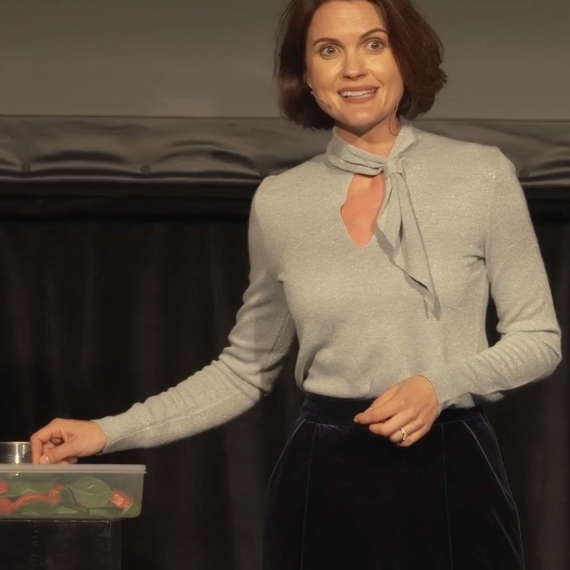
Join WA Museum curators Kylie Elston and Monika Durrer as they share stories of the trailblazing women who challenged discrimination and developed creative ways to ensure girls and women could play the sports they love.
Women's rise in sport is a story that is still unfolding, come join us for this chapter.
-
Episode transcript
Monika Durrer: Thank you so much for coming out tonight. I can see some familiar faces in the audience, people that we’ve interviewed as part of this project. So, this is your chance to see yourself on the big screen. And everyone else that’s come along as well, thank you so much for supporting this event.
I’m going to start off, actually, with a video. So we’ll get right into it.
Cheryl Kickett-Tucker: Well really it’s all about family. Basketball is a really social sport. And for us as Aboriginal siblings and sisters, it’s easy to put a pair of shoes on— Or you didn't even have to have shoes in the days when we started playing. You just needed a ball and a wall! And so it was all about fun, family and relationships for us.
Pauline Armstrong: It’s been my life, and a lot of my family are still involved. And we all follow the basketball and always have. In the times when I first started, and I was very lonely because I had a husband that travelled and was away a lot, I think it saved me.
Jasmine Johansen: I think we’ve got what some would call a family sort of thing. So it’s kind of cool to just be able to go to training and you get to hang out with 30 or 40 of your best mates two, three times a week. It’s pretty, pretty special.
Joanne Huggins: I grew up watching West Perth playing at Leederville oval with my nan, so it was in the family. They were into it. They used to go on Saturday afternoons and take the sandwiches and the rugs and things.
Tanya Fisher: I grew up in Geraldton in the country, so I played hockey. I played netball. I did jazz ballet. I did judo. I did calisthenics. So, you know, like, you tend to do a lot of sports when you’re in the country.
MD: Okay. So, as part of this project, we did interviews with 15 women, and the question that we kind of always started with was, “what does your sport mean to you?”
And so, some of those clips that we just saw are I guess people talking about their passion for their sport. Something that came through really strongly in all of the interviews, the importance of the friendships that were developed, through involvement with various sports as well.
So, women's sport has come a long way in the last probably 10 to 15 years, although I'd say that there's still work to be done, as I'm sure a lot of you know. But we're looking today, I guess, at some of the people behind some of the changes that have occurred, some of the obstacles that have been faced by women as well.
So I'll give you a little bit more context to the project first before I get into some more videos. The reason why this came about for us was actually because we had a look at our history collection, and we realised that there was a bit of a gap in the representation of women’s sport in our collection, particularly in the last 20 years.
And so recently with this increasing growth in women’s sport, we kind of wanted to capture some of those changes and we wanted to look at some of the challenges as well that had been faced by women in their various sports. And I should say at this point as well, that this project was made possible by a Foundation for the WA Museum Minderoo grant, which enabled us to film all the interviews and do this project.
So, what was our approach? Our game plan, I suppose you could say. So, we decided to focus on three different sports. So, Aussie Rules Football, cricket and basketball were the three that we ended up looking at.
We researched these sports and we spoke with a lot of people who were kind of active in the heritage space for their sport, who maybe had a lot of knowledge in that area. We contacted interviewees, who might be interested in doing an interview, and then we ended up filming six interviews for football—
I will actually say here too, that included and interviewed one man who was a coach, who coached women and girls. But all the rest were women.
And then we had three interviews for cricket, five for basketball. There’s one, actually, for gymnastics as well, which is a recent one.
So, a couple of weeks ago we had an Aboriginal women in sport panel [Moorditj Yorgas in Sport, 2 June 2026] held at the WA Museum. And as a result of that, we kind of got a few more interviews out of that. And one of the panellists, Paige James, was a gymnast. We also had Narelle Henry and Courtney Ugle on that panel too. So, we’ve got recent interviews with them, which unfortunately are not included in this presentation because we’ve only just done them. So, we haven't even got the footage yet for them.
So, and then I guess the part that we’re kind of up to now is we’re starting to collect objects for our collection. We've already got a few items that I’ll be showing you later.
vKaren Read: When we used to go to cricket with Dad, we’d play on the sidelines. But then when I was at primary school I really, all I wanted to do was play cricket. But at primary school—this was one of the challenges back then—there was a football and cricket field, and girls were only allowed to play on the asphalt, softball or netball. And all I wanted to do was go out and play football and cricket. And I must have put so much pressure on the teachers that finally they relented and they gave me one game of cricket against the boys on a Friday afternoon. And I was quite successful bowling out the boys. And I got sent back to the softball pitch on the asphalt.
Joanne Huggins: And then my brother, when he was old enough, started playing, I think, at the age of six. And my dad ended up being the coach of my brother’s team. So I was involved in his footy experience. And I used to help out with coaching and ended up being the boundary umpire for his team, only because that was all I could do. I used to like training the best, because then I got to kick the footy and mark and do all the footy things. And so I’d, you know, take one team and Dad would take the other and we’d do the drills, and I’d, you know, exercise with them. I’d do the laps and stuff like that. I liked all of that and, you know, quietly wished I could be doing it for myself.
Margie Oldfield: It wasn’t really till one of our daughters, at age 13, came and said to me, I want to play cricket and I want to play in a team of girls. And I looked around and realised, actually that wasn’t an option for her.
MD: Okay, so you’ve just seen Karen Read, Joanne Huggins and Margie Oldfield talking about, I guess, some of the opposition that they faced in the various sports that they were involved in.
So, with this project there were various kind of perspectives that we wanted to cover and so we were looking at having sort of historical and contemporary experiences represented or, sort of, you know, different time ranges; community and elite sport, regional and metro; and diverse perspectives as well, so Aboriginal voices, LGBTQi representation as well. And there were kind of a number of things that we ended up covering. So, we looked at discrimination, opposition. So we’ve seen a little bit about opposition just now. Changing the game. Coaching. Injuries. Uniforms. Training. And the kind of opportunities that have been coming up more recently.
So, part of what we really wanted to do was to not just capture the hero stories. Although, you know, we do collect those. But we wanted to know more about the experience in general for women in sport across WA. The obstacles they faced as well as the kind of victories.
And I'll hand over to Kylie.
Kylie Elston: Hello everybody. Hopefully I’m talking loud enough. It’s not normally a problem for me.
So we’re just going to move once again on to some more videos. As you’ll notice, we’re actually trying to let the videos speak more than Monika and I, which makes it a bit easier for us now, but wasn’t so easy when we were trying to clip the videos.
We’ve already seen some of the barriers that women faced in finding sport, particularly in the past, the biggest barrier in the past being finding a team or an association in which to play.
And this clip talks to a few more, of the discrimination that women faced. So, one of the people we talked to, Margie Oldfield, talked a lot about the cultural barriers in Australia, where sport is such an important thing. But if you can't see yourself playing it—it’s quite a common term that I’m sure everybody here is familiar with—that if you can’t see yourself, you can’t imagine yourself playing those games.
But Margie’s talking now about cricket now, and not being able to see yourself. And just imagine, as some of you can, because you were there, how hard it was in the ‘70s and ‘80s when Karen Read was playing school girl’s cricket at Wellington Square; Jo Huggins, ten years later, was setting up a football competition; and Jan Cooper, who at that stage was actually playing cricket in the nets at UWA [University of Western Australia].
Jan Cooper: And we were training next door to the men but some of them made really disrespectful comments and it wasn't always an enjoyable experience to be training next to some of the men that were in the nets.
Karen Read: Well, I think probably that normal criticism of like, you know, girls can’t play cricket, can’t throw, can’t catch. I think that, yeah, there was... Basically, I think the view that, well, why are girls playing cricket, it's not your game. You should be playing softball or netball type of thing. And it’s a man's game.
Joanne Huggins: I think the hardest part in a lot of ways was attitudes. Just the constant attitude. From not only men. Women as well.
KE: This one we’ve called the all-rounder, but we could have called this the super women [PowerPoint] slide because I think from all the people we interviewed, it became apparent that so many women, particularly those playing at elite sport, had to be super women.
They had to be able to do so many things. And a lot of you are the people, some of you the people we interviewed. And so you know exactly what I’m talking about. Whether it was balancing all the different roles you had to play in your sport because you didn’t have the coaches, the managers, the supporters; or whether it was actually juggling all the different everyday aspects of living.
Pauline Armstrong: But it was very difficult for me to train because they trained out in Langley Park in Perth. Now, I was living in Hilton Park. My grandfather, who was in his 70s at that stage, came to Perth to live with me as my husband was travelling all over the place, and he used to bring my little son to training, and we used to catch two buses and a train to get into Langley Park with, you know, to do this.
Tanya Fisher: So you did get up at 5am so that you get yourself ready. Like, you need to have half an hour to get ready, half an hour to drive to wherever we're running or, you know, lifting weights from. Most times it was at the Mount Claremont Superdrome. We’d have about half an hour to get showered and stretched down and to be able to get into the car and drive to work. Most of us started work at 8.30, 9am. We’d work all day, full-time. You start training at 6pm and then you train till 8pm. You'd have a warm down or whatever, and then you’d maybe get home by nine. You get into bed at 9.30pm or 10pm, and you’d be up again at 5 for the next day.
Cheryl Kickett-Tucker: I knew when I finished high school that I had to get myself a car, because I lived in Lockridge and I had to drive to Mount Claremont for weight training, team training, individual training. So when I finished high school I walked the streets of Midland and asked and knocked on God knows how many doors to get a job. And I was turned down by everyone but a Pakistani man, a man of diversity who gave me a job at the local newspaper as a receptionist. And it was because of him—who didn’t see past my colour, you know, he just saw me as I am—gave me a job. And that job allowed me to get a loan which my mum was a guarantor for, and I bought a car for a thousand bucks.
Karen Read: If you played cricket and you wanted the game to keep going, you were also an administrator. So, from early days, even when I was 15 or 16, I was helping out on the club committee and playing. It led to me being captain and coach of my local team, Melville, and from that, the whole time through, I just feel like I was playing, coaching, administrating.
KE: So that clip ends with Karen Read, and the others were Pauline Armstrong, Tanya Fisher and Cheryl Kickett-Tucker. And I must just point out, I’m sorry about the subtitles. We don’t know how to remove them. And we know that they are sometimes wrong.
I like the spelling of WAIS in that one. So, this next one I think can speak for itself.
Danielle Fagents: We had to pay for our airfares, our accommodation, transfers, uniforms, everything.
Tanya Fisher: They were training on the court next door. Their lives on a day-to-day basis were very different. I was dating one of them, and I tell you what, it was really annoying. He was a bench player at the time and he was getting paid a full-time wage for playing basketball.
Cheryl Kickett-Tucker: But as you got older and got into like, the state basketball league—and we were still juniors then, right, like 14—there was a difference because the men would get paid and the female team would get nothing. Yeah!
Jasmine Johansen: In our competition, we currently don’t get paid at all, not a single cent, and the boys do.
Karen Read: But the reality is we were always begging and pleading to try and get funds from somewhere, or some place to support us.
KE: So I’d like to acknowledge there that, I understand the WAFLW has started paying some of their players. Jasmine might be able to confirm that.
KE: 80 bucks a game?
KE: Yeah, I’ve noticed that in quite a few sports, it’s moved to a model where players get individual sponsorship. And we must— There’s a lot of women’s sports around the state which are at the same level as WAFLW, which of course are not paid anywhere near, if at all, the same level. So that will— Back to Monika.
MD: Okay. So, I guess in doing our research for this project there were a number of different resources that we drew on, and I just wanted to mention a couple here because there was a lot of good research that came before what we did.
So, Brunette Lenkić and Robert Hess’s book on women’s football. Clare Papasergio, together with Janice Moy and Greg Randell, who wrote a history of women’s cricket. You’ll see basketball doesn’t have a history written for it currently, women’s basketball. So if anyone’s keen, might be a good one?
But basically, with basketball, because we didn’t have sort of one very obvious source to go to for contextual information, we had to do a lot more talking to individual people who had knowledge of the history of the sport.
So, now, I guess we’re getting to looking at how women’s sport has changed across the three sports.
What sort of have been the things or the people that have that have driven change?
So, this here is a little video for football. Women in WA have been playing football for a very long time but sort of unofficially. In the early 1900s, there’s even documentation of women playing, you know, mainly charity matches and things and then sort of— But not until the late 1980s, where you really see that there’s kind of this organised competition being started up by Joanne Huggins. And then sort of in, from 2005 onwards, Jan Cooper joins the WAFLW and then later the AFL. The sort of explosion in women's football that took place around that time.
So let’s have a listen.
Joanne Huggins: I sent a letter to the WAFL at the time, and they put me in touch, and Brian Cook was the general manager, and I told him that I wanted to play footy on a regular basis. I didn’t just want to have a one-off game. I wanted to play all the time in a competition. I needed someone to pay for advertising to find the players and provide footballs and ovals and coaches. So that was what I asked for and he helped me. There was, one little ad about that big in the newspaper, and from that one little ad, there was about 60 phone calls.
Jan Cooper: So, in 2005, there was this most vibrant women’s league existed, even though, you know, the Football Development Trust would turn up on grand final day and maybe gave them footballs. I don’t think there was much more support than that.
So when I first started at the AFL, they would have been about 16,000 women and girls on the pathway across all levels. And by the time I left, after 12 years, there was between 500 and 600,000. I would do things like if I was invited to a function, I would find out what table I was on, and if I was on a table that was way up the back of the room with, with all due respect, just lovely people but not the movers and the shakers and the decision makers of the code, I would ask an event manager, who often were women, could you put me on one or two so I can sit next door to the CEOs of state organisations, or the chair of the AFL Commission, or a business CEO? You know, I’d go to the top.
Jasmine Johansen: For females in football, I think it’s come a long way. I know that many girls in my team didn’t really have the option to play football from three, four until they were about in high school, 15-16, when they were actually able to play. But you’ve got a new group of girls coming through now like myself. We’ve been able to play all the way from Auskick up until now, basically, where we’re still able to play and enjoy the sport that we love playing.
KE: So, basketball has a much, probably longer history of organised play than football. It started in the 1940s. And Pauline Armstrong, who features here was integral in setting up clubs and competitions in Narrogin, Fremantle, Cockburn and Karratha. Tanya Fisher was a member of two significant teams in the history of basketball. The 1987 team which won the second-tier national competition, and that gave them the right to play in the top-tier the next year; and the 1992 team which won the first national championships.
And you may be aware that one of the things that makes it tough in basketball is that they keep changing the name of the female team here in Perth. So, it started as the Rockets; it became the Breakers in various formats; and now it’s known as the Lynx. But it’s actually been the same franchise, or owned by different people but the same club over that time.
Pauline Armstrong: It was my father who actually— I came home one day and he was putting this pole up in the backyard, and I said, what are you doing? And he said, I’m putting a backboard up for you. And then when I started to throw the ball, he said, no, you don’t do it like that, you got to move it so that it spins this way, get it off the backboard, get it off— And I said, you know, how would you know? You know, typical kid. How would you know? And he said, well, I was based in Learmonth, which is an airport for Exmouth, and he said, we used to play against the Americans all the time.
We had a talk, you know, us women and said, well, if we could get a bit more support, maybe we could play closer to home. So, I put an ad in the paper - it was the ‘Fremantle News’ in those days. And because we were all based, like, around the Fremantle area and we started as, in the PCYC Hall in Fremantle. We started off with four teams and we played Sunday night in there.
Tanya Fisher: That was in 1987 that we won the grand final in the Conference [League] and so WA had our first team in WNBL in 1988 after that.
The Conference League was originally the Australian Conference League, but it was a league that was played predominantly on the east coast and it was like the precursor to WNBL. So it was the one under WNBL at the time. We couldn't afford to the teams come over here in WA and play, and so we had to play all of our games away.
12 games in 17 days we had to play because we had to win it to get into WNBL, to prove we’re viable. We took out that first game and that was pretty much, that pretty much set the tone for the rest of the 17 days. Us screaming from venue to venue, you know, and then stepping out in the court and having to play under some of the most amazing circumstances. So, it was nothing short of phenomenal to come away with 10 wins at the end of it.
Then when we arrived back in and we had achieved that, Wally Foreman— who is a great man for WA basketball, and I think that he’s long been the unsung hero in terms of providing the economic viability for our early days. When Wally knew that what we’re trying to do and how we’re trying to get in, you know, get a team into WNBL, he secured the funding through the West Australian Institute of Sport for us and yeah, that’s how we got there.
KE: So cricket in the 1980s was thriving, probably on the back of a number of factors, a lot of hard workers and also quite a successful school girls cricket competition. The people we’re speaking to here is Karen Read, who was one of those players and an administrator, and the captain and coach of the women’s team that won the national championship in 1987 for the first time. 1987 is a key year in women’s sport in WA.
Also included in these clips is Leanne Bidwell, who set up a sundowner cricket competition in Geraldton with plastic bats and a ball. And wickets, plastic wickets, and now, actually probably not a plastic ball but plastic bat and plastic wickets. And they now have a regular competition with 4 or 5 teams. And Margie Oldfield, who started with Wembley and then has moved into cricket as a community development area.
Karen Read: Through a lot of work they managed to secure Rosalie Park as a ground for, Subiaco as their home ground, but were able to negotiate it as a sort of a home for women’s cricket. And I think that was probably one of the first pieces of a big jigsaw puzzle that enabled women’s cricket to have an identity. But people got to know, oh, women play cricket at Rosalie Park. And that was the home of our cricket, whereas you look here, the WACA ground, the home for men, very different. But the reality was, at least it gave us a starting point.
Leanne Bidwell: I had been talking about women’s cricket at my club for a long time, and there were— It took me a long time to convince some of the men that, you know, that we should be playing cricket. They have all come around. I can’t speak for other clubs, but yeah, definitely a bit tricky.
Margie Oldfield: So I went down to Wembley and said, can we start up a girls program? And that was I just went to one of the committee meetings and said, can I join the committee? Can we start up a girls program? And they were incredibly positive about that. And we went really quickly. We went from no girls at the club to 100 girls at the club within three years, which was really exciting.
Leanne Bidwell: We have lots of coaches, so a lot of the senior men come down and help us. We have lots of supporters on our game day. We always have a scorer. We always have someone to do square leg umpiring. We have supporters. We’ve had senior men players come down and bring their barbecue and cook sausages for everyone that comes down and yeah, we have a cheer squad.
Jocelyn Kickett But there’s still a lot of undercurrent inequality happening. That’s what I feel. My daughter plays netball and everyone’s great, but the cost—and I’ll go to that, that causes inequality because the cost is— And luckily I can pay for it, but I know there’s a lot of families that can’t. The cost is expensive. Like, to set a child up for even, like, netball would be close to $400, might be $500 a season sometimes. If you’re going to get shoes, a uniform, jacket, and pay the fees, that’s a lot of money. Jan Cooper: But in the beginning there was a body of people who said things like, women shouldn’t be playing this game. It’s too brutal for them, it’s too physical. And trying to say to them things like, but why wouldn’t women want to play this game because of those points? Why wouldn’t they want to challenge themselves? What is your point? Won’t they lose their femininity if they play this game? That used to drive me nutso.
What? What is femininity? Isn’t it empowering yourself, being whatever you want to be, chasing your dreams?
If you want to be a footballer, why can’t you be a footballer? Why is that connected to a notion of femininity? So, I was talking to the school boys competition co-ordinator and saying, why do the girls have to pay for an entry fee and the boys don’t? And he went, oh, I have no idea! And so, straight away, the very next season he made sure that there was no entry fees for the school girls.
It was as simple as that.
KE: So I think that video just points out a couple of the inequities that that exist. There’s obviously still a lot within women’s sport. So Cheryl Kickett, who along with other people that we spoke to, raised the issue that sport is very expensive. Certain sports are very expensive.
And Jan Cooper raised an interesting point that some of the inequities are just embedded and people aren’t even conscious that they’re there. And so, it requires a different sort of thinking to challenge those sort of inequities that are so embedded. Another, another particular area that we were interested in were injuries that women face through sport, because women are more susceptible to knee injuries and concussion, and a lot of the problem around that being the lack of research into women’s physiology and women’s injuries.
So we actually set out, we had to specifically find somebody—Hayley Newton, who was really nice—and spoke to us about the injury she faced, which, you know, for many people, they are career ending.
Hayley Newton: I was playing a game. And ultimately, I just jumped out for a rebound. Some people describe ACL injuries as a pop, but I don’t remember feeling this pop. It was more of a pressure. And I’d kind of thought somebody had hit me. But it wasn't until looking back at the film that I realised I was just like, pretty much by myself, and I just had a little twist of the knee. So, I knew I was going to be out for that next season. So, I just took my time and did all the recovery and stuff myself on the sideline. And yeah, I was actually pretty gutted about it because not only had we missed some basketball because of COVID, that I did my knee. And then again, with the realisation that, you know, being a woman and things that my career is only X amount of years and it was pretty upsetting to know that, you know, part of those years, which should have been my best basketball years, were missed, unfortunately.
Jan Cooper: When the ball’s on the ground a lot, heads can come together. So, I felt the girls weren’t being taught to protect their head when they were picking up the ball off the ground. So that was one of the first things we looked at. And we did an injury audit of women’s leagues around Australia that showed that there was a lot of upper limb injuries and concussions. Women are more prone to concussions than men because of our neck anatomy. So, for injury prevention, we were adamant that we had to deal with that, first and foremost. And then, of course, the other anatomical quirk about women is that we have a hip to knee ratio which is not very stable when you’re playing any sport, any physical activity, and so we wanted to ensure that we were preventing ACLs more than they were occurring.
Nathan Johansen: So, we did some sessions the other day where we saw the girls really strengthening their upper leg. The box jumps are a massive one, and that’s just giving them more stability. Just that continued movement of jumping off one leg, landing on the other leg with the knee placed under the body, taking the weight through there.
KE: So, as you can see, there's quite a few sports now who are starting to incorporate training to try to avoid things like knee injuries. Coaching in some places is also changing, which is probably good because quite a few of the other interviewees spoke about issues with coaches and coaching.
Nathan Johansen: You need to adapt your verbal, the way you speak to the women. Shouting and screaming as a coach went out a long time ago and it’s more guidance. Guidance and teaching is what we are as coaches, and mentoring. So that’s what we’re there for. Not to highlight mistakes, it’s to remedy situations that occur. If something doesn’t go right out on the football field or at training, then we work on how we can be more adaptive, how we can change that to make it work.
Leanne Bidwell: So, bowling is very unnatural. It’s not like throwing a ball. And boys will tend to, because they’ve played a lot more cricket as juniors, they’ve been taught how to bowl and seem to have that natural ability to be able to do it. Whereas women especially, we’re all coming in a lot older, so learning skills at an older age as a brand-new skill is quite tricky. I know that our coach also says that because we’re quite social, we like to chat and talk, and getting used to that. We need to have that social element. We need to be playing with our friends and chatting while we’re doing things.
KE: So at the start of that interview, a lot of that clip was Nathan Johansen, who’s in Geraldton, and he was the one man who we interviewed as part of this project because we wanted to get the perspective of coaches and we were looking for things like, how are they dealing with injuries, preventing them.
MD: Okay, so I’m going to talk a little bit about some of the items that we started collecting as part of this project. So, the first one you're going to see, which Danielle Fagents is holding is a shirt.
Danielle Fagents: So, this shirt is part of our 2005 state team uniform. And it’s significant because, well, this particular year we had The Court as a sponsor. So, The Court is obviously the gay pub in Perth. And yeah, we went from having such a negative image, that we were a bunch of lesbians playing football in, you know, late 90s, early 2000s, to 2005 being sponsored by The Court. That’s kind of how much of a difference it had made in a few years as to the acceptance of gay people in sport.
MD: And we’ve also collected through Danielle, as well, very kindly— This is a women’s state jumper from 1998. And there is also—
Some people laughing. There is a cap there as well. So, some people have picked up that the logo, the sponsorship is Langtrees of Perth which is actually a brothel.
But I guess for the women who were wanting to play football and wanting to travel as part of their sport, the source of the sponsorship was actually less important than actually just being able to go and play the sport that they love.
So, it sort of speaks to that hardship in getting sponsorship for women’s sport as well.
‘Wicked Women’ relates to the same thing as well. It’s just sort of another slogan that was used by Langtrees.
We also have from Joanne Huggins a few stickers, like bumper stickers, which were distributed to promote women’s football, probably in and around the ‘90s, I would say.
And at the bottom you can see there is a woman’s football. So, this was donated by Jan Cooper and it was given to her after the inaugural AFLW 2017 match. So, it’s actually a smaller size than the men’s football. And the reason for that is that they actually did a bit of research and they decided that women’s anatomy was different and so the other balls that the men used were too large and that this was sort of a better size for them. There might be some more research kind of going into that in the future as well, I think. But at the moment this is what they’ve been using.
KE: So, we’re really excited with these objects which people have so kindly donated to us. And they do quite— they’re very significant and they add to what we have in our collection because until now we had virtually nothing about women’s football apart from a 1980 trophy from one of the first matches between two of the department stores.
So, we were very grateful to receive these, and this will be the next part of our project.
Just to recap, with these interviews, we weren’t we weren't actually necessarily setting out to get new information, which is why when you’re listening you might have you might be thinking, I’ve heard a lot of this before. Because part of the purpose of what we’re doing is just to make sure that we have the voices and that we collect the objects that will enable us to tell this story.
So, what happens in museums? Things hang around for a long time, and someone might do an exhibition in 20 years' time and look back and go—
You know, maybe in 20 years women and men’s sport will be equal and women will be getting paid the same amount as men. And it’s hard for people who are living in a moment to look back and realise that things were different. So, what we’re collecting now and the stories we’re collecting are to show you that things have been different, that it hasn’t been an easy road all the time.
But the other thing, it’s really apparent to us from everyone we spoke— The girls and women love sport. They primarily love, you all love your own sports. It’s good if you love other sports as well. And if given the opportunity, girls and women will play.
Then there were a few things that, that were either unexpected or struck a chord with Monika and I. And once again, some of these things you might be familiar with, but they were sort of new to us.
So, heritage—because as a museum, we’re very interested in heritage—and so even in some sports like football, where women are starting to make some headway, you still have to fight for the recognition of your history. Because people think football started with AFLW, but football actually started well before that.
And the same with other sports, with every sport that women play: your heritage is very important.
The other point being, individual women's achievements are not always recognised because there weren’t the same as many opportunities to play for your country. But you might have been coaching, managing, treasurer, secretary. Women have contributed in so many different ways to their sports.
I won’t talk about— Oh, and then the last thing I was going to say from here is that what we were struck by is that, a lot of— there’s been a lot of women who’ve worked very, very hard for change, but there’s also a lot of strategic thinkers who’ve put themselves in the right place at the right time. And we’ve tried to show that in some of the videos. And then these last couple of videos point to just a couple of little different points that came up in some of the interviews.
Jocelyn Kickett: Look, I know there’s not many Aboriginal school teachers, so there is a lack of understanding, and even though the department’s moving to more culturally responsive schools it’s going to take a long time for that to be ingrained in the schools. So, when the kids are at school and there’s not much expected of them, when they go to sport, they’re good at it. That is something they’re good at. Their confidence grows. They’re good at that. They want to be there. They want to experience success. And I think that’s what it’s all about, experiencing that success in a different forum.
Margie Oldfield: Her reaction was that she slept with her cricket kit next to her bed, and sometimes slept in her cricket uniform. That was the reality for our daughter, because she could not believe she was going to be waking up in the morning and going to a cricket game and playing and walking onto the field as a player. That’s how important it was to her. And again, for me, I was sitting on the sideline thinking, our girls should not feel grateful that they have an opportunity, that nobody questions whether the boys have that opportunity.
KE: And that brings us to the end, basically. We’d just like to say thank you very much to all the women that we interviewed. Thank you very much for sharing your stories, your experiences with us. And our last slide relates to donations. But I’ll put that back on in a minute. So, I think, how long have we got for questions? If anyone wants to ask something.
Audience 1: I'm Suzanne Ardagh. I co-chair Minerva Network here in WA. Very passionate about women in sport, and I'm a history nerd, so this just fills all my boxes. I'm interested to understand how you chose the sports that you chose, because we would— Like, most of us: netball. Right? We all played netball, a lot of us. And they’ve got quite a good display out at the Gold Industry Group place. And there’s tennis and there’s a whole range of other sports. So I was just interested. And I'm not saying you shouldn’t have those because they’re wonderful, but how did you come to choose the sport?
KE: Okay. Yes. I’m expecting this question. I get it everywhere I go. So just to clarify, I’m a hockey player and hockey’s not in here either. So when we looked at our collection, a couple of sports were— Immediately, football and cricket came out as sports that’d had a lot of change in the 21st century. And we hadn’t, we didn’t have anything that reflected that change. And then when we were looking at a third sport, basketball was one of the first sports to actually semi professionalise for women. So that seemed to be another area that we thought we could have a look at. But really, in the end, we just couldn’t do them all. I would do them all, but I would be here for the next few decades.
Suzanne Ardagh: Can we get more money?
KE: I don’t know. It’s also time, for the curators. It’s more the time. The other thing is we're also conscious that we haven’t collected specific or we didn't record people from with disabilities, which is an area that also has had enormous growth in the last 20 years. And it’s probably one that we’ve started collecting objects from sportspeople with disabilities, and probably collecting their video stories would be something we need to do as well.
Audience 2: Would you take donations from any other sports, etcetera? Because I actually know a world champion shooter. And, like, she’s beaten the men in a lot of competitions overseas. Her name’s Linda Jekyll. Might want to contact her about this project at some stage.
KE: We’re certainly, yes, we’re not limited to collecting from just these sports. We want to collect from other sports as well. I suppose what’s slightly different about this project is we are trying to go behind the hero stories and actually collect things that help us to show the obstacles people faced. So that could be something slightly different; say, it might be if we’re if when we’re looking at uniforms, we're looking at how uniforms have changed, how like that jumper that Danielle Fagents donated— The first jumper, you know, it’s very boxy-shaped, made for men. And now women are wearing tops made for them. Where it might be letters of opposition or emails saying things which aren’t very polite. Or it could be a knee brace, you know. So, yes, we are interested in other sports, but we’re also interested in trying to collect these things that help us to tell this story of change rather than just stories of high achievement. We’re interested in those as well but this project’s focused on that particular aspect.
Audience 3: Yes. Hi. Thank you for all the work you’re doing. With the interviews, are they going to form, like, backgrounds in the museum to the pieces, or are you going to do a documentary as well?
MD: So we’re, I suppose, not entirely sure what the next steps are going to be for this beyond the collecting of objects, but we would love to, for example, put something online. But we’d have to see, I guess, how that could be done, whether we could do that. But these videos are available as a resource for people to access who are doing research. So even if something is not immediately on display it doesn’t mean that you can’t contact us and we can kind of share those with you as well. But we would love to at some point.
More Episodes
Watch 13 of Australia’s brightest early-career researchers compete for the title of FameLab Australia 2026 Champion.

Koala fossils from WA were long assumed to belong to the modern east-coast species, however, new research undertaken by WA Museum scientists has revealed these fossils represent a distinctly different species. Join Helen Ryan to learn more about this remarkable species.

Join us for an inspiring panel with three Moorditj Yorgas (strong women) who paved the way for Aboriginal and Torres Strait Islanders in Sport.

The 'Godfather of Coral' Charlie Veron joins internationally acclaimed cinematographer Michael Haluwana, and marine ecologist Todd Bond in a discussion facilitated by professional science and technology communicator, Commander Kat.

Join Dr Harriet Mills, Program Leader of the Perth Zoo Science team at the Department of Biodiversity, Conservation and Attractions, for a behind-the-scenes look at this vital program. Discover how partnerships with students and researchers have led to new scientific insights and stronger conservation outcomes.

Join Dr John Goldsmith, astrophotographer and researcher at Celestial Visions, as he shares breathtaking images of the cosmos captured over 35 years across WA’s stunning landscapes.
