
Meet the Museum: The lost Koala of Western Australia
Museum collections hold the key to discovering and identifying species previously unknown to science.
A previously unrecognised species of koala has been identified from fossils held in the Western Australian Museum collection—the first new koala species discovered in Western Australia.
Koala fossils from WA have been known for more than a century and were long assumed to belong to the modern east-coast species, Phascolarctos cinereus. However, new research undertaken by WA Museum scientists has revealed these fossils represent a distinctly different species: Phascolarctos sulcomaxilliaris. The discovery offers new insights into koala evolution and the environmental changes that shaped Australia’s ancient landscapes.
Join Helen Ryan, a member of the Museum’s research team behind this discovery, to learn more about this remarkable species and what sets it apart from modern koalas.
The study has been made possible thanks to a fossil skull donated by the late caver Mr Lindsay Hatcher and supporting dating analysis made possible through support from the Foundation for the WA Museum.
Meet the Museum
Are you curious about the fascinating world behind the scenes at the Museum? This monthly program delves into the less visible parts of the Museum’s work, as scientists, researchers, historians and curators share their expertise and passions. Discover more talks at the Museum.
-
Episode transcript
My name is Helen Ryan and I'm the Collections Manager in Paleontology, which means that I basically get to play with fossils and get paid for it. So, today I'm here to talk about the new fossil koala and how we discovered it, and just a little bit more about the collections as well.
So I'm sure you're all familiar with this. This is our Portals to the Past Gallery, which is one small section of the bigger Wildlife Gallery. Which in itself is one of 7 or 8 galleries throughout the entire museum. So it's one small portion. But out of the entire museum, only about 1% of the specimens that the museum actually has are on display. So the rest of the specimens are stored here. So this is the Collections and Research Center in Welshpool. So at the back, you can see the green building out the back. Massive big warehouse, used to be the Time Zone factory, it’s now the museum. And that is divided up into collection boxes, which has every collection that's part of the museum.
So that's the paleontology collection, the terrestrial vertebrates, invertebrates, aquatic zoology, maritime history, everything is stored here. Nearly everything is stored there. And this is the paleontology collection, or of some of it. So the paleontology collection covers more than 3 billion years worth of Earth's history. The oldest specimens we've got in the collection of the stromatolites, and they're like the earliest forms of life on this planet. And they date to just over 3 billion years old. We've also got plants, invertebrates and vertebrates that span the last 500 million years or so. So where do all the specimens come from? So the museum's been around, the museum opened in 1891 as a geology museum. And then in 1892, we invited the other parts of life sciences to join us. And collecting has been happening since then. So a lot of our specimens come from fieldwork, which is the funnest part of my job. I actually just got back from fieldwork last week. But the museum's been doing fieldwork for a very long time. In the old days, they used to just go out and explore and go, oh, look, here's a place with fossils, and they’d collect a bunch of fossils and they’d take them back to the museum, throw them in a collection, to be seen later.
These days were a bit more systematic. So we'll have a look at geological maps. We'll find rocks of the right age and the right type that we want to look in, whether it's marine or terrestrial. We'll have a look through literature and see what things have been described from and see if there's still work to be done there. Other times, members of the public will tell us. A lot of the time it'll be a pastoralist found something on their land. Other times, like the Du Boulay Creek Project...Ah, what happened? Tech support.
So like the Du Boulay Creek Project. So the Du Boulay Creek, does anyone remember the Diprotodon project that we did a few years ago? So that was actually discovered by a shire worker back in the 1990s. He was doing a survey on skeet, which is this horrible, scratchy weed, and he came across these bones in a riverbed and he thought they were a whale. So he went and told someone at CALM, who then told the museum and the museums, like, oh no, they’re Diprotodon. So there are various ways that we know where to go out for fieldwork.
And hopefully, I can't remember my next slide, so we'll just wait. Good old reset. All right. So. Oh that's right.
So these rocks here contain little snails. And they were collected back in the 1970s. And this is an example of something that was collected on a field trip, thrown in the truck, brought back to the museum, registered, put into the collection, for someone to look at them one day. So that one day was back in 2017 when a colleague and I were going through the collection looking at a group of land snails called Bothriembryon and we came across this box. And it's like, oh, those snails look a little bit different to the other Bothriembryon we have. So we wanted to look into it more, but we didn't have enough to do a proper comparison. So we went back into the field notes from the 1970s and found out where they came from, and we went and did some fieldwork. Which was really fun because we got to use sledgehammers and smash rocks. So, yeah, that was pretty cool. And inside those rocks were snails. So we collected lots and lots of snails, and we had more than enough to do a morphometric analysis on those. So we compared those with other snails that were geographically close and also similar in, similar in appearance and discovered that they were actually a new species. And then we described it as Bothriembryon pilkiensis back in 2024.
So that's just an example of stuff that's already in the collection, can help us discover new things. The other way that we get stuff in our collection is through donations. So this is Lindsay Hatcher. And when he passed away, his family was kind enough to donate his life's work, basically, to the museum. So I got to go through everything, and I had a lot of fun doing it, sorting it all out, getting it all registered. And then we came across this. So this is a koala skull and I've actually got over here a 3D print of it. Sorry. Which I'll pass around. He's going to have a look. It's plastic, so it's I don't know if it'll withstand dropping, but we can make another one. So we found this skull and looked at it and thought, this looks different to other koala skulls, but is it something that's unique to this individual, or is it something that we should investigate further?
I’m going to take a step back and I’m going to talk about the koala for a bit. Phascolarctos cinereus. So the koala is actually as a part of a group of animals called Vombatiformes, and it is the only member left of the family today. So does anybody know what other Vombatiformes are? If you change the V to a W you get wombats. And there's also another group of vombatiformes which is now extinct called the Diprotodon. So yeah, that's, they're gone now. But like the wombat, I don't know if you know the wombats have a really tough behind. It's got extra skin. They use that for defense. So if they get attacked they sit on their attacker and they crush them to death. Koalas also have a thickened behind, but they use it to get comfortable in gum trees so that they can sleep for 20 hours a day. Koalas also have two thumbs and that just helps them climb better, which I think is pretty cool.
So koalas today are restricted to the eastern states. So there is a small population around Adelaide that's introduced, but they're thriving and they’re pretty much wild. There is also another small population in Yanchep. There's only about 8 or 9 koalas there that were introduced back in 1938, but we wouldn't really call them wild because they're sort of, they’re captive, but they've got space. Previously koalas were a lot more widespread. So Phascolarctos cinereus, the modern koala, had a much bigger range. But all the black dots that you can see are where we found fossil koalas. And in the past, today we've only got one species of koala left, but in the past there were multiple genera. So there were lots of different types of koalas, own and they go back about 25 million years to the Oligocene. Nimiokoala, I think is pretty cool. It's got a long face, and we know that it had a long face, because the fossils found of Nimiokoala are actually some of the most complete of koalas of that age. And we can see that it's got a long snout. So they were quite diverse. Oh, they lived in rainforests as well. They didn't always eat eucalypts, they also lived in rainforests.
So going back to our collections, when we saw our koala, first thing we did was compare it with other fossils that were already in the collection. So this is what all the koala fossils are now, minus the holotype, because that's in a different cabinet. And a lot of these were also collected by Lindsay Hatcher, but have been in museum collections for a long time. So we compared our specimen to these ones and saw that the features we were seeing on that skull were actually in all of these as well. And I thought, oh, that's pretty cool. But is it in the modern koala and we've just not realized? So we went and had a look at the modern koala collection. This is just a little bit of it. So these are all koalas either from Yanchep or from over East, and they did not have these features. What was this feature? Ours had dimples, I like dimples I think they're cute. So we went on fieldwork. We thought, this is exciting. We have a new species of koala. Well, we're pretty sure it's a new species of koala because it's a lot different. Let's go to where these fossils came from. So here we've got Kenny on the left who's a lead author on the paper, and we've got Kailah Thorn in the middle who was also involved in the paper, and then me on the end. Natalie Warburton, who was also on the paper, was not available or I think keen to go caving. So we went to two caves in particular. So the first we went to was Foundation Cave, and the reason we went here is because with all the koala fossils we already had in the collection, one of them was actually a lot better preserved than the one that I've just passed around. And we decided that if we can show that this is a new species that was going to be the holotype, which would make Foundation Cave the type locality. So we thought it was important that we go to this cave and have a look and see if we can figure out where it came from. And then we also went to Moondyne Cave, which is where the one I just passed around actually came from. Kenny also did another trip later on to retrieve a koala skull from another cave, which name escapes my mind at the moment, but you can see the koala skull just here embedded in flow stone. So that flow stone is basically just calcite that's left behind when the water evaporates. And he very carefully got it out, and then it proceeded to fall apart. So it's now in a box, and it will stay in the box until I have enough time to dedicate to getting it done properly. Because it's not something that I can just start and do in little bits. So I need to actually commit a big chunk of time to make sure it's done properly.
So now we get to the sciency stuff. So we can't just go, ‘oh, it looks different, we have a new species.’ We need to prove it so that we can put it into a paper, get it past reviewers and out to the general public. So we measured all of the all of the fossil specimens we had and all of the modern specimens we had. And Kenny also went to Museum Victoria and measured a whole heap that they had in their collection as well. And we put all of that information together. So all of the measurements went into an analysis called a Principal Components analysis, which looks at where the variation is in a data set and it sort of separates out species. I won't show you plots because that's quite boring, but what I can show you is that we've got, in the fossil, the palette is a lot wider, and also the front end and the back end of the skull was a lot shorter in the fossil. And then in the jaw we could see that it's got larger, sorry, wider and more robust teeth. There is a little hole where the nerves for the jaw go through, which was a lot lower in the, in the fossil. And the bottom of the jaw was a lot flatter. And also where the chewing muscles attach was also smaller and more vertical.
So what does that mean? Well, it means with the dimples, this was the most fascinating part. It's about to get a little gory, I don't have gory photos, but we couldn't find anything in the literature that would explain to us why there would be dimples in the skeleton. So we had to figure it out for ourselves. Not me, because I'm a bit squeamish, but Kenny and Nat dissected a koala. Probably from Yanchep or the zoo, but it was conveniently already in a freezer, and they had a look. And it turns out that it's an attachment point for the lip and nose muscles. So what this means is that they had increased mobility of the lip so that they could manipulate stuff better, and also they could flare their nostrils out a lot more. So koalas already have a strong sense of smell, these ones would have had an even stronger sense of smell. So they would have been able to smell food from further away.
With the shape of the jaw. They've got bigger teeth for eating tougher food, a wider palate for taking bigger mouthfuls and the shorter face for a stronger bite. But some elements, like the attachment points for the chewing muscles, which were a lot smaller, indicate it might not have had such a powerful bite force. So we think that the WA koala achieved what the Eastern State koala does, but in a different way.
So if we look at the bones that are not part of the head, so the postcranial bones, we can see that the fossil is longer and more slender, and the head of the femur is actually a lot smaller. And it was the same across most of the limb bones. And then also in the hands, the knuckles were a lot more narrow, so those articulation surfaces were a lot smaller. So basically what this means is that it probably had different mechanisms for climbing. So maybe the vegetation it was living in was a little different. But we still, we need more postcranials so that we can do better analyses. We know a lot more about the head than what we know about the rest of the body.
So then we wanted to know how old are these fossils? So one of the first things we did was we had a look at where our fossils came from and where they came from in caves. So a lot of them had really good collection data, where it said what layer of a trench that the bones were found in. And then we had a look at, through the literature to see which caves had been dated. So there was about 4 or 5 caves that had dates associated with them. This one here is a diagram of one of the trenches in a cave called Tight Entrance Cave, which is in the southwest, and we had a lot of koala bones from this cave in particular. This cave is also very well dated. There's been a lot of work done on this cave. Several dating methods have been used to date the various layers. So we had koala fossils from layers B through to E, and the dating work that had already been done showed us that the Koala is, at least from Tight Entrance Cave, were between 48,000 and 137 years ago. There was one other cave, I think it was Devil's Lair Cave, that gave us a date of around about 30 or 40,000 years. But we have teeth, we have technology, and the Foundation gave us money so that we could date them. So we picked out three specimens, one from Foundation Cave, which is a type locality, one from Moondyne Cave, which is like the paratype locality, and then we also had one from Koala Cave, which is located in Yanchep. And that's the northernmost point of our fossils.
So now I go into a little bit of brain work. So we did radiometric dating. We used uranium thorium dating because it's got a half life of 80,000 years, and it can measure back to half a million years. Now, if these were older than half a million years, that would be a nature paper, so we thought we were pretty safe in doing the U-Th. So just a quick overview on how radiometric dating works. When you have a newly formed rock or fossil, in this case, it's all uranium. After a certain amount of time, in this case 80,000 years, you've got half uranium, half thorium, and then after some more time, you've got less uranium and more thorium. So by having a look at the ratios of uranium and thorium, we can see how old something is. So these are the dates that we got. So for the type locality it was between 30 and 35,000, for Moondyne Cave it was between 40 and 50 and Koala Cave was around 75,000 years. Which is pretty interesting because that's the northernmost one. So that's the dating.
Now when and why did they go extinct? So we didn't have any fossils that were younger than 30,000 years, so we know it was around about then. In 2019, I think it was, Sniderman et al did a paper. Sorry, I forgot to cite it on my slide. They took some speleothems from Mammoth Cave. They use long stalactites or, is it stalactite from the from the roof? I get them confused. So they took some of those and they examined them. Now, what's really cool about these things is that they're made of calcite, they can be easily dated. So you can take a length, you know it's grown over time. You can date it at different parts, see what the ages are. But not only that, it also holds a record of pollen. So there's all these pollen grains within the speleothem and they can see, okay, this part of the speleothem was this age, what pollen do we have in it? And they find that out, and they know what vegetation was around the cave at that point in time. So they did this for the entire length and got this beautiful little graph, which is basically all the different plant types across the top, and then how much of it there was. So this little square here, 28,000 years at the bottom, 17,000 years at the top. That’s eucalyptus, koala's favorite food, and it's all gone. So we know that their, their environment changed, their food source was gone and they could not survive. So it basically went from this beautiful, lush forest to this not so koala friendly bushland.
And I spoke to fast because that's the end. I timed that like 30 minutes at least. So lots of time for questions. [laughter] Oh good, let's go.
Question time... oh we got a couple of questions, do we have the mic?
Audience question 1: Thanks for the talk. What do you think might have caused that change in eucalypts.
HR: It would have been climate.
Audience question 1: So what do you think, is there any other record of climate change around that time?
HR: Yeah, so it was in an ice age. So the land was drying out because all the water was being put up into the ice caps. So we went from, like eucalypts require a bit more water, and as the land dried out, became more arid, it moved into more arid vegetation. And colder.
Audience question 1: Can I ask another question whilst I have the mic? Do you think, is it clear that the koalas were eating the eucalypts? You mentioned some koalas didn't eat the eucalyptus.
HR: Yeah, back in the Miocene they lived in rainforests, so not entirely sure what they ate, but we know from where the fossils were found and the stuff that was found with them, that there was a rainforest environment. So it would have been something different in there. But Phascolarctos survive off eucalypts.
Audience question 2: Why is it between koala and foundation? In other words, Yanchep and Augusta? What's the age, why is the age difference there? Because it's pretty huge.
HR: It is a pretty big difference. But I mean, the caves have been around for thousands of years and it could just be when the animal fell in. So like, you could have a whole heap of remains in a cave and they could all be different ages just from when they died in the cave.
Thank you for the talk. I have two questions. One. What is the scientific name of the new described species mean?
HR: Oh, Phascolarctos sulcomaxilliaris, I should have said that in my talk. Sulcomaxilliaris is, so the sulcos is the grooves and maxilliaris is after the maxilla that the grooves are in.
Audience question 2: Makes sense. Second question is, So when I read the field guide I often come across the word fossil and subfossil. So just wondering, like what's the, like official distinction between the two?
HR: So that is a little bit of a grey line. So typically a fossil is something that is no longer bone. It's been actually fossilized. Whereas a subfossil is something that's just old and sort of on the way to being fossilized, but not really quite fossilized yet. So technically speaking, the koala bones that we have are subfossils because they're still bone, they're not actually silica or any other mineral that has replaced the bone.
Audience question 2: Thank you.
HR: I’ve still got half an hour. [laughter] And usually have the opposite problem. Usually I'm like, having to talk fast. I'm talking away.
Audience question 3: It's a little bit off topic, but any tips for someone who wants to study history, paleontology, archaeology?
HR: You need passion because it pays poorly. But if you're passionate about what you do, depending on whether you want to do paleontology or archaeology depends on which direction you'll take in uni. But most of the time you'll go through uni, you do your degree and then you do some post-grad studies like a PhD, and then you can go on and do post-docs and get research positions and stuff.
Audience question 4: The skull from Connolly's Cave that you just got recently...
HR: The one, is that the one that Kenny collected? Yeah.
It had really long teeth, is that normal? Is it...
HR: I did notice...
Audience question 4: Is it because where it was?
HR: I did notice that the teeth looked quite long, but I haven't actually examined it properly yet because it's still in the box that Kenny gave it to me in. I don't want to touch it because he said it keeps falling apart. So I don't think he's had a proper look at it yet either, because it's falling apart. So we need to get it together so that we can actually have a proper look at it.
Audience question 4: Because the pictures in the cave only just had the top half.
HR: Yeah.
Audience question 4: And you've now...[inaudible]
HR: It does, but yeah, we can't do measurements or anything like that until we've properly stabilized it, which is going to take me some time. I need to dedicate a full day to getting it to a point where I can apply stuff and leave it to set.
Audience question 5: Lindsay identified the fauna in Foundation Cave as being one of the most interesting, from the point of view of the variety of bones that was in amongst the rocks.
HR: Yeah.
Audience question 5: Do you think there's a chance of more field work being done in Foundation Cave?
HR: It's a very beautiful cave and I would love to go back, but I think there are some sensitive issues around that site that we need to have some discussions with to better go back there and do more stuff. But we did find, like when we were there, we found a Tassie devil tooth and we want to do some trenching, but yeah, we need to have some discussions first.
Audience question 6: I was just wondering if Mammoth Cave was ever considered in the study, in the research, because there was quite a significant deposit of fossils that were recovered in the early 1900s.
HR: Yep. Yeah. So a lot of the specimens, Koala specimens, were from Mammoth Cave. There is some dating that's been done on Mammoth Cave, a lot of it from the flowstone. But it's just, I didn't really go into that in the talk, I probably should have because I had lots of time. But yeah, Tight Entrance cave had a much more thorough sort of analysis. And we knew, because Mammoth Cave, Glauert went there back in the 1900s and had just like, collected all the bones. That was it. And he just took them back to the museum, and we just got Mammoth Cave. Whereas Tight Entrance Cave, it was like from this pit, and it was from this layer, and it was collected on this date by this person. And yeah. So the data for Tight Entrance Cave was a lot more defined. So we could actually get the dates better.
Audience question 7: I’ve got another question. So obviously like Australia went through this period of aridification and then a lot of the rainforest disappeared. But like when I picture this biome in the southwest of WA, like we still have quite a bit of euc forest left, like Marri forest and Karri down south. So like, like it just doesn't seem like their preferred habitat is completely gone. So was there another theory of why they went completely extinct in the southwest?
HR: So that study was basically conducted around Mammoth Cave. Well was in Mammoth Cave, so it is the southwest. So the eucalypts sort of receded, but they wouldn't have gone completely extinct. It's just that would have not been enough to sustain the koala population. So koalas died out, but then the climate changed again and the eucalypts came back. But yeah, unfortunately when they did recede, it wasn't enough to keep them going, which is quite sad because it would have been really cool to see them alive with their big lips.
Audience question 8: Blinky, just got one more, sorry. You mentioned the, the new species had, like, shorter cranium cavity.
HR: Yeah.
Audience question 8: Does that mean they're even, for the lack of better word, dumber than the modern one? [Laughter]
HR: Possibly. Yeah, they did have a smaller braincase, so...
Audience question 8: Sorry, maybe I shouldn't stereotype the Koala intelligence.
HR: But hey, they get to sleep for 20 hours a day, I’d like that.
Audience question 9: Just a question. What, not a simple one, what other megafauna lived with these koalas?
HR: In WA?
Audience question 9: in this environment, that the koals’s in?
HR: Agh, we’ve got lots. [laughter] We got the giant kangaroos, we’ve got the Thylacoleo , we've got like the Tassie devils. Not really megafauna, but yeah, all the megafauna that you would have...
Audience question 9: So that that includes our echidna?
HR: Yes, Murrayglossus.
Audience question 9: Yes, so they were all living together. That's what I was trying to get through.
Audience question 10: I was just wondering if this was compared to any of the samples on the Nullarbor? Because I knew that when dad was collecting, there were new species being discovered out there that indicated the environment was very different out in the Nullarbor before, and maybe more, more of this eucalypt environment.
HR: So the only fossils that we know of, of koala from the Nullarbor, were from Madura Cave. And those, unfortunately aren't in Australia, they're over in Texas. We were able to include them in our analysis though, because the measurements had been taken already. So we were able to extract those measurements and include them in the analysis.
Audience question 11: I may be mistaken, but I thought that we found Koala in Lindsay Hall Cave on the Nullarbor in Western Australia?
HR: Yeah. Oh. Don't think so.
Audience question11: Yeah. If you have a look in your collection. Lindsay was pretty confident that's what it was. And that's 96, I think.
HR: We went through all of the, we went through the database and extracted all of the koala specimens from the database. We went through the collection, found all of them, and none of those were from Lindsay Hall cave.
Audience question 11: Cool, I'll look for the photographs. I may have some others, it may be interesting.
HR: Yeah, do that because if you, if there was koala, I'd like to know where they are because that would have been really cool to add.
Audience question 12: This is a very general question. I noticed one of your slides had Gavin Prideaux’s name on the bottom of it. So is some of your data from South Australia, for example. Is there a parallel investigation happening?
HR: No. Gavin works a lot on our stuff. He loves WA. Yeah, so Gavin used to work at the museum, so yeah. But yeah, he's got a whole heap of our material over there that I'm still waiting for him to send back. It's like boxes that he’s registered for me, which is really nice. [inaudible conversation]
Audience question 13: Can I ask a simple question again? Sorry. I'm trying. I'm trying to think about visitors we have, that's what I'm thinking about. My question is, where are fossil remains found at Yanchep?
HR: Yeah, so we've got koala from Koala Cave. Called Koala Cave because there were koala fossils there.
Audience question 13: So actually got named...
HR: That was actually the first cave, one of, well yeah it was the first cave I went to with the caving club. And we went there because the, of the Koala, and we went to see if there was more, more stuff there. Which was a little bit, but it was...
Audience question 13: So, so in other words, the range is part of the Nullarbor Plain coming down to the south west caves up to Yanchep.
HR: Yep.
Audience question 14: Just a follow up question on that. Do you think this koala could occur, could have occurred in other parts of Australia?
HR: Sorry?
Audience question 14: Could this new koala species that you've found have occurred in other parts of Australia?
HR: It's possible, but we don't have any fossils telling us that it was. But in saying that, now that this one's been described, maybe other museums will go back and have a look in their collection and have a look at their fossil koalas and see if they had dimples too.
Audience question 14: Yeah, I didn't really get an idea of how big this koala was. Is it similar to our modern day?
HR: Yeah, it's similar size, but more gracile, so it's a bit more slender. And just another question.
Audience question 14: Do you think there's enough evidence to give an idea of from the cave deposits and the numbers of fossils that you're collecting in them, any idea of the sort of densities of the population of these?
HR: That's really hard to tell. Yeah, there is some studies going on at the moment using collagen. So you just basically get a whole heap of unidentifiable bone fragments and you run them, you crush them up and run them through an analysis, and then it spits out all the different groups of animals that are in there. It very rarely gets it down to species level, but sometimes it gets down to genus. Most of the time it's family. So you can sort of get an idea on sort of yeah, what was there and how many compared to other species were there. But yeah, the fossil record is so broken because to be fossilized is very rare. So there's a lot of stuff. I mean, there are hundreds of thousands, if not millions of species that have existed that we'll never know about because they never fossilized. So yeah, it's really hard to get an idea on numbers of something when we've only got fragments. And I mean, we've got fragments of, of bone in the collection that we know are of koala, but was it the same individual or was it two different koalas? So yeah, it's really hard to put numbers on things using fossils.
Audience question 14: Just a last question, if I may? You mentioned that these are sub fossils, could you do any genetics on it?
HR: DNA doesn't last very long. I think there is the capabilities of maybe trying to extract ancient DNA, but it's quite costly and, yeah, maybe...
Audience comment: Jurassic Park
HR: No, we definitely can't do Jurassic Park. It would take the fun out of my job.
Audience question 15: I was just going to ask, it sounds like the generous, I guess donation to the museum was super important for this find. Like, what does the Foundation in the museum do, I guess, to garner more awareness for communities like the Caving Club to drop them off, to really explore? Like if you find something, how do you know where to bring it basically? What outreach does that look like?
HR: Oh, typically, if you find something, the best thing to do is just send an email of the picture. We do get emailed stuff quite a lot. People saying, I've found a dinosaur bone and I say, no, it's a cow bone. And they're like, no, it's a dinosaur. No, it's a cow. But yeah, if you do find something, by all means send, send a photo through and then we can let you know what it is, if it's important, if we want it. In saying that, if you do find a fossil, there is no obligation to actually give it to us. But if you find a meteorite, on the other hand, you have to give it to us. So that's in the Museums Act 1972. All meteorites found in Western Australia belong to Western Australia.
Audience question 16: Mine was a general question about attribution and your collections. So some years ago the collections were in the museum, along with the curators. And now you're separated. Has that proved, challenging?
HR: So the museum moved out of Francis Street just before I started. So a few years before I started is when they moved. But from what I've heard of other curators, they love it because they're further away from the public.
Audience question 16: Okay, okay.
So we get to just make special trips here, and it's like having an excursion, like when you were in school. You get to go to the, get to go to the Perth site.
Audience question 16: And more to the point the other gentleman made, I've been in and around the museum for a while, visiting just as a visitor, and I'm a friend of Lindsay's and have done a lot of caving with him. There was a time when things would be displayed with no attribution, and that doesn't actually encourage people to come forward. So I'm wondering if there's a policy or whether it's just good manners, and you expect there will be an attribution?
HR: These days I think we're heading more to giving credit to where things come from. Sometimes we have things in the collection, we don't know where it came from.
Audience question 16: Right.
HR: These days if we were given something, we didn't know where it come from, we wouldn't register it unless it was something that was really, really significant. But there are a lot of historical specimens in the collection, from back in the day when they didn't care about records, but they've been registered.
Audience question 16: But as a follow on, I'd heard that the description had to be X number of characters, and that that actually was a bit of a barrier to full attribution.
HR: My understanding was that the attribution was separate. The certain number of characters was just challenging, because you want to tell everything you know about this thing in only a few words, and then they're like, oh, you can't use that word, people don't know what it means. And it's like they can Google it. [laughter]
Audience Comment: That's like a doctor telling you to Google your medical information.
HR: Yeah, no, like just the scientific terms, not the whole context.
Audience question 16: I’ve got one more question. I know that like in the other part of Australia, there were instance when, there was a species depicted by the Aboriginal people on the, their wall painting and it was later described by science. So I'm just wondering, because the existence of this koala 30 to 70,000 years ago that overlaps with the aboriginal history of arriving Australia. I know it's hard for the southwest to find any sort of paintings. This is not really Pilbara, but was there any story being told about this koala? Any evidence?
HR: We actually went to the Nyoongar people when we were trying to decide on a name for it, because we really wanted to incorporate their language into the name, but they didn't actually have a word for koala, so they didn't even know about koalas in Western Australia until we told them. So yeah, no, we've got nothing in their stories about it. Might be different out near Madura where the other koala fossils were found, but we haven't been able to speak with them.
Audience question 16: Thank you.
MC: Any more questions? You guys have had some excellent questions.
HR: I spent more time answering questions than doing my talk, it’s great.
MC: That's okay. Well if there’s no more questions then we'll let...
HR: I have a question. MC: Okay.
HR: Where's my koala skull? [Inaudible conversation]
Audience comment: Was this a fully grown male?
HR: Yes, this was a male.
MC: Another question.
Audience question 17: How did you tell it was male?
MC: How did you tell it was a male was the question.
HR: Male. Female. One of them. It's not very well seen on the 3D scan, but this one also has a crest on the top, whereas the female doesn't.
Audience question 17: Like the brow ridge?
HR: Yeah, but along the back of the head. I'll get away from the speaker.
MC: Okay. Well thank you very much Helen. Will everyone join me in thanking Helen. [applause] It's great to hear about your discoveries. And I was just saying to Helen earlier, she was here in the last school holidays, I think with Kenny, when we were doing a paleontology dig upstairs with the kids and they were uncovering fossils. Not koalas, different fossils, but they were very excited because the paper was coming out that week. So it's nice to hear the actual research and how that has all gone.
So our next meet the museum is on September 17th. From Tall Tales to True Scales with Wayne Walters from Blue Crew. So Wayne is a science communicator and founder of Blue Crew for an interactive session on which blends marine science and creative expression. And so it's exploring the anatomy, adaptations and survival strategies of fish. So that sounds like an interesting talk for September.
That's all I've got on my notes. So I don't know what's coming up after that. But thank you everyone again for coming along this evening. I hope you enjoyed Helen's talk. Feel free to ask her any more questions on the way out and just head on back out the way you came in, and we'll see you next time, hopefully. [applause] Thank you.
More Episodes
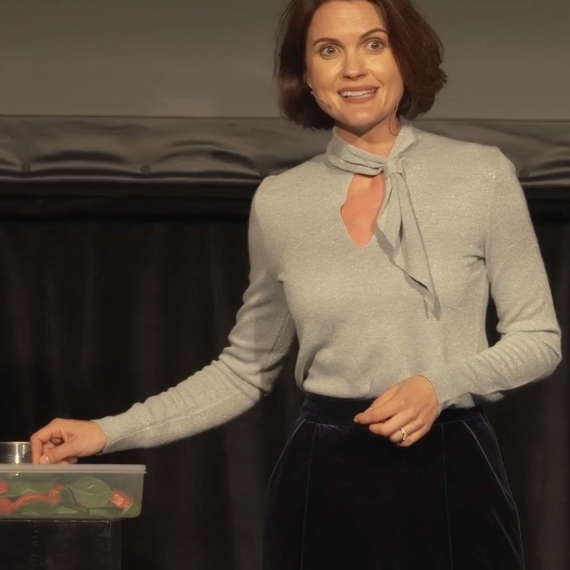
Watch 13 of Australia’s brightest early-career researchers compete for the title of FameLab Australia 2026 Champion.

Join WA Museum curators Kylie Elston and Monika Durrer as they share stories of the trailblazing women who challenged discrimination and developed creative ways to ensure girls and women could play the sports they love.

Join us for an inspiring panel with three Moorditj Yorgas (strong women) who paved the way for Aboriginal and Torres Strait Islanders in Sport.

The 'Godfather of Coral' Charlie Veron joins internationally acclaimed cinematographer Michael Haluwana, and marine ecologist Todd Bond in a discussion facilitated by professional science and technology communicator, Commander Kat.
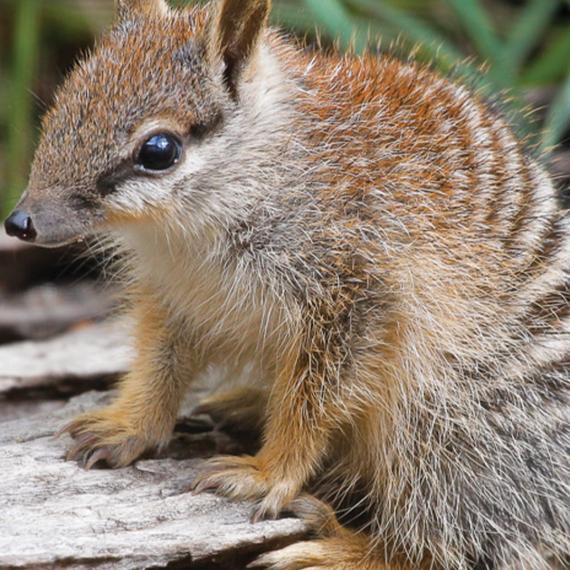
Join Dr Harriet Mills, Program Leader of the Perth Zoo Science team at the Department of Biodiversity, Conservation and Attractions, for a behind-the-scenes look at this vital program. Discover how partnerships with students and researchers have led to new scientific insights and stronger conservation outcomes.

Join Dr John Goldsmith, astrophotographer and researcher at Celestial Visions, as he shares breathtaking images of the cosmos captured over 35 years across WA’s stunning landscapes.
