Albany Talks: Submarines
In this video Albany historian Malcolm Traill discusses the hidden history of submarines in Albany.
-
Episode transcript
Hello everyone! Welcome to another in our curatorial series presented by the Museum of the Great Southern. We're part of the West Australian Museum and we're based in Albany, Western Australia. My name is Malcolm Traill and I am the programs officer at the Museum of the Great Southern, but also an historian, and I specialize in stories and tales about Albany and our region.
So today I wanted to talk to you about quite a hidden history. I love hidden histories. And as we go on, you'll see perhaps why it was hidden, because for many years it was quite a well-kept secret. So what is that secret? Well, it's the story of submarines in Albany. Submarines, by their very nature, are secretive vessels. They operate by stealth.
And during World War Two, especially in Albany, just for a short period. Albany was the centre of a well-kept secret submarine base. But we'll come to that in a little while.
Let's go back over some of the history of naval vessels in Albany and submarines in particular. So the first exposure perhaps, that we had to a naval fleet in Albany was in 1908. The American Great White Fleet toured the world, showing the flag, the Stars and Stripes in a fleet of 16 battlecruisers and naval warships that came to Albany. Not because Albany was particularly significant on the world stage, but because Albany had a wonderful harbor and a coaling depot.
That could refuel these ships that were here for a few days. In 1908, as I mentioned. And during that time, about 16,000 American sailors arrived in Albany, a huge, short term invasion, if you like. And they had a great time while they were here. That was in 1908, as a build-up to World War One and the rearmament of the world.
Also, as part of that rearmament and the threat that was being felt throughout Europe, Australia conducted a review of its naval defences. Already by this stage, it was cutting itself free from the British Empire and the Royal Navy.
And it was creating the Royal Australian Navy. This report was commissioned by the newly formed Australian Government.
Under the auspices of Admiral Henderson. Now there’s a name to conjure with, because, of course, there’s a suburb in Perth which once was known as Naval Base. Now called Henderson. It’s the same Admiral Henderson. So what did Admiral Henderson say in his report to upgrade this new Royal Australian Navy? Well, he suggested that a number of new bases be set up around the country to defend our shores and that a comprehensive program of shipbuilding be undertaken.
And the expenditure in 22 years would come to the staggering amount of 88 million pounds. Now, how did this affect Albany? Well, it did, and if you can see this map from The Argus, the Melbourne newspaper of 1911, Albany is shown on that map. And the map shows the chief naval bases suggested by Admiral Henderson. They are dotted around the countryside and coastline.
As you can see, Albany had a part to play and in the fine print, which is a little hard to read from this clipping, but you can possibly read that Albany is going to be a candidate for a destroyer sub base and a submarine sub base. Submarines were going to be based in Albany as part of the deployment of the Royal Australian Navy.
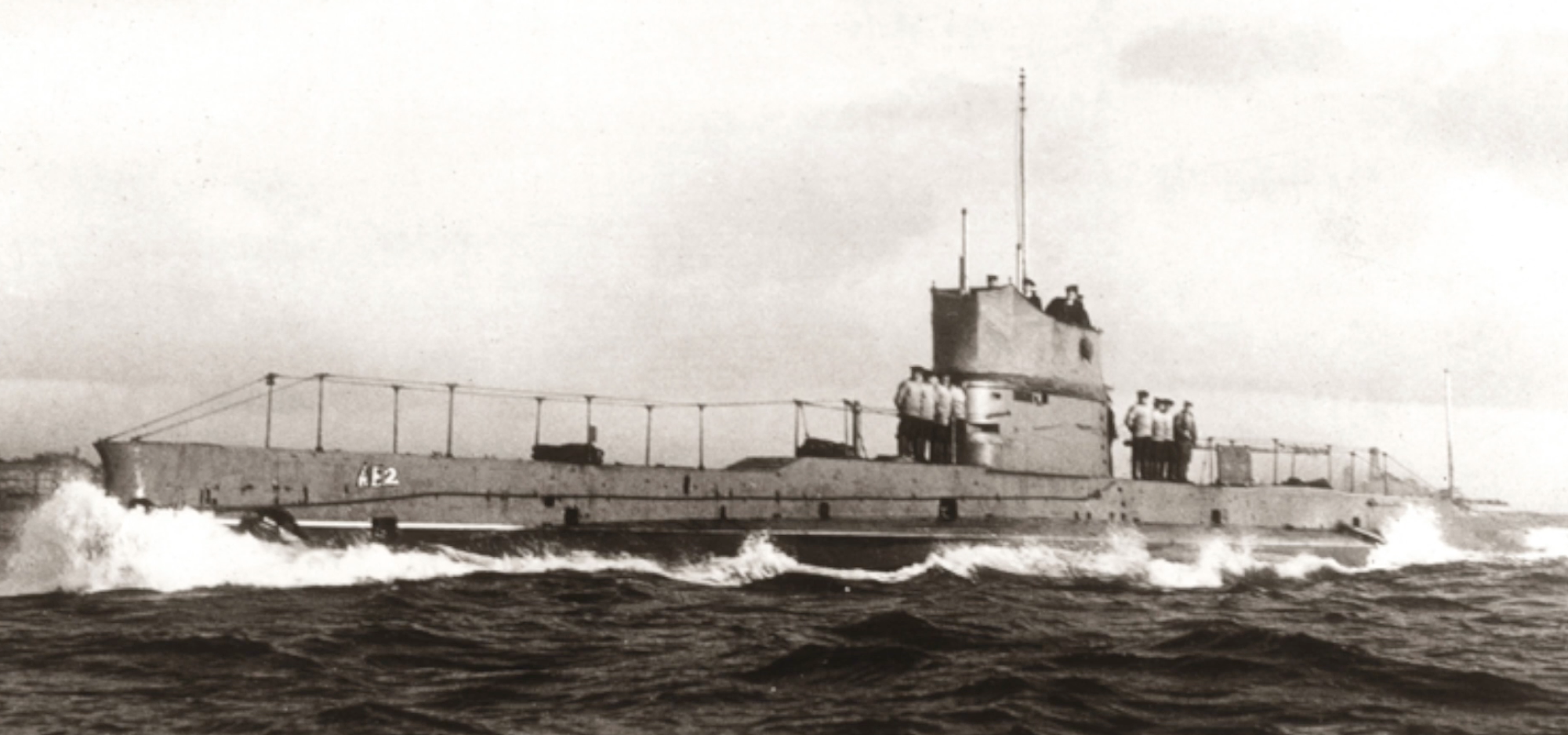
Now, sadly or possibly not, sadly not a lot came of this submarine sub base. Initial preparations were made to start building. A site was prepared in Oyster Harbor at any point which is just east of the main townsite of Albany. But perhaps the nearest we got to a submarine base in Albany was in 1914, when we had a visit by this submarine here.
So you had two submarines in its fleet at that point, named the A1 and the A2. This is the A2 you're looking at now.
Why did the A2 come to Albany? Well, it was en route with the forces of the Anzac convoy to the Middle East to become part of the Australian war effort and naval presence in the Dardanelles. It accompanied the second convoy, which left Albany right at the conclusion of 1914. It didn't get to the Middle East under its own steam. It was towed all the way by one of the transport ships.
When it got to the Dardanelles. It became part of the force which was threatening the Turkish forces entrenched at Gallipoli and around the Black Sea, and it had some success in disrupting Turkish naval operations. But then it was sunk by Turkish ships. And that's where the A2 remains today. And the water in the Dardanelles Straits sunk by Turkish action in 1915.
Let's go forward a little bit and I'll talk a little bit about this man here, Lieutenant General Iven Mackay. Now, he was a commissioned officer in World War One. By World War Two as a permanent army officer, he was one of the two controlling members of Australia's Home Forces in World War Two. Now, when World War Two began in 1939, Australia didn't see itself under threat.
It sent forces to Europe to assist the British in their efforts to defeat Germany. But it was only slightly later that Australia realized that it had a threat to its north, and that threat was Japan. Now I'm grateful in these little sections of this talk to my colleague and friend John Doncon, who very interested in the whole Japanese efforts of World War Two and why they came to this stage.
Now John has discovered that it was Japan's aims and efforts towards domination of East Asia to actually take over many of the surrounding countries to that nation. Japan was low in its resources, and in particular it lacked rubber and it lacked oil, and it saw prospects for getting both of those resources. Plus, of course, many minerals from countries surrounding and to the south of it.
In World War One, Japan had been an ally of Australia and the British Empire. One of the ships that accompanied one of those convoys which left Albany to take the Anzac troops to the Middle East was actually a Japanese warship. It was an escort vessel, but by the 1930s Japan had begun an expansionist regime. It had already attacked China and defeated China and a well-publicised war in the 1930s.
It had annexed Korea at the same time. So Australia was perhaps right to be worried about the prospects of a Japanese move south.
And General Mackay, in his advice to the Australian government, realized that Australia was potentially under threat by Japan.
In 1941, Japan launched a strike on America on the naval base at Pearl Harbor in Hawaii. It's as a well-known part of World War Two history. From there, Australia and Britain declared war on Japan. And from there it was a frantic effort to defend Australia because the Japanese advance south moved rapidly, effectively and totally, taking over countries like Indochina, like the Philippines, like Malaya and the Dutch East Indies to get as far as New Guinea on Australia's doorstep.
Australian plans were then to bunker down. How would it be possible to actually defend that huge coastline that we have?
And General MacArthur recommended to the government, and this recommendation was actually not technically taken up, that he recommended to the government that Australia should defend what became known as the Brisbane Line. And this was a line in south east Australia running from north of Brisbane through to Adelaide and including the big cities, of course, of Sydney, Melbourne and Canberra.
Now this was somewhat controversial and was never taken up by the Curtin Labor government, and it became an election issue because the Labor government actually accused the Menzies government, their predecessors, of actually formulating this response, which Menzies never had done. The Minister for Defence at that point, a gentleman named Eddie Ward, accused the Menzies government of concealing information from the Australian people, and this was the subject of a Royal Commission which found that no information had actually been concealed.
The Menzies government was exonerated and Eddie Ward was actually demoted in the cabinet. But the story of the Brisbane line continued, and this was actually used by General MacArthur, the American general who was in charge of Southeast Asian forces, in one of his speeches. So the Brisbane Line was an area, as I said, south of Brisbane, incorporating south east Australia.
This was the area that was going to be defended. But what about Western Australia? Here we are, a very small population with a very large area, a third of the landmass of the continent. And already Japan had intelligence about some of the coastline because Japanese divers and workers had worked in the pearling industry in Broome right from the 1920s.
And there was evidence that they had actually collected data and information about Australian transport and about Australian coastal facilities and charts in that area of the North West and the Kimberley.
The Japanese would also have had access to maps like this one. This is a map showing the railway lines of south Western Australia in that period of 1930s and 1940s. And of course, it would be a prime area to commandeer. They had plans, which they did have to actually invade Australia and to take over the railways. So all of these things were adding up to a threat to Australia.
Now, one of the ways of defending a coastline is, of course, through the use of submarines. Now Australia didn't have a submarine fleet at that stage. Both of its submarines from World War One had been sunk and we did rely then on our allies, the Americans, to provide that underwater defence. And that they did do.
They retreated from their bases in south east Asia, down to the Australian coastline, and first set up a base in late 1941 and early 1942. In Fremantle, they had resources. This picture shows the submarine tender, which was the ship that actually maintained the submarines. We provisioned them, gave accommodation, and you can see this picture of the USS Holland, one of the submarine tenders in San Diego, a big American naval base in California before the war.
So the Americans were well prepared with submarines. Here's another picture of the USS Holland in San Diego. Now, the Holland is part of our story in Albany because as the submarine fleet gathered in Fremantle in early 1942, the Japanese threat was coming closer. So it was decided to move the Holland, the submarine tender and five submarines further south from Fremantle, as far south as you could get in Australia.
The western part at least, to Albany. So in March 1942, the Holland and five submarines arrived unannounced in Princess Royal Harbor in Albany. Much to the shock of the gunners and servicemen stationed at the Princess Royal Fortress who saw this strange fleet of grey ships coming through the early morning mist. They hadn't been told of their arrival.
They didn't know what to do, but quickly established, once they saw the Stars and Stripes, that they were American allies, and that they were coming to set up a base in Princess Royal Harbour from that initial small fleet of one submarine tender, the Holland, and five U.S. submarines. The fleet expanded, and several submarines actually came and went from Fremantle to Albany.
And over the period of 1940 to about 6 or 7 months, quite a number of submarines, as you can see in this slide here, quite a number of submarines visited Albany on a temporary or permanent basis. Now, at this point, I must recommend this book to you. It's called Secret Fleets, written by Lynn Cairns, and the subtitle is ‘Fremantle's World War Two Submarine Base’.
Fremantle was the main base for the US and then subsequently British and Dutch submarines, although they didn't arrive until 1944. We'll see some pictures of those submarines a little bit later on.
But Lynn Cairns mentions briefly the submarine base in Albany.
And I'll read a little bit to you. ‘No warning had been given to the Australian Army gunners at the Albany forts, who appeared alarmed to see a large vessel and several submarines entering the harbour on the 17th of March, 1942.’
The Holland was stationed at Albany until July 1942, when it was relieved by the Peleas. It stayed at the Port until October. During this time, 31 submarines visited the port. Most of them were refitted by the submarine tenders. Technical staff assisted by the crews. The submarines were tied up at the Albany Jetty and the jetty at the quarantine station, which was used by the sailors and crew for rest and recreation.
Now the US Navy took over a number of buildings in town as headquarters and also technical stores. The Wesfarmers building at the foot of York Street, still used today as a supermarket, was the periscope shop and the periscopes came by rail from the Deepwater Jetty. Steam trains from Perth brought torpedoes and other supplies, and transported servicemen on leave to and from the capital.
The Peleas left in October, as I said, so they were only here for 6 or 7 months. There was a short time, but certainly the American submariners, the crews and officers were welcomed by Albany locals as allies and friends, and they were feted around town.
As a footnote, in March 1944, two submarine tenders, the Peleas and Otis, were sent to Albany briefly for safety, but they only stayed here for less than a week.
So let's go on with some of the stories about the American submariners in Albany. In our museum, we have a special display of some of these stories. And here's a uniform of one of the American submariners who were based here. One of the memories by an Albany historian, Bonny Hicks, writes, ‘The Yanks, so many, so generous, so glamorous.’
‘They all seemed larger than life from Hollywood and later at our doorstep.’ And it was like that. These were exotic people who were well paid, had a bit of leisure time and were able to see the countryside. But above all, they were here to help and to save us.
Now, that's not to say we didn't have some fun on their behalf. The story goes that one of the American sailors was looking to buy a dog in town, and he was sold a big dog. One of the biggest that you could get around town. Of course, it was a rock - Dog Rock. Is that true or not? Well, perhaps it's an urban myth, but a good story nonetheless.
But they also enjoyed recreation around Albany. They were allowed to go to films. They played football. Here's an American football left behind in Albany. They had quite a bit of leisure time before going out on patrol, but whenever they went on patrol, they never knew when they were coming back or not.
Submariners’ life is very dangerous under the water, of course. And if a submarine is hit and sunk, there's no hope for any of the crew. Several of the men were photographed while they were in Albany. And some of these photos remain with us today. Here's a photograph of a young serviceman, D.W. Newton, taken in the gardens, which still exists in Albany today at the corner of Duke and Collie Street.
And this young man, Julius Peterson, in front of the Union Bank. These sailors were taken out by townspeople, taken into their homes for dinners, taken on trips and excursions. Julius Peterson enjoyed life with families in Albany. He was only 17, barely older than some of the boys he's photographed with here. Far too young, you would think, to be part of a serving navy at war.
And this one of D.W. Newton on Mount Melville, again with that same group of boys. The Americans enjoyed themselves. To Albany locals, they were polite and they were generous. And they were missed when they left. Now, as I said, the American submariners really took part in Albany community events. They went to films. They took part in boxing matches at the Town Hall.
And they were part of concerts as well. And here's a report from the Albany Advertiser from June 1942 under the heading a musical treat. You can read it here ‘On Monday night, June 1st. The town hall was packed to capacity, all having come to a most delightful concert in aid of Saint John's. The audience was most appreciative throughout and proved most encouraging to the performers.
Mr. Victor Marchese of the US Navy was the ‘piece de resistance’ of a varied and musical program, but perhaps his most musical and best rendered numbers were Three Negro Spirituals, and these he sang with great feeling and ability. Amongst his numbers were I Love Life, Without a Song, and My Hero. The second group was in different style, consisting of Serenade Toseli, Neapolitan Nights and the Prologue from Pagliacci.
The last group was Rosary, Because, and very well and delightfully sang was Tommy Lad as encores. Mr. Marchese sang the very popular Road to Mandalay and God Bless America.’ So I did actually look into Victor Marchese, and he became quite a popular music star in America after the war. Perhaps we can claim credit for some of his early performances, and one of his posters bills him as the undiscovered tenor.
And even in the San Diego Union Tribune from 1994, reminiscing about the American submariners time. This is article ‘Down Under’ in the early days of World War Two.
“The Aussies in the rustic coastal burgh of Albany, pronounced Albany, expected the worst from the Yankee sailors scheduled to come cruising into port. Past experiences with crews from other nations persuaded these plain and simple townsfolk that seafarers were footloose, womanizing louts with penchant for running wild.
So when a U.S. submarine division appeared on the horizon only months after the infamous Pearl Harbor bombers blew this country into the war, Albany prepared for an attack of another kind. The women and girls of the town resolved to stay behind locked doors, and town fathers made provisions to roll up the shutters daily at the precise moment the shadows fell.
But the sub tender Holland was carrying Victor Marchese, the sailor who had changed the town with song.” So it even made the San Diego Union-Tribune.
As I said, the American stayed for not a very long time at all. Just 6 or 7 months. Why did they leave? Well, later in 1942, the Japanese advance had been halted temporarily, perhaps, but halted nonetheless in New Guinea. Australian forces were engaged in hand-to-hand fighting in those jungles through Kokoda and the like, so it was deemed more suitable and sensible that the American submarine fleet be returned to Fremantle, where their main base was.
Bonny Hicks, writing again, says, “I don't even remember them leaving. They just seem to slide imperceptibly out of our lives. They slipped away just today, as they had slipped in seven months earlier.”
But the Americans have slipped into lives in more ways than one. Several romances took place between American sailors and West Australian young ladies. And in Albany in particular, there were two of note, one of which has come down to us in song. Now, Bob Kane wasn't a submariner. He was a technician on the tender, but he met and fell in love with Betty.
They subsequently married. And their story of meeting and marrying and subsequently moving to America became the subject of a song by Bob and Betty's granddaughters, Vicki and Donna Simpson, and their song Bridal Train. It may be familiar to you, which tells us the story of Vicki and Donna's grandparents, all those years before.
Another story which probably had a greater effect on Albany, even though it didn't result in a song involved another young technician onboard the USS Holland, a jeweller by trade who was working on the periscopes. His name was Homer White.
And he married, met, and married a young lady named Ethel Hessel, whose parents had a farm near Warriup near Albany. These two met at the Allied Service Club in Albany shortly after the tender arrived at the port in March 1942. They got engaged in July and were married in August. Ethel travelled to the United States after the war, but the couple did return to Albany with their two children in 1947.
And Homer was a very well-known Albany businessman, an identity who set up as a watchmaker and jeweller for 32 years. He remembers this time when he met Ethel at the Allied Service Club. He'd stopped in for a cup of coffee, and he'd found that they had common grounds for discussions, wildlife and farming methods. He said he went back to his ship, woke up his old shipmate, Louis Kellifner, and told him, ‘I've met my loved one, my future wife.’ With permission from Admiral Nimitz, they got married on the 15th of August, 1942. What about Ethel's memories? Well, much more prosaic, I suppose. She said, ‘I'd never thought I'd get married. To have this tall, handsome American sailor want to marry me was like a fairy tale.’
And here's a picture of them in young married life.
There were many other stories of romances between American, British and Dutch sailors around and about Perth and Fremantle, many of whom got married and subsequently lived their lives out in either America, where many went on that bridal train that the Waifs write about, or in Perth and Fremantle, where many men migrated after the war had finished. So the American submarine base in Albany closed by the end of the war, of course, the Fremantle base, it closed and it played a vital role in the defeat of the Japanese Navy during World War Two.
By 1945, all of the submarines had left, returning to their home ports. But the memories lived on. But it wasn't for another 32 years that Albany recognized its submarine past again. It was one of these well-kept secrets that nobody really realized.
Then it was the Mayor of Albany at the time, June Hodgson, who inaugurated a Submariners service to remember and recollect and honour all those who served in the submarine service in Albany in World War Two. A memorial plaque was unveiled in the park in Albany in 1976, actually on American Independence Day by a representative of the US consulate.
The plaque was entitled Still on Patrol, which is very much the motto of submariners who were lost in great numbers. And some of these pictures you see here shows that unveiling of that plaque back in 1976.
By 1977, it was realized that there were several U.S. submariners living in Perth with their Australian wives. And the Mayor, June Hodgson, decided to inaugurate an annual U.S. Submariner service in May every year.
At that stage Homer White was very active in the community, and he played a key role with Mayor Hodgson and subsequently Mayor Annette Knight, to keep this tradition going. And in the 1970s and 1980s, there were many of these survivors of the US Submarine Service still alive, and who would regularly come to Albany for the annual Submariners service.
It was an event every year, looked forward to and this picture has Homer White and Mayor in it. The Submariners lookout at the Princess Royal Fortress is another story that came from that period. This lookout that you can see behind Mr. White and Mrs. Knight, was a replica of the original lookout that was built overlooking the entrance to the harbour for the submariners to spot any enemy shipping.
The original lookout, back in 1942, was built from packing cases that originally contained torpedoes and other naval equipment. This was re-erected as a replica in the 1980s, and was unveiled as a memorial and a memory of the submarine times in Albany. Now, sadly, it's no longer there. The Anzac Centre has been built in that place, but there is a plaque that indicates its existence also at that time.
Around that time, the Americans donated the torpedo from Oakland in California, one of the naval bases, to actually mark the service of submariners in Albany during World War Two. And some of these pictures show the arrival of that torpedo from Oakland and the subsequent ceremonial handover between the American Navy and Mayor, Annette Knight. Trees and rose bushes were planted to mark that time, and plaques were unveiled.
As you can see, the ceremony and the memories still go on of submariners in Australia during World War Two. As I said, they played a vital role and for a short time a submarine base was established in Albany. All those years after that recommendation by Admiral Henderson back in 1911, he would not have envisaged such a scenario, I'm sure, of an American submarine base here, but that did occur, of course, and played an important part in ensuring the survival of the American fleet during those dark days of World War Two.
And the Japanese threatened Australian coastlines. Of course, the base moved back to Fremantle. Albany resumed its life, but it played an important part during those few months. In 1942, as I said, to ensure the survival of that fleet.
I hope you've enjoyed that story. A long-lost secret and mystery of Albany life? Very few people around remember that time. But at least now some of those stories are becoming are coming into the public domain and are being honoured for the way that they've played out in 1942. Thank you for listening.
More Episodes
Join Dr Tony Friend, Research Associate, DBCA to hear about the conservation story of Gilbert's potoroo.

Go behind the scenes of Albany Then & Now: Historical Panoramas of Menang Noongar Boodja exhibition.
In this video Albany historian Malcolm Traill looks at the influence of the Chinese in Albany and throughout Western Australia, from their first arrival in Sydney over 200 years ago to the present day.
In this video Albany historian Malcolm Traill discusses the history of quarantine in Albany.
In this video Albany historian Malcolm Traill looks into the lives of those families and individuals commemorated in paving stones in one block of Stirling Terrace.
In this video Albany historian Malcolm Traill explores some of the myths, legends, and ghost stories that have grown up around Albany over the last 200 years.
In this video Albany historian Malcolm Traill talks about a rivalry between two towns in Western Australia.

In this video Albany historian Malcolm Traill looks at the 1920s, a decade of heightened optimism in Albany after the trauma of World War One.
