Albany Talks: Quarantine
In this video Albany historian Malcolm Traill discusses the history of quarantine in Albany.
-
Episode transcript
Hello. Welcome to the Curatorial series, brought to you by the Museum of the Great Southern, a part of the Western Australian Museum. And we're based in Albany in Western Australia. My name is Malcolm Trail. I'm the Programs officer at the Museum of the Great Southern, but I'm also a historian who specializes in Albany tales. And today, I'm going to tell you a tale of quarantine.
At the time of recording this, it's very topical. And I entitled this talk ‘Flying the Yellow Jack’. Now, that's a good place to start. What is the Yellow Jack and what does it mean in maritime terms? Well, let's start with the colour yellow. That's a good place. Yellow can stand for happiness. Energy, but also for jealousy. And it often symbolizes the sunshine. In China, yellow is considered to be the imperial colour, and Buddhists consider it a colour representing humility.
Yellow is also the colour of warning - the amber light. And maybe that's where we're coming from in this tale of quarantine, because quarantine represents disease and warning. And the Yellow Jack? Looking at this chart of maritime flags, you can see under the letter Q there's a yellow flag there.
Now if you look closely, you can see the Q represents the fact that the vessel is healthy and requests free pratique, which is free passage, which doesn't really equate with the colour of quarantine, but it does have that letter Q. The word quarantine comes from the Italian 40 or 40 days, which was the period that sailors were required to self-isolate in Venice when they returned in the 12th, 13th and 14th centuries from voyages to the Far East.
So that's the Q in quarantine. The Yellow Jack actually then became the flag from the letter ‘L’. So the letter L, when you say that on the ship, it indicates a warning, indicates danger, and it means ‘Stop instantly’. That's the background to the Yellow Jack, the flag. So what about quarantine in Albany? Albany is a maritime city or town.
It always has been. So the dangers of importing disease by ship was always there, especially in the early days of European settlement, when medicines were rudimentary, antibiotics were not even thought of, so disease could travel. And that was the last thing that land-based towns and cities wanted - the introduction of exotic diseases from other parts of the world.
The first evidence of disease in an Albany ship came in 1869. Now what were some of these diseases that could be introduced by visitors by ship. Well, these included a huge long list. And all of them appeared in Australian ports at one time or another. Diseases like diphtheria, typhoid, scarlet fever, yellow fever, whooping cough and measles, chicken pox and smallpox, cholera and influenza - all of these highly contagious and could really rip through a community which didn't have immunity, at the drop of a hat.
Most in danger and at risk were indigenous populations who had never encountered any of these European based diseases. So, of course, authorities were keen to keep out any chance of these diseases arriving in their towns. The first recorded ship coming to Albany carrying disease was the ‘Sir William Molesworth’ in 1853, on board with 20 people carrying scarlet fever - sometimes known as Scarletina - and several people in the town contracted scarlet fever and died.
This brought on a recommendation by the chief medical officer, Doctor Henry Wollaston in Albany, for a government public health officer to be stationed in Albany. Two years later, in 1855, 40 Chinese passengers from Singapore arrived on the ‘Malacca’ and they were ordered into quarantine. They were suffering from what was known as ‘The Itch’. Now, I'm not sure what ‘The Itch’ is, but obviously it was a contagious disease of some sort.
By 1860, things were getting more serious. The case of the ‘Salsette’. The ‘Salsette’ ship arrived, and the captains were required by law to report any disease on board.
This, of course, they were reluctant to do because it would delay their onward voyage, and any passengers or freight that they needed to deliver would be then late in arrival. The captain of the ‘Salsette’ failed to report this disease, and of course, it was then taken on to subsequent ports around Australia. Albany got into trouble for not enforcing quarantine at that point.
In 1860, the disease got into the town when one European woman died. But every one of the population of the indigenous population of Albany, which numbered 60, every one of those was infected. 29 died. That's almost 50% death rate of the indigenous population. There was more unrecorded events of scarlet fever in rural areas as well. Something had to be done and quickly.
New quarantine regulations were brought in. The coal ship, the Larkins acted as a floating quarantine station. There was no land-based station at that stage.
Passengers were put onto the ‘Larkins’ while the ship was in port, and those who were ill were disembarked and isolated.
But then the ‘Larkins’ itself was put into quarantine when the daughter of the keeper of that coal hulk contracted scarlet fever. It was a hopeless situation and not sustainable. There was a move made to build a quarantine station, a permanent land-based quarantine station. The government resident at the time, a man named Alexander Cockburn-Campbell, pushed for this. But the Colonial Secretary, Frederick Barlee, who you can see here, disregarded this request and said it was an unnecessary expense.
The suggested location for this permanent quarantine station was actually outside the harbour, on an island, which was connected to the mainland by a little sandbar. The island was called Mistaken Island, and this was the preferred place. The thinking at the time was the disease was carried by airborne winds and breezes. It's a theory of miasma which has some kind of credibility.
So the idea was to put any quarantine station a long way from the centres of communities. Now, Frederick Barlee features in the next part of this story of quarantine. He became a central character. It revolves around the ship ‘Baroda’ in 1869. The ‘Baroda’ was on its way to Melbourne. There was a passenger on board who had apparently had smallpox, and the ship was not allowed to land.
It was told to keep moving. Now of course, this was not popular with the authorities in Melbourne because when the ship arrived in Melbourne it had an outbreak of smallpox on board. So they had to deal with this particular issue.
The ship turned around and sailed back to Albany and parts further afield. On board the ship was Frederick Barlee, the Colonial Secretary, returning to Perth, his home. Also on board was a prominent politician, Sir Luke Leake, whose brother George Leake later became Premier. Luke Leake was the speaker of the West Australian Parliament. They were both on board the Baroda.
The ship arrived in Albany. And of course, it's not surprising that there was still infection on board. The medical officer in Albany, Doctor Rogers insisted that the ship be put in quarantine. No one could land. The alternative for the passengers if they didn't wish to stay in Western Australia was to stay on the ship. Their next port of call was Ceylon - Sri Lanka.
The passengers were not impressed, especially Frederick Barlee and Luke Leake. They were told they had to go into quarantine, but there was no permanent quarantine station. They were put into tents on Mistaken Island for 21 days in May in Albany, on a bleak, windswept beach on an under-vegetated island, miles from town. They and their wives were not impressed.
It got the message across to Mr. Barlee that a quarantine station was needed. And why are we surprised that then, at the very next session of the West Australian Parliament, the Colonial Secretary himself recommended that money be set aside for a permanent quarantine station in Albany? What a coincidence! So money was set aside to build this station in the 1860s.
But where were they to put it? Should they put it on Mistaken Island? That little patch outside the harbour, a long way from the town. Or should they put it inside the main harbour again on the other side of the harbour from the town? But at least closer to land. The government and the town favoured the Mistaken Island option.
You can see on this aerial photo mistake an island on the bottom right of your picture. A little island almost connected to the Vancouver Peninsula. The shipping companies, on the other hand, led by Captain Toll, who was the head of the P & O depot in Albany, said ‘No, that's too far away and too difficult for ships. If they come into the harbour, how are they going to discharge passengers who may be suffering from disease?’
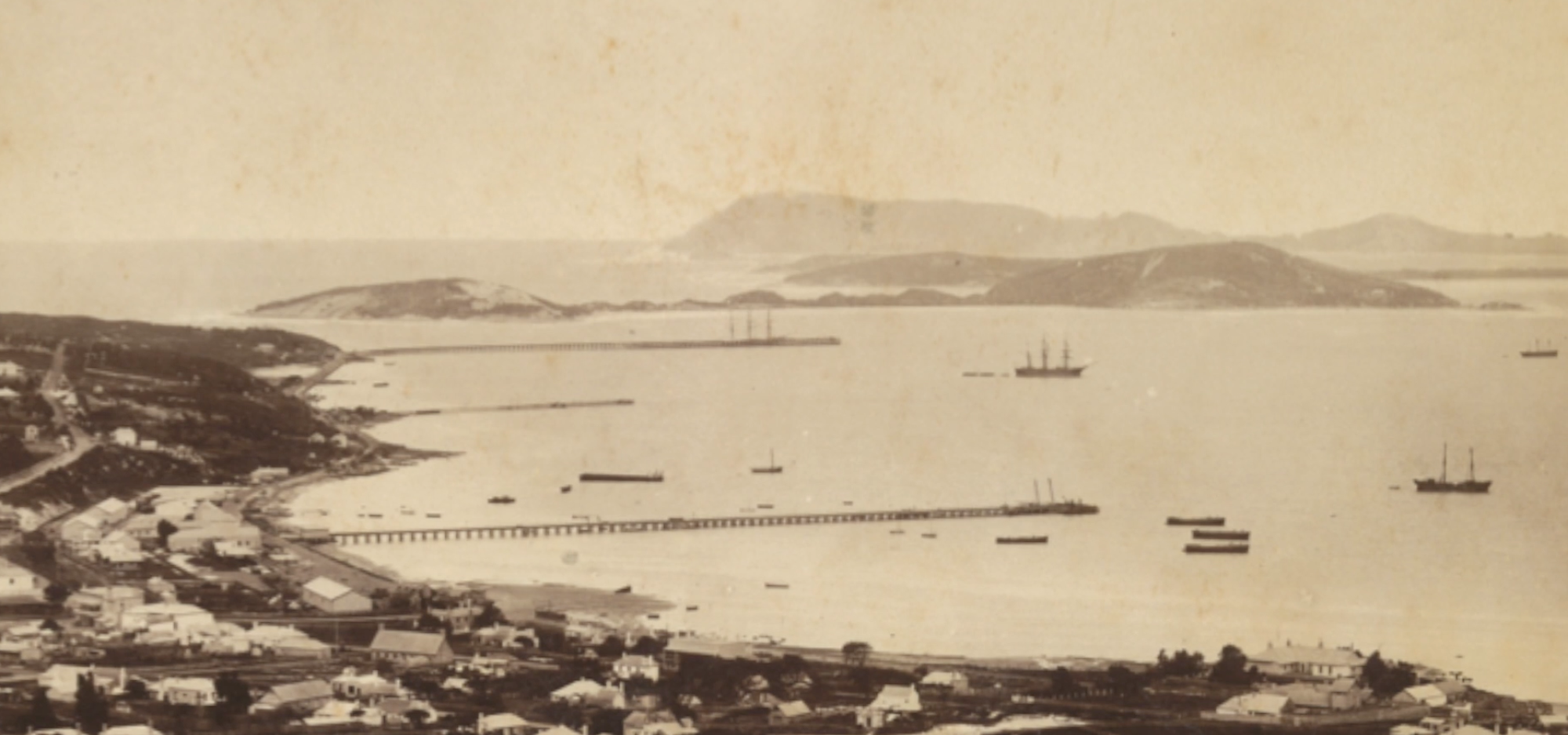
‘We need to put this quarantine station inside the harbour’. The shipping companies, after much debate prevailed and the quarantine station was planned and built on the tip of the Vancouver Peninsula. You can see that right in the centre of your picture, with the town to the north of that. It's interesting that emotions ran high in the newspapers as to the siting of this new quarantine station.
Take a look at this picture of the Princess Royal Harbour in Albany from the 1880s. The eventual site of the quarantine station was directly to the top right of your picture. A little mound coming out into the harbour from there. But then some of the words that were published in the Perth papers in the 1870s about this station were certainly strong, especially against Frederick Barlee, the Colonial Secretary.
Let me read it. “There was a very strong feeling of irritation here against the Colonial Secretary, on account of his determination to have a quarantine station in the Inner Harbor. The feeling is shared by all classes and will not end here.” It went on to say, “Would it not be possible to promote the unlucky officer on account of his long services?”
“The government of Barataria [a mythical country] is, I believe, vacant and the mission to the Ponga Islands. At any rate, let him go from here while the play is good.” They were very keen to get rid of Frederick Barlee at any cost.
The quarantine station went ahead, but it was quite a primitive and a small construction. Initially, only two small cottages were built. They were very primitive. They put a caretaker there. He had little to do and certainly was not paid much. He was allowed to keep the rabbits that he captured. That was one of his perks added to his duties, where he was to keep an eye on the powder magazine.
And this little magazine. This building was built out on the spit of land which was just off the quarantine station. You see, as well as putting people suffering from disease a long way from town, they also put the armaments that were going to defend the town a long way away, because that if that blew up, it could have just as bad an effect on the town's community as disease.
So this little powder station, as it was called, was built on what was then an island, Geake Island, just off the tip of the peninsula where the quarantine station was built. It is still there, but it's no longer on an island. It's been joined to the mainland. Life went on in this little quarantine station, known as the Albany Quarantine Station.
It had no particular name at that point. It went on, but it was overwhelmed in the 1880s and 1890s because the shipping increased and migration increased, so did the cases of disease. Even though public health measures had improved to that time, in the 1890s, the ‘Orizaba’, a ship coming in, had 68 passengers who were due to serve out a term of quarantine, but the station could accommodate only 20. So the others had to live in tents. This was not satisfactory.
Doctor Ingoldby, who is the town doctor at the time, ordered that they be cleared for landing, subject to fumigation. They had to be fumigated, so a much bigger station was planned and funded by the state government on the same site as that original little station. Now, as well as agreeing to extend the station, there was hope that the station would become a federal or a national responsibility.
And after Federation that was the case. But still back in the 1880s and 1890s, there was huge pressure on this quarantine station. The ‘Elderslie’, for example, came in in 1887 with almost 200 passengers who needed to quarantine. And this really put a huge pressure on the facilities.
There was a thought and certainly evidence of racism and discrimination, even in the quarantine days back then, against Asiatics.
There was allegations of profiteering by the caretakers at the cost of detainees, who had no choice but to stay there. There were complaints of bad conditions, of a lack of water, of a lack of bathrooms, lighting, and also, believe it or not, a lack of class segregation. First class passengers actually wanted first class quarantine accommodation. They didn't get it there.
In 1896, large extensions were designed and proposed - First class accommodation and a dining room, new Third class accommodation, doctors and servant rooms, kitchen additions, numerous stores, laundry and wash house, a disinfecting house with adjoining bathrooms and luggage stores to be built adjacent to that powder magazine, an isolation hospital, a separate hospital with a separate jetty and underground tanks.
The designs for these improvements were approved by the Colonial Architect George Temple Poole, a very influential figure in West Australian architecture and design, but it seems likely that a lot of the actual design work was done by this man. John Grainger was also a notable colonial architect who specialized in bridge design. You might be familiar with the Princes Street Bridge in Melbourne at the end of Swanston Street leading up to St Kilda Road.
That's a John Grainger design, but John Grainger is also notable for being the father of one of Australia's best-known classical composers, Percy Grainger. So he has an influence in Albany. These facilities were completed. The new designs included a super heater, which was used to fumigate passengers’ luggage.
At least two of the new huts were designed for Asians, in keeping with the White Australia Policy at the time, which was prominent in Western Australia, and then of course, nationally after Federation.
The facilities were large. One of the first caretakers was a man named Paul Bauditz. Many of these photos that you're looking at now come from him and his time as caretaker at the quarantine station. The station was used during wartime as well - during the Boer War to combat measles and pneumonia from returning troops.
And of course, also after the First World War, the well-known and much publicized pandemic of the Spanish flu, which killed possibly 50 million people worldwide, also touched Albany very briefly. We were quite worried about the influence of the Spanish flu on returning soldiers from Europe from the Great War. Luckily, there were no cases in Albany, but certainly ships were very carefully watched and fumigated when they came through on their way to Sydney and Melbourne.
The only two burials at the quarantine station - there's a small graveyard - that occurred during that period after World War one, and both have a couple of mysteries. One was a Private Robert McGuire, who was a 19-year-old Queenslander returning from the war He died of cerebral spinal meningitis and the other one was Joseph Grant, a seaman, not a military man, who apparently died of pneumonic influenza.
Both were treated in the hospital at the Albany Quarantine Station. Town doctors also doubled as quarantine officers, and they would go out and greet boats arriving. The captains, as I mentioned earlier, had an obligation to report any sickness on board, and anyone who was sick would be taken off separately before reaching port, to a small jetty at the quarantine station, and from there assessed and either put into isolation or taken to the hospital.
They did not enter the town at all. The quarantine station was last used in 1928 when the ship, the ‘Vedic’ was quarantined for measles. So what's happened to the quarantine station since that time? That's almost 100 years now. It's still part of Albany's vista. It still exists. And it's been used as many things over the intervening years. Town access to the quarantine station was always somewhat controversial.
It was, remember, a federal institution and the Commonwealth of Australia had control over it, but the town saw, as it wasn't being used, that they should actually be able to have access to it. There was some controversy in 1933 when the Albany Yacht Club, the Princess Royal Sailing Club, was denied access to the grounds for a picnic.
It generated quite a lot of local heat. In 1942, the buildings there were used by American naval personnel. Submarines were relocated from Fremantle to Albany for a period of about 6 or 7 months in the depths of war in 1942. And those buildings were used to house many of those US sailors.
The station was officially closed in 1956. It had remained open and available as a quarantine station, even though it had no cases to treat, but it was officially closed in 1956 and then used as a holiday destination and a camp. Some of these photos date from that time, and this is about the first time that we find the use of its common name today - Quaranup.
Now, for many years, I and many other people thought that Quaranup was a made-up name referencing the quarantine station. Now, in the Noongar language of the south-west of Western Australia, the suffix ‘up’ means ‘place of’. So it's a logical conclusion to think that Quaranup might be the place of quarantine. A made-up European adaptation.
But no, I was wrong. The kwoor is the actually the Noongar name, the Aboriginal name, for the Brush Tailed Wallaby, which at one point inhabited that peninsula. So it's technically Kwooranup, not Quaranup, but it's been known as Quaranup ever since about the late 1950s. The caretaker, Ted Wheeler, and his wife set up the camp as a private camp for school children and visits.
And there were many stories of camps from schools coming from all over the state to spend time at Quaranup and many ghostly tales about the morgue and the hospital, and tales between students who had dared to stay overnight in the morgue and sleep on the slab in the morgue, which is still there today.
It's still used as a community camp as part of the Department of Sport and Recreation in Western Australia. So the buildings have been updated and adapted and rejuvenated as a camp for school children and young people all over the countryside. And the Quaranup music camps are famous in Albany. Summer music camps for young musicians from all over the state.
These have been running for at least the last 40 years. So the story of quarantine, the Yellow Jack, the flying of that yellow flag to indicate disease and danger on board, has a long history in Albany, going way back to the 1850s. Now, luckily, not many arrivals come by ship these days. Anybody suffering disease is checked at airports and quarantined accordingly, if appropriate.
We don't have a use for the quarantine station in Albany, but it remains there, as does the little powder magazine, which for so many years stored the town's armaments and supplies of gunpowder. It never blew up, and the quarantine station served its purpose to keep Albany healthy over all those years.
I hope you've enjoyed this tale of quarantine at Albany. From where I'm speaking, it's a very pertinent topic. In the past, quarantine has been very important to the health and welfare of all of our communities. Thanks so much for listening.
More Episodes
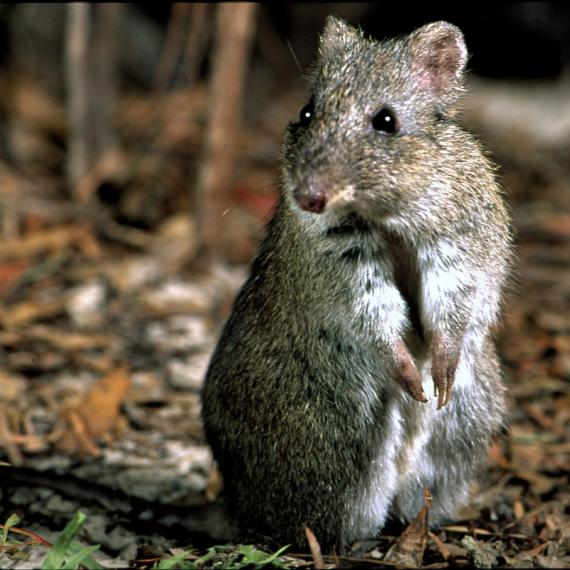
Join Dr Tony Friend, Research Associate, DBCA to hear about the conservation story of Gilbert's potoroo.

Go behind the scenes of Albany Then & Now: Historical Panoramas of Menang Noongar Boodja exhibition.
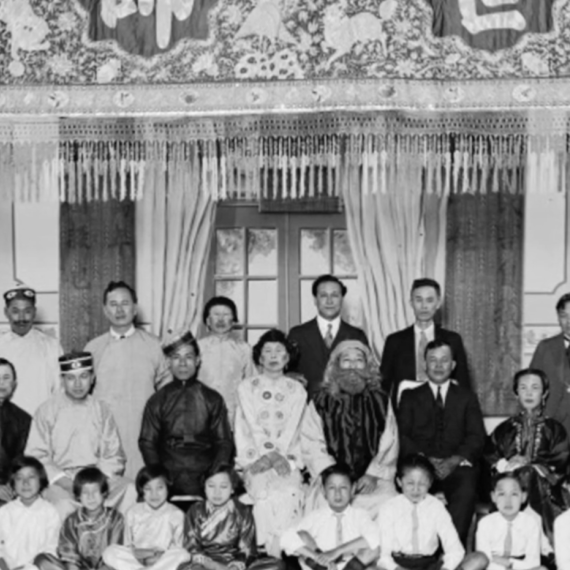
In this video Albany historian Malcolm Traill looks at the influence of the Chinese in Albany and throughout Western Australia, from their first arrival in Sydney over 200 years ago to the present day.
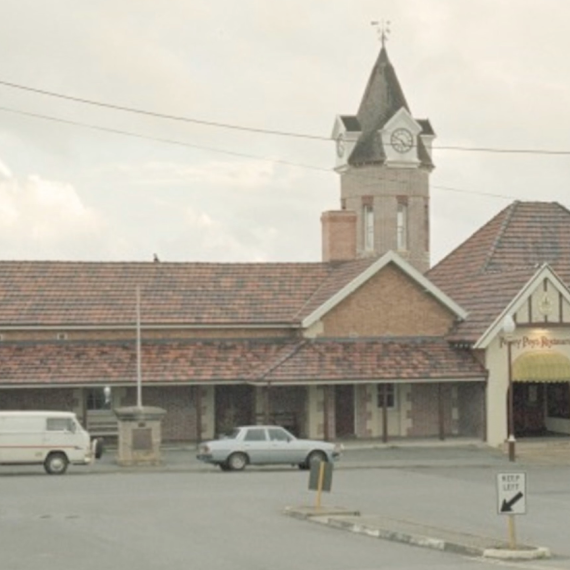
In this video Albany historian Malcolm Traill looks into the lives of those families and individuals commemorated in paving stones in one block of Stirling Terrace.
In this video Albany historian Malcolm Traill explores some of the myths, legends, and ghost stories that have grown up around Albany over the last 200 years.
In this video Albany historian Malcolm Traill discusses the hidden history of submarines in Albany.
In this video Albany historian Malcolm Traill talks about a rivalry between two towns in Western Australia.

In this video Albany historian Malcolm Traill looks at the 1920s, a decade of heightened optimism in Albany after the trauma of World War One.
